UAE's ambitious Asteroid Belt mission targets 2028 Q1 launch
UAE Space Agency on track for Asteroid Belt mission launch in Q1 2028
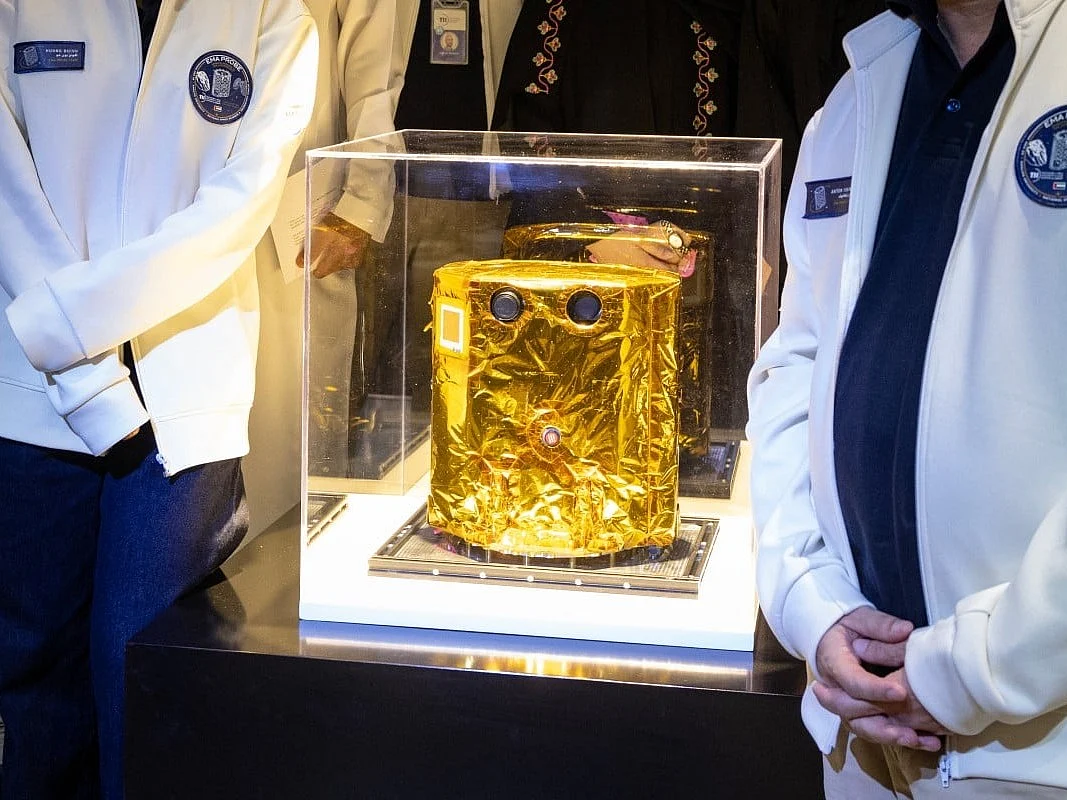
Abu Dhabi is preparing to launch the Emirates Mission to the Asteroid Belt (EMA) in the first quarter of 2028. This ambitious project, managed by the UAE Space Agency, is a significant investment in the nation's space sector and aims to develop national talent, strengthen space industries, and create new economic opportunities.
Mohsen Al Awadhi, Director of the Space Missions Department, revealed that the mission is nearing completion. The EMA Lander, a key part of the mission, has been entirely designed, developed, assembled, and tested within the UAE. It has passed all necessary technical and environmental tests and is prepared for transfer to the University of Colorado Boulder for integration with the MBR Explorer.
The mission will explore seven asteroids, with the final destination being asteroid 269 Justitia. This asteroid's spectral characteristics suggest it may have originated in the Kuiper Belt and migrated to the main asteroid belt, providing valuable insights into the Solar System's early history.
The MBR Explorer, carrying four scientific instruments, will study the terrain, surface characteristics, and mineral and chemical composition of the asteroids. It will also search for indications of water and organic compounds. The spacecraft is designed to withstand extreme conditions, including significant temperature variations and precise navigation for gravity-assist maneuvers.
The mission involves over 150 Emirati professionals, contributing to spacecraft design, development, assembly, testing, and operations. International partners include the University of Colorado Boulder, the Italian Space Agency, JAXA, NASA, and Mitsubishi Heavy Industries. The mission is expected to last eight years and cover approximately five billion kilometers, with the MBR Explorer expected to encounter its first asteroid, 10253 Westerwald, in February 2030.
Written by urgent.news from Gulf News's reporting — not their text. Machine-written — may contain errors; check the original before relying on it.