The genome offers a recipe, not a blueprint, for the brain
During brain development, genes set the rules and turn the knobs; self-organization does much of the rest.
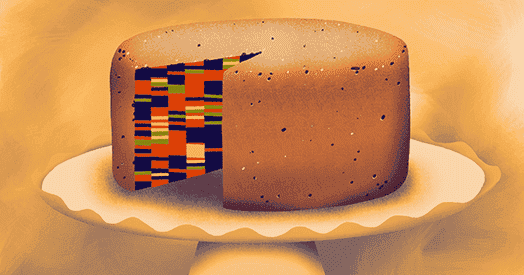
The genome provides a recipe for brain development, not a precise blueprint. During the formation of the brain, genes set rules and adjust parameters, while self-organization plays a significant role in shaping the final structure. To understand this concept, consider a cake mix box and the resulting cake. The box contains all the necessary ingredients and directions, but it does not include the cake itself.
Similarly, the genome provides the components and instructions for brain development, but the actual structure emerges through self-organization processes.
Genes specify which molecules to combine and in what quantities, but they do not dictate the precise location of various brain regions or the exact connections between neurons. Instead, these details are determined through the interplay of simpler processes that lead to the self-organization of complex structures. This idea was proposed in the early 20th century by scientists like Alan Turing and John von Neumann, who demonstrated that local rules applied repeatedly can generate intricate structures from simple components.
While there were periods in the past where genetics dominated research, it is now time to reconsider the role of genes and integrate self-organization into the understanding of brain development. The genome can be seen as a cookbook, providing the necessary ingredients and guidelines for self-organization to take place. The development of different brain regions and cell types can be explained by both genetic instructions and self-organizing mechanisms.
Some classic models of brain development, such as the chemoaffinity hypothesis and the "French flag" model, emphasize the role of genetic instructions in specifying the organization of tissues. However, the development of digit patterns in the limb bud provides evidence for Turing pattern formation, where simple chemical interactions generate complex patterns without explicit genetic instructions.
Digit formation relies on Turing mechanisms, where Wnt, BMP, and SOX9 signaling act as dials that adjust the pattern's characteristics.
The question remains: which mechanism, genetic instruction or self-organization, is more prominent in brain development at different stages? Even in the fly, the genome's role may be less dominant than previously thought, with network dynamics and physical forces contributing to its organization. Grid cells in the entorhinal cortex, for example, exhibit discrete functional modules with abrupt boundaries, but their formation can be explained by a combination of smooth gradients and fixed-width interactions, known as "peak selection."
Written by urgent.news from The Transmitter's reporting — not their text. Machine-written — may contain errors; check the original before relying on it.