Scientists uncover how a tiny reflection of light helps us navigate the social world
When assessing where another person is looking, human beings use a variety of visual cues. A new study shows that the tiny reflections of light bouncing off the surface of the eye help us accurately track gaze direction.
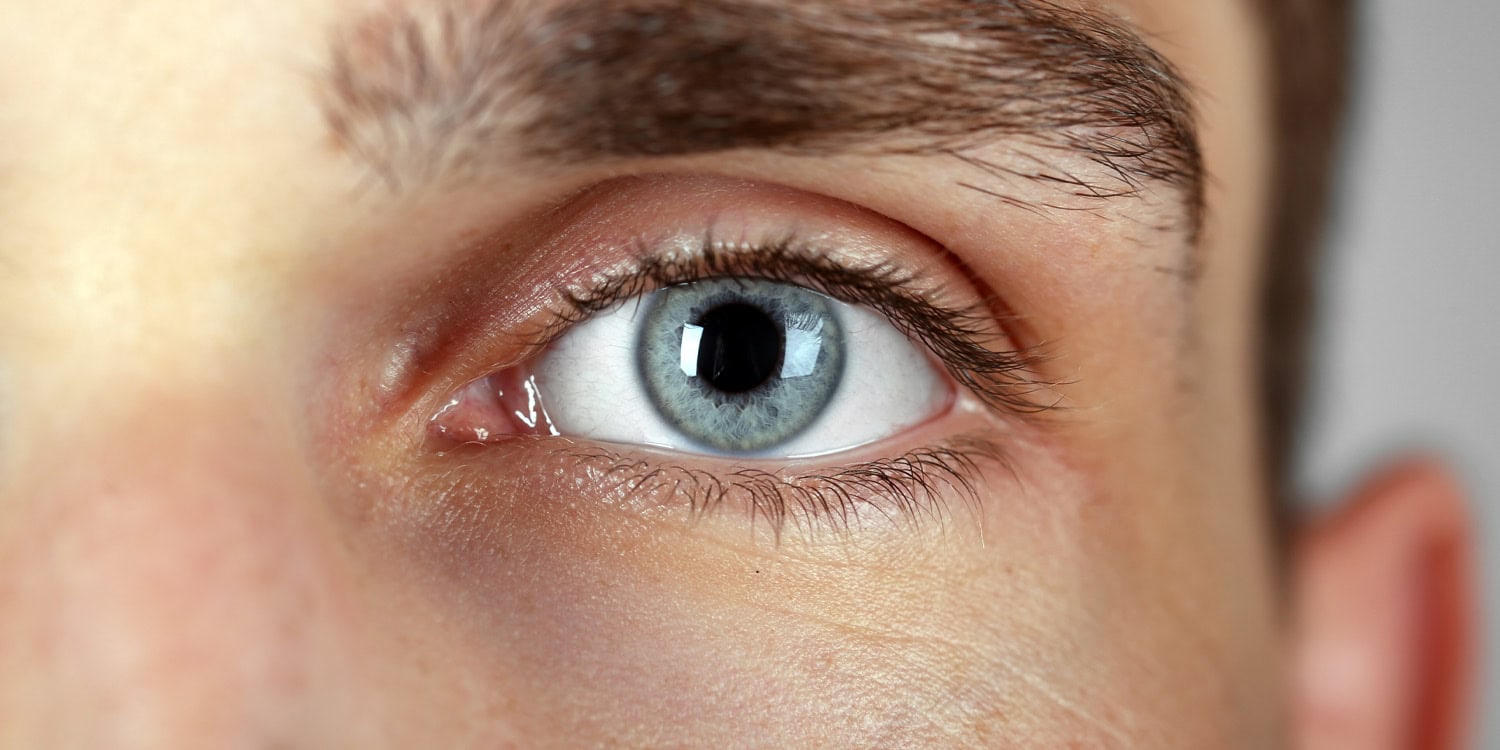
Scientists have discovered how a faint reflection of light on the surface of the eye aids in navigating social interactions. A small study published in Psychological Science reveals that these minor light reflections, known as eye glints, assist observers in accurately tracking gaze direction even when lighting conditions and head positions change. Tracking another person's gaze is crucial for understanding intentions, anticipating actions, and coordinating behavior in social situations.
Researchers Gwenisha J. Liaw and Colin J. Palmer of the National University of Singapore aimed to determine if the brain utilizes additional information gleaned from eye glints to correct visual errors. They focused on the tiny, mirror-like reflections of light that bounce off the glossy surface of the eye. Commercial video-based eye-tracking cameras employ glint to measure gaze direction.
To test their hypothesis, the researchers conducted three experiments using computer-generated three-dimensional human faces. In the first experiment, 40 participants viewed faces programmed to look at specific points while the faces were lit directly from the front and faced them straight on. Half of the faces featured realistic eye glints, while the others had the glints digitally removed.
Participants completed two tasks: indicating whether the face was making eye contact and estimating the gaze angle using a computer mouse.
Under these simplified conditions, the presence of eye glints had almost no effect on participants' judgments. However, in the second experiment, the researchers made viewing conditions more challenging by rotating the computer-generated faces 20 degrees to the left or right. This task required participants to maintain a stable perception of gaze direction despite changes in viewpoint, known as perceptual constancy.
The presence of eye glints significantly improved participants' accuracy and precision in estimating gaze direction compared to faces without glints.
The third experiment examined the impact of changing light sources. Off-center lighting creates shadows across the face and eyes, potentially distorting the visual cues the brain uses to calculate gaze direction. When faces were illuminated from the left or right, eye glints helped participants reduce visual errors caused by the shadows, leading to more accurate judgments of whether the face was making eye contact.
Importantly, only about half of the participants in each experiment noticed the eye glints, but their performance was nearly identical to those who did not notice them.
Written by urgent.news from PsyPost's reporting — not their text. Machine-written — may contain errors; check the original before relying on it.