Scientists Feared This Cute but Venomous Primate Had Gone Extinct Nearly 100 Years Ago. It Was Hiding in Plain Sight All Along
The Bangka slow loris is still close to extinction, but new research suggests it continues to survive on a tropical Indonesian island. Conservationists are calling for stronger habitat protections and a breeding program, among other measures
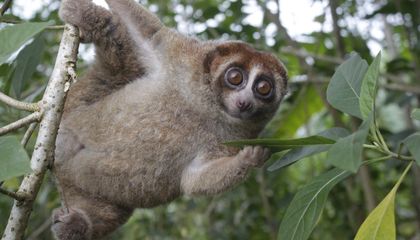
A small, venomous primate that scientists had once believed had vanished from the face of the Earth continues to cling to existence on Indonesia's Bangka Island, according to a recent study. Dubbed the Bangka slow loris (Nycticebus bancanus), this unique creature inhabits both Borneo and the island of Bangka and was previously classified as critically endangered, with a possible extinction on the IUCN Red List back in 2015. The species had not been recorded in any scientific literature since 1937, until recently.
The latest study analyzed over 90 Bangka slow lorises rescued by the Alobi Wildlife Rescue Center, a local non-governmental organization. Study co-author Timon Glaw, a graduate student from Vienna, Austria, expressed amazement at the loris's near complete absence from scientific knowledge for nearly a century. Co-authors from Alobi and the Taman Safari Prigen Conservation Breeding Ark in Indonesia contributed to the research.
Since 2021, the Alobi rescue center has recorded 43 loris individuals, with 39 being traced across the four districts of Bangka, including its largest city, Pangkalpinang. This finding suggests the species remains widely distributed throughout the island. However, the researchers caution that human activities continue to pose significant threats to the species' survival. In 2021, seven lorises were found dead due to human-related factors, highlighting the ongoing danger faced by the Bangka slow loris.
Written by urgent.news from Mongabay's reporting — not their text. Machine-written — may contain errors; check the original before relying on it.
This story
This is one outlet's version. Read the fullest account.