Sarawak's economic paradox
SARAWAK presents Malaysia with a revealing economic question. How can a state rank among the country’s strongest producers of economic value while its typical household receives less income than the national median?
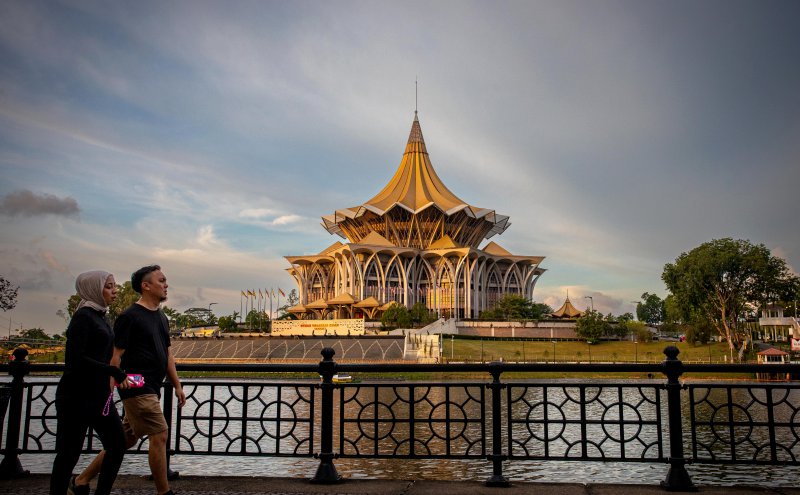
Sarawak's economic situation presents a puzzling conundrum for Malaysia. Despite ranking among the nation's top producers of economic value, the average household in the state earns less than the national median income. With a GDP per capita of RM73,253, surpassing Malaysia's RM56,772, Sarawak's median household income of RM5,504 falls short of Malaysia's RM7,017. The discrepancy between these figures warrants careful examination and sheds light on the complexities of assessing development.
The difference between GDP and household income stems from their distinct measures of prosperity. While GDP gauges the value added by production within a territory, household income records income from employment, self-employment, property, investment, and transfers. The median household income represents the middle income point in the distribution, whereas GDP per capita divides the annual value by the population. These measures have different units and coverage, making direct comparisons challenging.
Sarawak's economic prowess largely stems from its oil and gas, liquefied natural gas, and energy-intensive industries. These sectors require significant capital investment and can generate high value with relatively few workers. However, this high productivity may not directly translate into the earnings of people employed elsewhere in the economy. The ownership of income generated within a state can also be complex, with corporate earnings either retained for investment or distributed to shareholders.
To gain a more comprehensive understanding of Sarawak's economic situation, it is essential to delve into the industries and their impact on local residents. Analyzing the income generated by these industries for resident workers and the creation of jobs for local firms is crucial. Moreover, understanding how these firms improve productivity and pay is vital.
By examining two industrial projects of comparable size, one that procures most services externally and offers limited opportunities for local suppliers, and another that develops engineering companies, trains technicians, and establishes sustained ties with nearby firms, we can see how different the broader economic consequences can be.
To accurately measure the impact of these industrial developments, evidence on procurement, employment, and ownership is needed. Importantly, imported intermediate inputs should not be deducted from GDP a second time when calculating domestic value added. Additionally, purchases from other states can support a more competitive Sarawak industry.
A successful integration should enhance the state's ability to earn income through national and international supply chains. While keeping every ringgit within state boundaries may not be an ideal objective, the benefits households gain through public services, such as education, healthcare, and infrastructure, cannot be overlooked, even if they do not appear as cash income in a household survey.
Ultimately, a more robust assessment of prosperity should consider the wider contribution of resource-related revenues to household well-being, alongside the costs families face and the quality of services they receive. Policymakers should investigate the connection between productive industries and the people living around them.
By mapping purchases between industries and across state boundaries and linking these accounts to labor-market, ownership, and household data through a regional social accounting matrix, a fuller picture of how income reaches different groups can be obtained. This approach would provide valuable insights into where infrastructure is a binding constraint, where skills are scarce, and where firms need support to meet industrial requirements.
Recognizing the successes of specific programs based on evidence would help governments identify policy areas that require attention and foster a more constructive debate about Sarawak's economic future.
Written by urgent.news from New Straits Times's reporting — not their text. Machine-written — may contain errors; check the original before relying on it.