Regina Barzilay and Jim Collins win Pritzker Prize for AI and Science Research Excellence for work in AI-enabled antibiotic discovery
The MIT professors collaborated to identify the first AI-discovered antibiotic, a scientific breakthrough that is widely recognized as a milestone in AI-driven drug discovery.
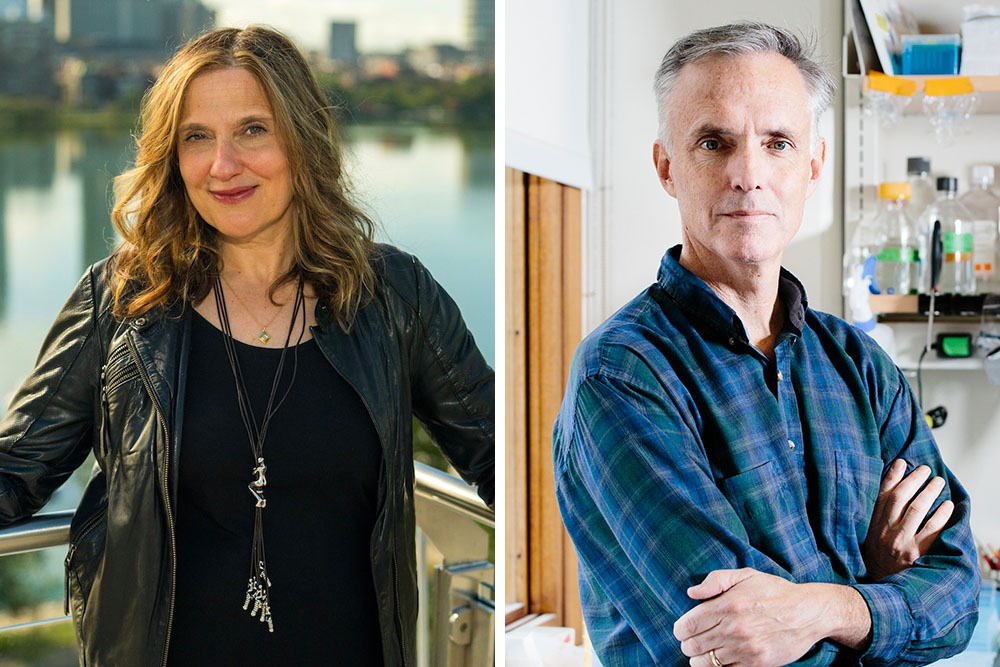
Regina Barzilay, an AI and Health Distinguished Professor at MIT, and James Collins, MIT's Termeer Professor of Medical Engineering and Science, have been honored with the 2026 Pritzker Prize for AI in Science Research Excellence. This prestigious award, established in 2024 by the University of Chicago in partnership with Caltech, recognizes their groundbreaking work in AI-enabled antibiotic discovery.
The duo utilized deep learning, bioengineering, and experimental validation to create novel antibacterial agents targeting drug-resistant pathogens.
Their pioneering research began in 2020 with the publication of a paper in Cell, co-authored with then-MIT postdoc Jonathan Stokes. The paper detailed the discovery of the first artificial intelligence-designed antibiotic, halicin, named after the AI system HAL 9000 from Stanley Kubrick's 1968 film "2001: A Space Odyssey." Halicin, a broad-spectrum antibiotic initially researched as a potential diabetes medication, was identified by a deep learning model trained on 2,500 molecules.
Remarkably, this antibiotic proved effective against antibiotic-resistant bacteria, including Clostridium difficile, Acinetobacter baumannii, and Mycobacterium tuberculosis. The discovery process, which had previously taken years, was completed in mere weeks, showcasing the potential of AI to accelerate the identification of new and effective antibiotics.
Building on their success with halicin, Barzilay and Collins collaborated with Stokes to use machine learning in identifying abaucin in 2023. Abaucin, a narrow-spectrum antibiotic, demonstrated effectiveness against the antibiotic-resistant bacteria Acinetobacter baumannii, commonly found on hospital doorknobs and in the wounds of U.S. soldiers deployed in Iraq and Afghanistan.
This narrow-spectrum antibiotic holds particular promise as it minimizes the risk of bacteria developing resistance and inadvertently harming beneficial gut bacteria.
Collins emphasized the transformative impact of generative AI on antibiotic discovery, stating that "the process is now shifting from AI being used as a tool for discovery to AI being used as a design tool." This shift opens new frontiers in antibiotic discovery, potentially leading to the development of the next generation of lifesaving drugs.
Barzilay added that while significant progress has been made in molecular modeling, "we are still in early stages of drug discovery. With AI, we can only automate parts of the pipeline, rather than totally transforming the discovery process. To achieve this, we need to work hard to build realistic AI models of human biology."
Written by urgent.news from MIT News AI's reporting — not their text. Machine-written — may contain errors; check the original before relying on it.