Puente responde este martes en el Congreso por el accidente de Urda
El ministro de Transportes, Óscar Puente, comparecerá a petición propia este martes, a las 17.00 horas, en la Diputación Permanente del Congreso para dar explicaciones del accidente ferroviario en Urda (Toledo), en el que han muerto, hasta la fecha, 69 personas. Leer
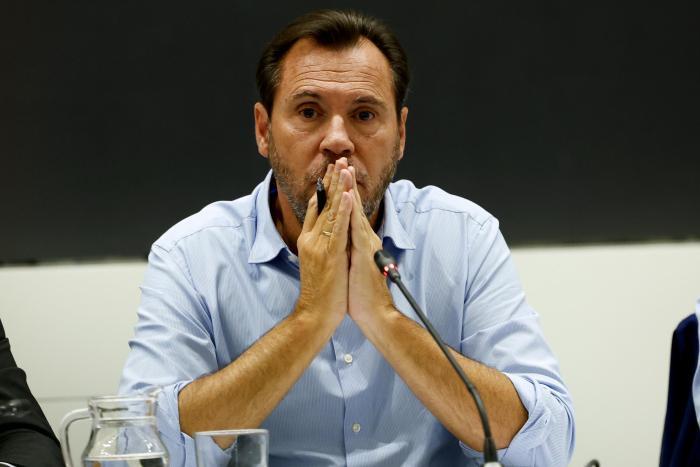
Puente, the Minister of Transport, will appear before the Permanent Deputation of Congress on Tuesday at 17:00 hours to provide explanations regarding the Urda rail accident that has resulted in 69 deaths. The appearance was requested by the liberal party Sumar, and later supported by Podemos and ERC. Puente will face 69 deputies from the Permanent Deputation, as the Congress is dissolved due to the election call.
Puente reiterated his intention to remain in his position and continue representing the government, dismissing any possibility of resigning. He emphasized that he would not step down even if it would comfort someone who has lost a child, parent, grandparent, or limb in the Urda and Adamuz rail accidents. Puente highlighted that the PP has been demanding his resignation since he assumed the Transport portfolio.
However, he contrasted their case with that of former Minister Ana Pastor, who had a 80-death accident in Angrois (La Coruña) in 2013 but only provided explanations in committee, not in the plenary, without the PSOE requesting her resignation. The leader of the PP in Congress, Ester Muñoz, called for Puente's resignation before his appearance at the Permanent Deputation.
Muñoz deemed it incomprehensible that Puente continues to lead the Transport portfolio after the Adamuz accident and mocked Renfe's delays on television programs. Muñoz also called for the appearance of Prime Minister Pedro Sánchez before the Permanent Deputation. Vox's spokesperson for Economy, Energy, and Deregulation, José María Figaredo, deemed Puente's appearance insufficient and labeled him a criminal who should be available for judicial scrutiny.
Puente explained during a press conference on Friday that transmission failures in the LZB signaling system are possible and common, and only 13 of the 170 such incidents in 2026 occurred in the Urda accident sector, which is lower than in other areas. Despite this, Puente assured that the system is reliable and the problem lay in communication with the control center's computers, not the system itself.
He detailed that when the LZB system fails, the ASFA backup mechanism takes over, and virtual cantons switch to physical cantons with barriers that prevent or allow train passage based on whether another train is occupying the canton. In the Urda accident, both trains were in the same virtual canton, and the ASFA mechanism could not warn them, but radio communication was available with the train drivers, as the minister pointed out.
When instructing the following train (Renfe) to resume normal operation while a train in front of it was stopped (Iryo), Puente lamented the doubly tragic circumstance. He regretted that the instruction was given despite the stopped Iryo train being visible on the control center screen and clearly depicting the approaching Renfe train.
Puente emphasized that the cause of the accident could have been a failure in Adif's control center and reiterated that, when systems fail, it becomes the human element that takes control of the environment, whether in rail, air, or maritime transport. Puente declined to address human error, stating he had never used that phrase to describe the accident's causes.
He clarified that he will not use any worker as an excuse and differentiated between clarifying responsibilities and seeking a culprit. Puente concluded that investigations and justice will clarify the reasons and consequences, and he will continue to clearly convey the facts to the public.
Written by urgent.news from Expansion ES's reporting — not their text. Machine-written — may contain errors; check the original before relying on it.
This story
This is one outlet's version. Read the fullest account.