NASA says Orion capsule could splash down off Cape Town eight minutes after launch
: NASA has visited the NSRI in Cape Town to discuss how local sea rescue teams could assist if an Artemis mission spacecraft makes an emergency splashdown off South Africa. The discussions covered potential rescue operations, spacecraft hazards and medical preparations.
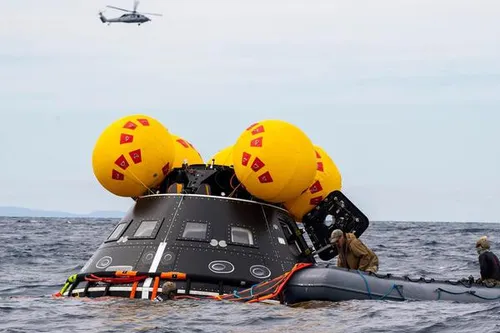
NASA has explored the possibility of an Orion capsule splashing down off the coast of Cape Town within eight minutes of launch during an Artemis mission. The National Sea Rescue Institute (NSRI) in South Africa was visited by NASA representatives to discuss potential collaboration in such an emergency. The NSRI's Head of Operations, Charl Maritz, said the visit came as a surprise, as NASA had reached out to them due to their reputation for maritime rescue and safety.
The NSRI's training, capabilities, and experience in maritime rescue make them a potential resource for locating, reaching, and recovering astronauts in distress. However, the distance from the splashdown point to the coast could pose a challenge, with a potential splashdown up to 200 nautical miles away. The NSRI would focus on maritime rescue, while NASA's teams would handle spacecraft-specific requirements.
They discussed various scenarios, including injuries to astronauts, decompression issues, and the need to wait for hydrazine fuel to stop venting. NASA also showed interest in a formal statement of intent that would outline their collaboration, providing technical guidance on spacecraft hazards and medical information for hospitals.
Both organizations agreed that preparation and cooperation are crucial for handling unlikely emergencies, with the NSRI's mission to assist people in need when they can do so safely.
Written by urgent.news from IOL's reporting — not their text. Machine-written — may contain errors; check the original before relying on it.