Life mirrors art: the story of Yayoi Kusama
The life of the enigmatic artist, who died in August, was filled with paradoxes and was not without controversy
Yayoi Kusama, a Japanese artist who passed away at the age of 97, left behind a legacy that is almost unparalleled in contemporary art. After moving to New York in 1958, she became one of the most recognizable artists globally. Her iconic dots and pumpkins expanded from canvases and sculptures to various products like handbags and shopfronts.
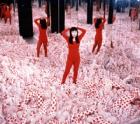
The Infinity Mirror Rooms she created drew crowds to museums and inspired millions of selfies. However, her global success has also highlighted the gendered and geographical disparities within the art world, according to art historian Izumi Nakajima. While Kusama's achievements are exceptional, she is not the sole monumental woman artist in the canon; many other women artists also faced structural marginalization.
Kusama's departure from Japan in 1957 played a crucial role in her international success, as Japan's high-growth era shifted women's lives towards domesticity. Her relentless pursuit of art and visibility abroad, through exhibitions, photographs, fashion, happenings, and media, contributed to her worldwide recognition. Yet, the transformation since her early career raises questions about whether her trajectory should still serve as a model of success when success is measured by criteria inherited from a predominantly white male art world.
Nakajima argues that it's more productive to use feminism as a critical method to interpret Kusama's work rather than as an attribute or categorical designation.
Despite her international fame, Kusama is less frequently perceived as a feminist icon in Japan; instead, she is better known as the creator of colorful polka-dotted paintings and installations. The Multiple Spirits collective notes a disparity between Kusama's global reception and her popular image in Japan. Her politically charged 1960s happenings, addressing anti-war sentiments and sexual liberation, have received comparatively less attention.
Rather than reducing her to a singular "feminist" or "queer" identity, it is essential to reconsider these radical practices within the social and cultural conditions that produced them.
Another paradox lies in Kusama's shift from avant-garde provocateur to global cultural brand. In 1966, she unexpectedly appeared at the Venice Biennale with Narcissus Garden, selling mirrored spheres under a sign declaring "Your Narcissism for Sale." Decades later, the mirrors became among contemporary art's most coveted attractions, with visitors lining up for hours to experience the Infinity Mirror Room.
Collaborations with Louis Vuitton further solidified her global recognition, turning her dots into a recognizable luxury motif. Critics have cast Kusama as both a precursor of immersive "artainment" economies and one of their most successful brands.
Hidenori Ota, Kusama's longtime representative in Japan and founder of the gallery Ota Fine Arts, suggests that Kusama's embrace of visibility cannot be separated from her struggle to be heard. Having experienced war firsthand, Ota posits that Kusama sought a language capable of reaching a mass audience, repeatedly returning to the word "love" as a vehicle for critique.
However, Kusama's popularity also made mental illness unusually visible within mainstream contemporary art. She voluntarily lived at a psychiatric hospital in Tokyo from 1977 onward, working at a nearby studio. While she connected her compulsive repetition and artistic production to hallucinations and psychological distress, she generally avoided disability advocacy.
Critics have drawn attention to the potential dangers of reproducing the "mad genius" trope, which suggests that Kusama triumphed over adversity. At the same time, narratives surrounding her have often done little to address disability, psychiatric experiences, or accessibility. In her 2002 autobiography, Infinity Net, Kusama described Black people in ways that have drawn criticism for perpetuating harmful stereotypes.
Written by urgent.news from The Art Newspaper's reporting — not their text. Machine-written — may contain errors; check the original before relying on it.