I asked Claude Code, Codex, and Antigravity to build the same Android app, and only one made something I'd actually install
Three AI agents, one Android challenge
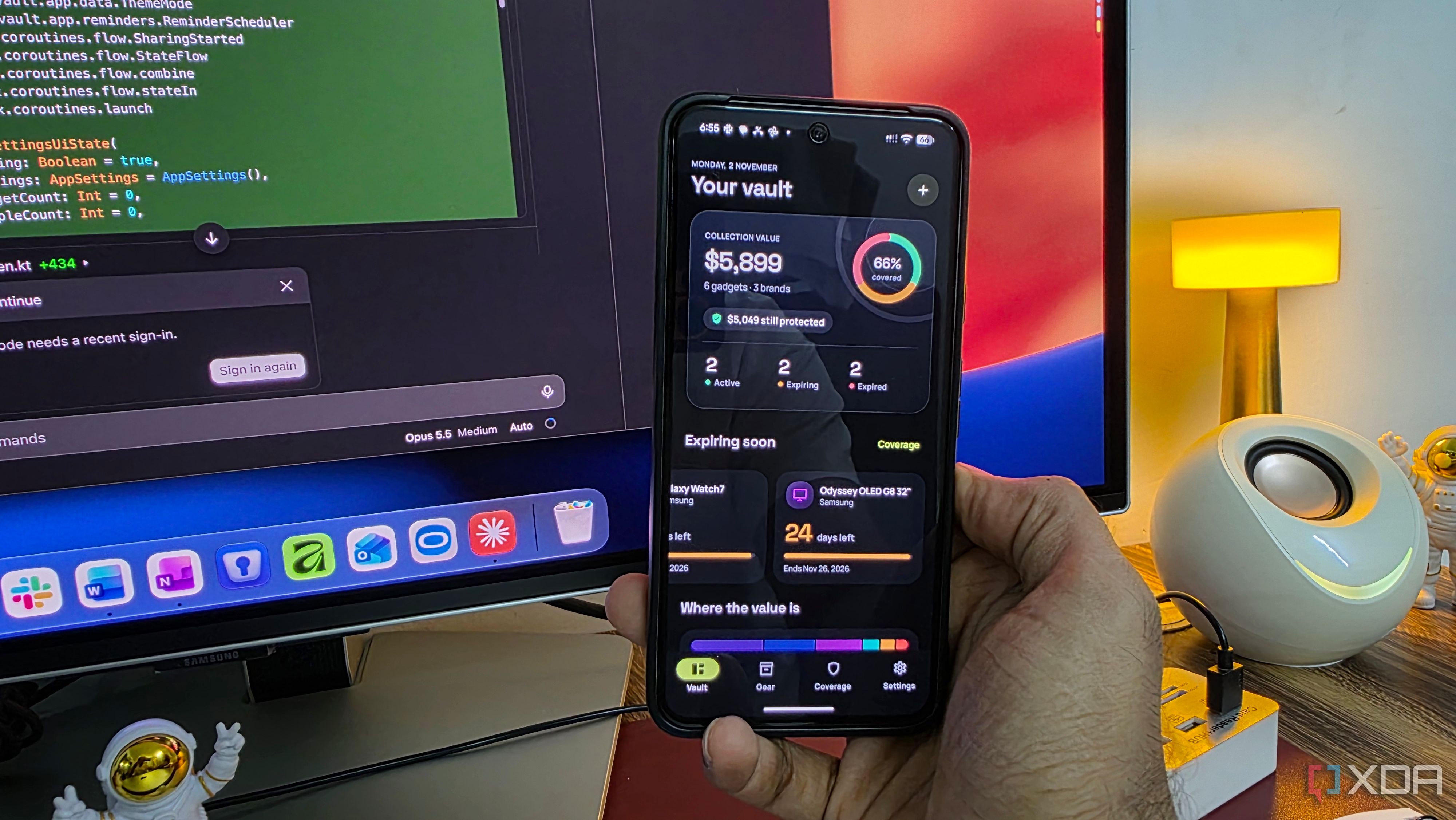
Upon testing the capabilities of Claude Code, OpenAI Codex, and Google Antigravity in building the same Android app, it became clear that each AI coding agent had distinct strengths and weaknesses. To ensure a fair comparison, the default AI model was used for each coding tool: Claude Opus 5.5 in Claude Code, GPT-6 Astra in Codex, and Gemini 3.8 in Google Antigravity.
The same detailed prompt outlining the desired features, such as a polished Material 3 interface, gadget inventory, warranty management, local storage, notifications, and other essential functionalities, was provided to all agents. The agents were given complete creative freedom to design the app's layout, colors, navigation, and overall appearance.
After the experiment, Claude Code emerged as the clear winner, delivering an Android app that surpassed the others in terms of usability and polish. Its layout was clean and modern, with a visually appealing light green color scheme that complemented the Pixel 8 and Galaxy S25 Ultra home screens. The app featured a well-organized Vault section, which received praise for its attention to detail and thoughtful animations.
While it lacked some of the creativity seen in the other agents' designs, Claude Code's final product felt like a premium Android app, earning a score of 7 out of 10.
Google Antigravity took a different approach with a light blue color scheme, resulting in an interface that was clean and modern. However, the app struggled with numerous bugs as more gadgets were added to the inventory. Some device listings failed to open properly, and certain interactions, such as clicking the Dashboard tab, became unreliable. These issues made Antigravity's app feel less trustworthy and less enjoyable to use, ultimately resulting in a lower overall score.
OpenAI Codex's app boasted a refreshing light green color scheme and a dashboard layout that was easy to navigate. However, it fell short in several areas. The Vault section could have benefited from more polish, and the app icon generated by Codex appeared out of place on the home screen. Additionally, the app exhibited minor glitches when adding more gadgets to the inventory, which diminished the overall user experience.
Despite these shortcomings, Codex still delivered a functional and polished Android app, earning a score of 7 out of 10.
In conclusion, while AI coding tools have made significant strides in generating fully functional Android apps, the quality of the final product can still vary greatly. Claude Code's app stood out for its attention to detail, polished design, and reliable functionality, making it the clear winner of this experiment. However, it is essential to remember that building an app that is not only functional but also enjoyable to use is a more complex challenge that each AI agent must overcome to achieve true mastery.
Written by urgent.news from XDA Developers's reporting — not their text. Machine-written — may contain errors; check the original before relying on it.