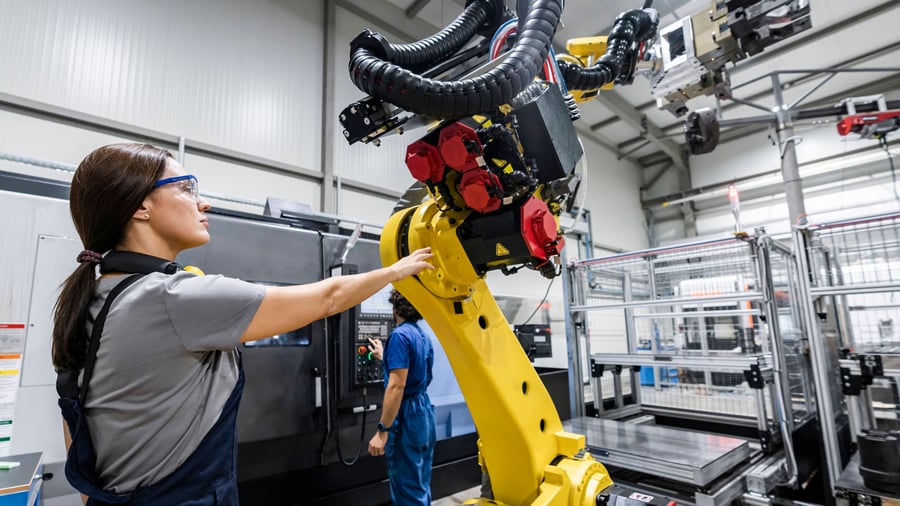
How might women be reintroduced into the science community they helped create?
Stephanie Buttigieg and Gregory Cooke of the University of Cambridge and Skyla White of the University of Bern discuss how the women who changed the scientific landscape should be recognised for their work.
Women who made groundbreaking scientific discoveries have been overlooked in school curricula for too long. In a new study led by researchers at the University of Cambridge and IncludeHer, scientists analysed over 40 science specifications across the UK. They discovered that although these early stages of science education are crucial, the omissions of women in the field are a persistent issue.
Half of British people cannot name a single woman scientist, and this invisibility sends a message to girls that science is not for them.
The study examined the specifications for six main exam boards for GCSEs and A-levels, as well as for Scotland’s National fives and Highers. Across 224 unique scientists referenced in UK specifications, discoveries were taught almost exclusively through concepts named after men, with only three mentioning women in total. Notable women like Inge Lehmann, Marie Tharp, and Rosalind Franklin were cited in A-level Geology and biology specifications for their significant contributions, yet their names were not attached to these breakthroughs.
At GCSE level, Marie Curie is the only woman mentioned in physics and chemistry, while Lise Meitner is mentioned in physics but only appears in one of the two A-level biology specifications. Each of these women made crucial discoveries that shaped our understanding of the world, yet they are not represented in the compulsory science curriculum.
By introducing one female scientist per subject into existing compulsory topics, schools can make inclusion standard practice. For example, teaching GCSE astronomy could include Jocelyn Bell Burnell, who discovered pulsars, and biology classes could highlight Dorothy Hodgkin, the only British female Nobel laureate in science. Chemistry classes could teach about Stephanie Kwolek, the inventor of Kevlar, and physics classes could include Annie Jump Cannon when discussing star classification.
These small changes would send a powerful message to the next generation that science belongs to everyone, regardless of gender. By showcasing these women's contributions, we can inspire girls to pursue careers in science and foster a more inclusive scientific community.
Written by urgent.news from Silicon Republic's reporting — not their text. Machine-written — may contain errors; check the original before relying on it.