Happy 65 Years: NASA’s Johnson Space Center Then and Now
Sixty-five years ago, a bold vision took root in Houston: a NASA center dedicated to human spaceflight. Since its founding, NASA’s Johnson Space Center has helped lead the nation’s human spaceflight program, supporting missions from Project Mercury through Artemis. Today, Johnson serves as NASA’s Center of Excellence for Human Spaceflight, and its workforce is helping […] The post Happy 65 Years:…
On May 25, 1961, President John F. Kennedy delivered a groundbreaking speech before a joint session of Congress, declaring the nation's commitment to landing a man on the Moon and returning him safely to Earth before the decade's end. NASA's Space Task Group, already working on Project Mercury, faced the daunting challenge of a human lunar landing, prompting the agency to establish a dedicated field center for human spaceflight.
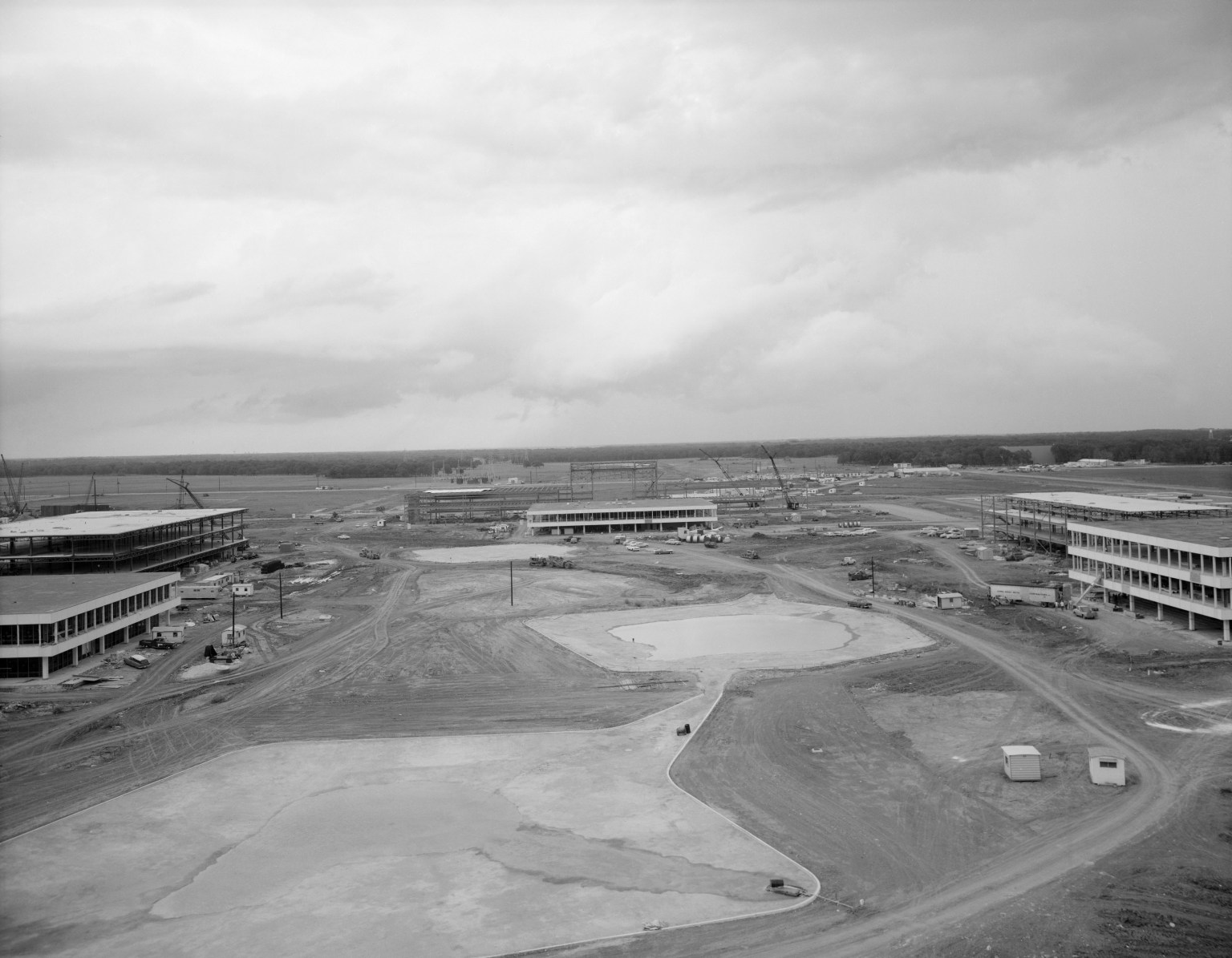
On September 19, 1961, after evaluating multiple locations, NASA announced the construction of the new Manned Spacecraft Center in Houston, Texas.
Construction of the center, initially named the Manned Spacecraft Center, commenced in November 1961, while employees worked in 13 leased buildings in southeast Houston. The design phase took six months, followed by an 18-month construction period of the first buildings. Employees moved onto the new site in late 1963, and the center officially opened on November 1, 1961.
In 1973, the center was renamed NASA's Lyndon B. Johnson Space Center in recognition of President Johnson's unwavering support for America's space program.
Today, Johnson Space Center stands as NASA's Center of Excellence for Human Spaceflight, playing a pivotal role in pioneering space exploration. The center houses America's astronaut corps, the Mission Control Center, and the teams responsible for some of humanity's greatest achievements in space. As NASA's human spaceflight programs evolve, Johnson remains at the forefront of these endeavors, continuing to push the boundaries of space exploration and discovery.
Written by urgent.news from NASA's reporting — not their text. Machine-written — may contain errors; check the original before relying on it.
This story
This is one outlet's version. Read the fullest account.