Fisheries Minister pushes reforms to tackle illegal fishing, boost transparency
Fisheries Minister Emelia Arthur has outlined reforms to curb illegal fishing, protect artisanal fishers, and work towards lifting the EU yellow card.
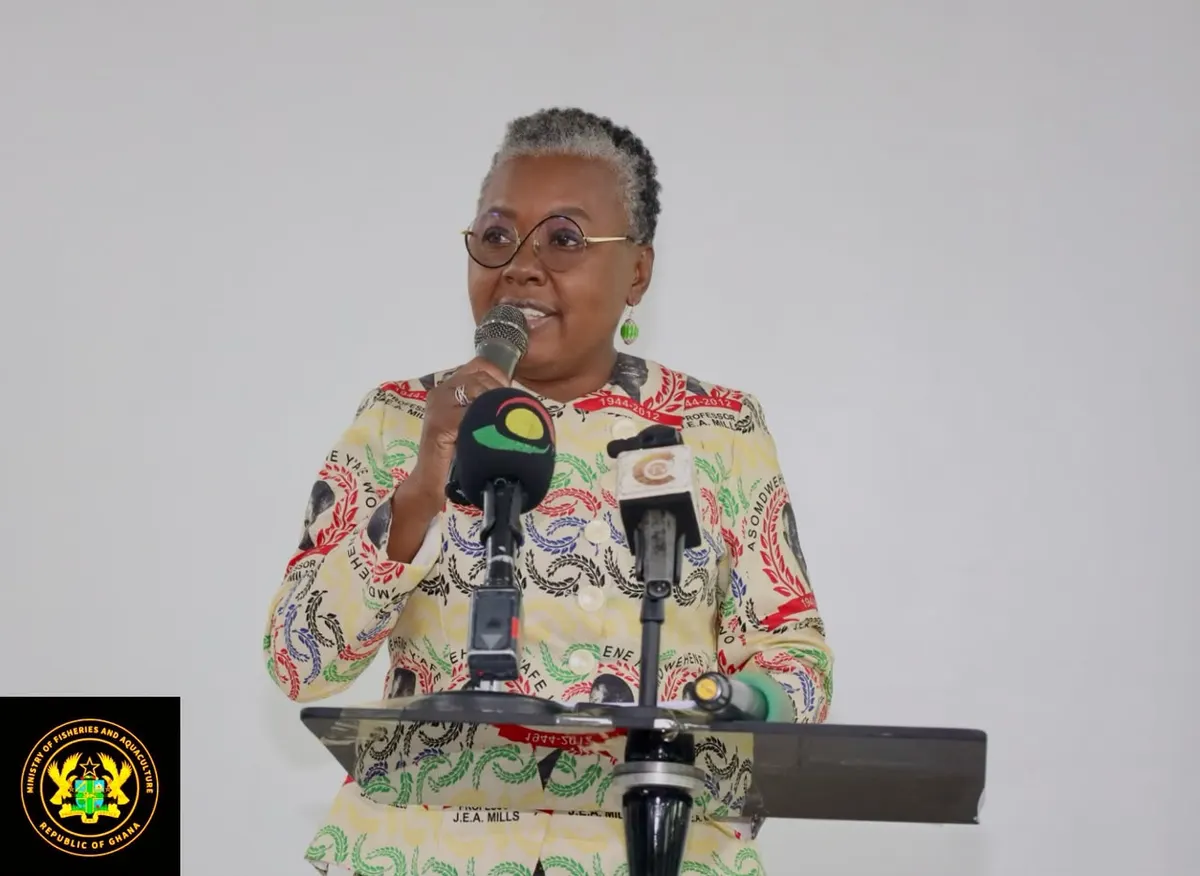
Ghana's Fisheries Minister, Emelia Arthur, is spearheading a series of reforms aimed at curbing illegal fishing practices, enhancing transparency, and bolstering coastal livelihoods. During the 37th session of the Food and Agriculture Organization's Committee on Fisheries in Rome in September, Arthur outlined the government's legal reforms, expanded protection for artisanal fishers, and a marine conservation program as key components of an agenda to safeguard food security and create economic opportunities.
She underscored that fish is crucial not just as a staple on Ghanaian dinner plates but as the backbone of national food security and coastal livelihoods.
Arthur's advocacy extends beyond domestic reforms, as she presented Ghana's application for Fisheries Transparency Initiative (FiTI) Implementing Country status at the Rome meeting. The reforms include stronger maritime enforcement, dedicated aquaculture zones, and extending the Inshore Exclusion Zone from six to 12 nautical miles to shield artisanal fishing operations from industrial trawlers.
She also called for international partnerships to integrate scientific knowledge with investment, technology, and opportunities for fishing communities, aligning with Ghana's 10-year Blue Economy Action Plan.
The recognition of Ghana's transparency reforms by FiTI took place in August, following a professional, participatory, and inclusive application process. FiTI acknowledged progress in publishing fisheries information through the Ministry's new Fisheries Information System but noted that much of the needed information for transparent fisheries management remained inaccessible. Ghana is required to publish its first FiTI report by August 2027, with subsequent annual reports.
Emelia Arthur emphasized the centrality of community interests in the government's marine conservation agenda. The declaration of the Greater Cape Three Points Marine Protected Area in April was described as the start of a new social contract between people and the sea. She credited government agencies, researchers, fisheries associations, civil society organizations, and development partners for the initiative's technical work and community engagement.
The Greater Cape Three Points Marine Protected Area aims to support fish stock recovery, restore damaged ecosystems, and enhance the resilience of coastal communities.
Despite these reforms, Arthur acknowledged that Ghana still faces compliance concerns, particularly in addressing the European Union's yellow card warning for illegal, unreported, and unregulated fishing. She highlighted the establishment of the Fisheries Enforcement Unit as a key institution for surveillance and action against illegal fishing.
Arthur also connected Ghana's marine, inland fisheries, and aquaculture plans to increased production, employment, and food security, seeking cooperation with France in research, investment, and fisheries security.
Written by urgent.news from 3News's reporting — not their text. Machine-written — may contain errors; check the original before relying on it.
This story
This is one outlet's version. Read the fullest account.