Fake nuclear threat alert sent to Ukrainians after emergency app hacked
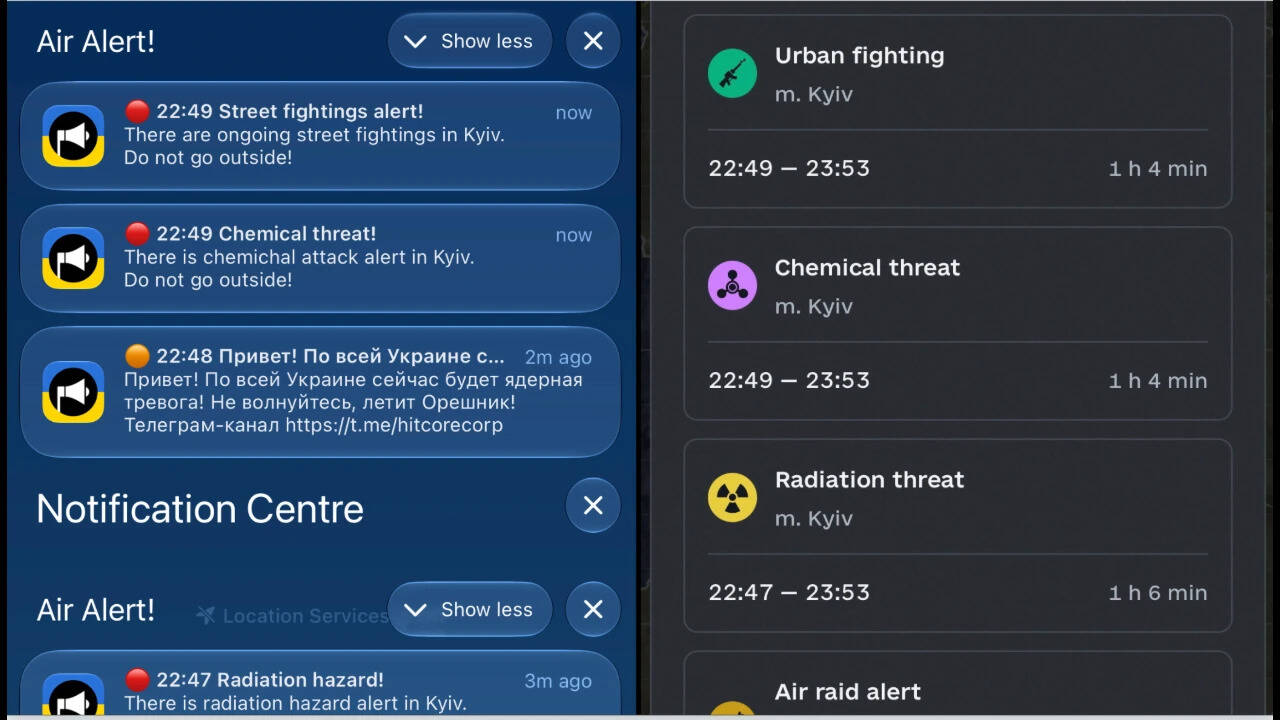
Ukrainians have become accustomed to the constant alerts on their phones and throughout their communities, warning of Russian drones and missiles. On Sunday night, the system issued a series of more extreme threats, including nuclear attacks, chemical attacks, and street fighting. However, many people did not take these warnings seriously and were skeptical of their validity.
Sofia Kochmar, a 34-year-old mother of one in Lviv, was initially alarmed by the "nuclear" warning but quickly realized the message was unlikely to be true. The alerts contained some Russian language and a link to a Telegram channel, likely belonging to a hacker group. Within 15 minutes, Ukraine's Air Force released a statement declaring the alert app had been compromised and there was no radiation threat.
It took over an hour to issue "all clear" messages. Ballerina Anastasiia Romanytska, 29, living in Kyiv, questioned the authenticity of the warnings but felt the stress response that came with them. Cybersecurity expert Yevhen Baliutov from Kyiv School of Economics confirmed that the Ukrainian alert system was hacked by Russians.
The informal language used in the hoax alerts pointed to hacktivist groups, which could be aligned with either side but are not formally directed by governments. Baliutov suggested that Ukraine might retaliate with a cyber-attack on the Russian emergency alert system. Though the incident had limited impact, it exposed weaknesses in a crucial system.
Cybersecurity expert Baliutov emphasized that such applications must prioritize security from the start, as millions of people rely on them. The Ukrainian authorities had been struggling to maintain public alertness throughout the four and a half years of war, with constant warnings occurring sometimes hourly. Now, they must reassure people that the systems in place to protect them are robust, trustworthy, and should be followed.
Written by urgent.news from BBC World's reporting — not their text. Machine-written — may contain errors; check the original before relying on it.
This story
This is one outlet's version. Read the fullest account.
- Fake warnings of nuclear attack posted on hacked Russian and Ukrainian emergency apps egyptindependent.com
- Fake warnings of nuclear attack posted on hacked Russian and Ukrainian emergency apps gbcghanaonline.com
- Fake nuclear warning from hacked app sparks unease but not panic in Ukraine bbc.co.uk
- Russian and Ukrainian hackers hijack emergency apps to spread fake nuclear attack warnings therecord.media
- Fake nuclear warnings in Ukraine as Moscow, Kyiv report separate cyberattacks on emergency apps cnbc.com