Cyanide ponds from illegal mining threaten Amazon Indigenous territory
With mercury increasingly hard to get, illegal gold miners have turned to a cheaper, deadlier alternative.
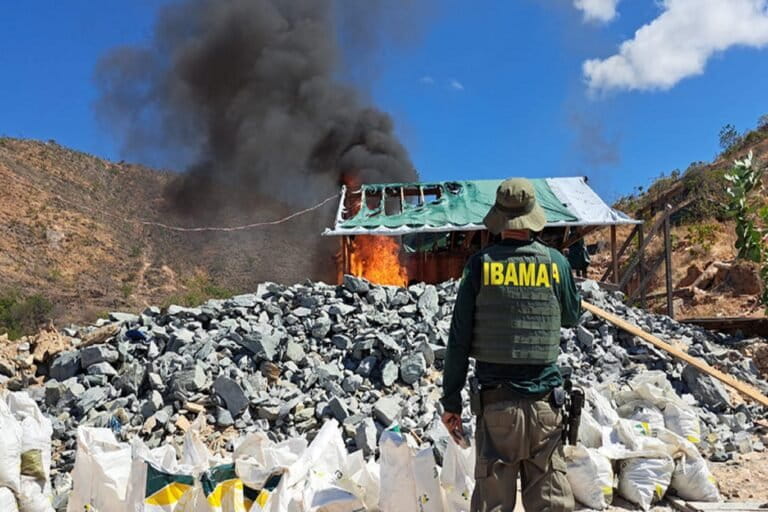
Gold miners in the Brazilian Amazon are using cyanide, a highly toxic substance, to extract gold, posing a significant threat to the Raposa Serra do Sol Indigenous Territory in Roraima state. The territory, which is home to Indigenous people and wildlife, has been invaded by illegal miners who employ cyanide to dissolve gold from crushed ore.
This process results in ponds of cyanide-contaminated water, posing a grave danger to the environment and the Indigenous population. In July, the Federal Police arrested two men and seized approximately 375 kg of a chemical compound suspected to be cyanide, along with 1,250 kg of activated charcoal, a substance used in gold processing in Roraima.
The seizures are believed to be linked to illegal gold mining activities in the Indigenous territory. A year earlier, in July 2024, the Federal Police shut down an illegal laboratory in Boa Vista, the state capital, where rocks thought to be from gold mining and areas contaminated with cyanide were discovered. These rocks were reportedly transported from the Raposa Serra do Sol to Boa Vista for gold-washing and separation.
Traditionally, illegal miners have used mercury to extract gold, a toxic substance whose trade is illegal in Brazil. However, due to intensified environmental raids, the availability of mercury on the black market has significantly decreased. As a result, the cost of mercury has skyrocketed, making it prohibitively expensive for miners.
Consequently, illegal miners have turned to cyanide as an alternative, further exacerbating the threat to the Raposa Serra do Sol Indigenous Territory and the surrounding environment.
Written by urgent.news from Mongabay's reporting — not their text. Machine-written — may contain errors; check the original before relying on it.