Colombia’s Security Policy: What Does It Mean to ‘Militarize’ a City?
The decision by Colombian President Abelardo de la Espriella to order the militarization of Cucuta and consider a similar measure for some neighborhoods in southern Bogotá has reignited the debate over the role of the military in urban security. The initiative aims to strengthen the state’s presence in areas affected by crime, drug trafficking and […]
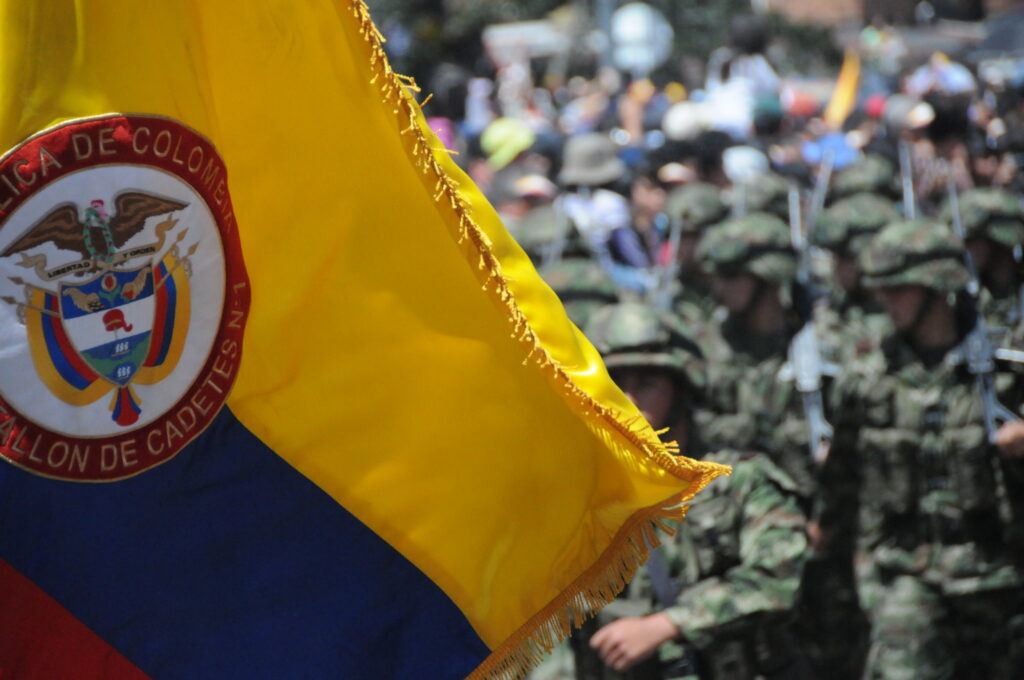
De la Espriella's decision to militarize Cucuta and potentially other areas in Colombia has sparked discussion about what it truly means to employ military forces in urban settings. The term "militarization" refers to the deployment of soldiers and military capabilities within cities to assist law enforcement agencies in combating crime, drug trafficking and violence linked to armed groups.
Militarizing a city does not equate to imposing military rule or removing civilian authorities from control. Rather, it involves integrating the military into urban security operations alongside the police, such as joint patrols, checkpoints, surveillance and counter-terrorism efforts. The nature of military involvement can vary greatly, from minor support roles to more extensive operations in high-risk zones.
When the Army steps into a city, the streets transform. Soldiers assume a more visible presence, conducting patrols, setting up checkpoints, monitoring critical routes, aiding searches and security checks, and collaborating with police in the pursuit of criminal elements. However, the core distinction lies in the specific duties assigned to each institution.
In Colombia, the National Police is responsible for safeguarding rights, ensuring public order and preserving peaceful coexistence. The Military Forces, encompassing the Army, Navy and Air Force, are constitutionally mandated to protect the nation's sovereignty, independence, territorial integrity and constitutional order. Their participation in cities should be viewed as temporary support for civilian and police authorities, not a permanent replacement for the police.
De la Espriella's directive in Cucuta, announced on October 29, 2026, calls for a temporary Army deployment pending the restoration of public order. This decision was made in response to security incidents, including the assassination of a local government official and a bombing at a customs facility, which resulted in injuries. President De la Espriella emphasized that the initiative aims to regain control and achieve tangible results, rather than simply demonstrating military presence.
The president also unveiled plans for the Esparta campaign and the Urban Security Operations Bloc (BOSUR) to kick off on November 3, focusing on intensifying operations against criminal organizations, apprehending their members and disrupting their financial operations. De la Espriella clarified that the deployment is not merely a show of force but a concerted effort to restore control and deliver meaningful outcomes.
While Cucuta has become the focal point of this militarization, Bogotá's mayor, Carlos Fernando Galan, has voiced concerns over preserving the distinct roles of the police and ensuring that military personnel do not supplant law enforcement officers tasked with maintaining public safety. De la Espriella promised to personally oversee the implementation and coordination of these measures, assuring the local population that their security is a top priority.
Written by urgent.news from Colombia One's reporting — not their text. Machine-written — may contain errors; check the original before relying on it.