Clean energy investments helped India soften West Asia crisis impact: PM Modi
Inaugurating Bharat Renewable Energy Summit & Expo, Narendra Modi says India’s economy continued to grow despite the crisis; warns that excess dependence on fossil fuels could risk increased exposure to global disruptions
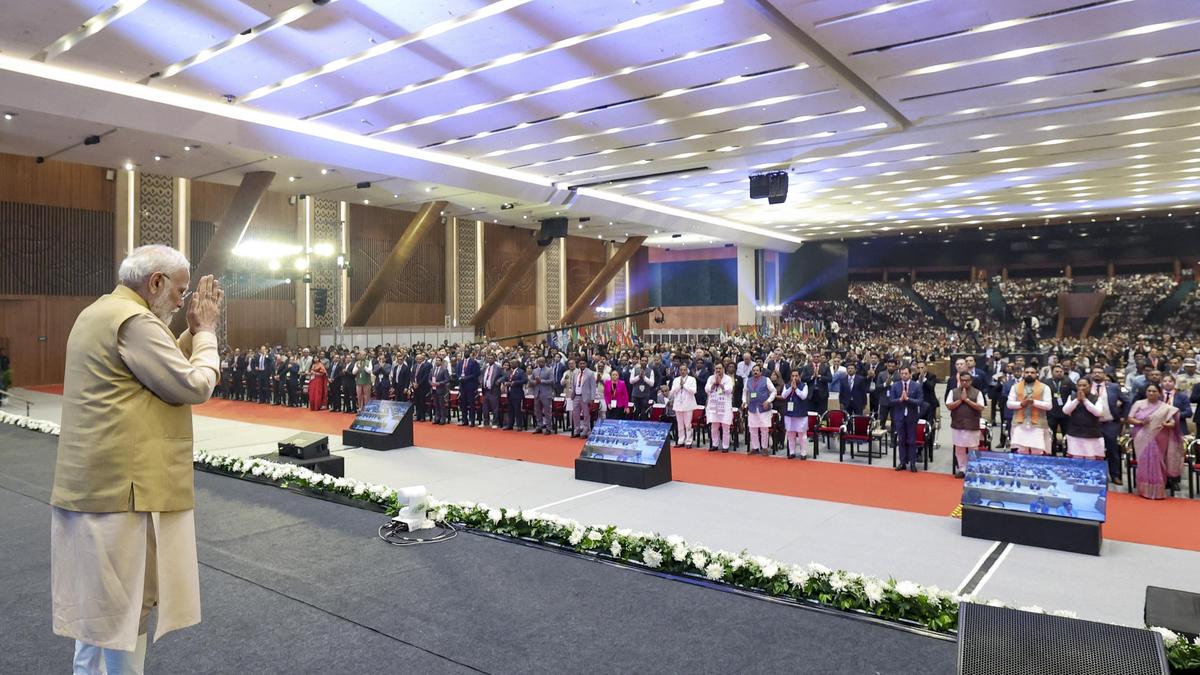
New Delhi: Prime Minister Narendra Modi addressed the opening of the Bharat Renewable Energy Summit & Expo (2026) in New Delhi, highlighting how investments in renewable energy could mitigate the impact of the West Asia crisis on India. According to the Prime Minister, had India not made significant investments in clean energy, the crisis's effects would have been far more severe than experienced globally. Despite the crisis, India's economy has continued to grow.
Modi elaborated on India's ambitious goal to achieve 500 GW of installed power capacity from non-fossil fuel sources by 2030. Solar power, which cost almost ₹10 per unit in 2014, now sells for as low as ₹2.15 thanks to the ecosystem established under the vision to promote clean energy. The Prime Minister warned that over-reliance on fossil fuels could expose India to global disruptions, emphasizing that energy security is directly linked to economic security, and the future of energy security lies in clean energy.
The Prime Minister forecasted that the renewable energy sector would attract about $220 billion in investment by the end of the decade, offering abundant opportunities for investors. He further stressed the importance of innovation in the next phase of the solar revolution. Stating India as a "solar superpower," UN Climate Change Executive Secretary Simon Stiell praised India's transition to fossil-fuel-free energy, noting that clean energy now accounts for half of its installed power capacity.
Modi envisioned a scenario where every Indian would be able to afford electric vehicles and charge them using solar energy, thereby saving considerable money. He also highlighted the potential for solar adoption in sectors such as dairy, animal husbandry, and farming. India's solar module manufacturing has expanded from 2 gigawatts to 200 gigawatts in a decade, with the capacity for manufacturing solar cells growing to about 40 gigawatts.
Modi emphasized the need for further enhancement of indigenous manufacturing of other critical components.
To achieve a green power transition by the fiscal year 2030, India requires $220 billion. Addressing the press curtain raiser of the summit, Sarangi mentioned that India has already secured $64 billion in private investment in the renewable energy sector. Currently, 44,000 government buildings in India are powered by solar energy, saving a total of about ₹700 crore annually.
Written by urgent.news from The Hindu's reporting — not their text. Machine-written — may contain errors; check the original before relying on it.