China's robot makers have mastered the moves. Now comes the race for brains
The shift is fuelling an investment boom in embodied AI, a field focused on software that allows robots to understand their surroundings, learn unfamiliar tasks and adapt without having to be programmed for every job.
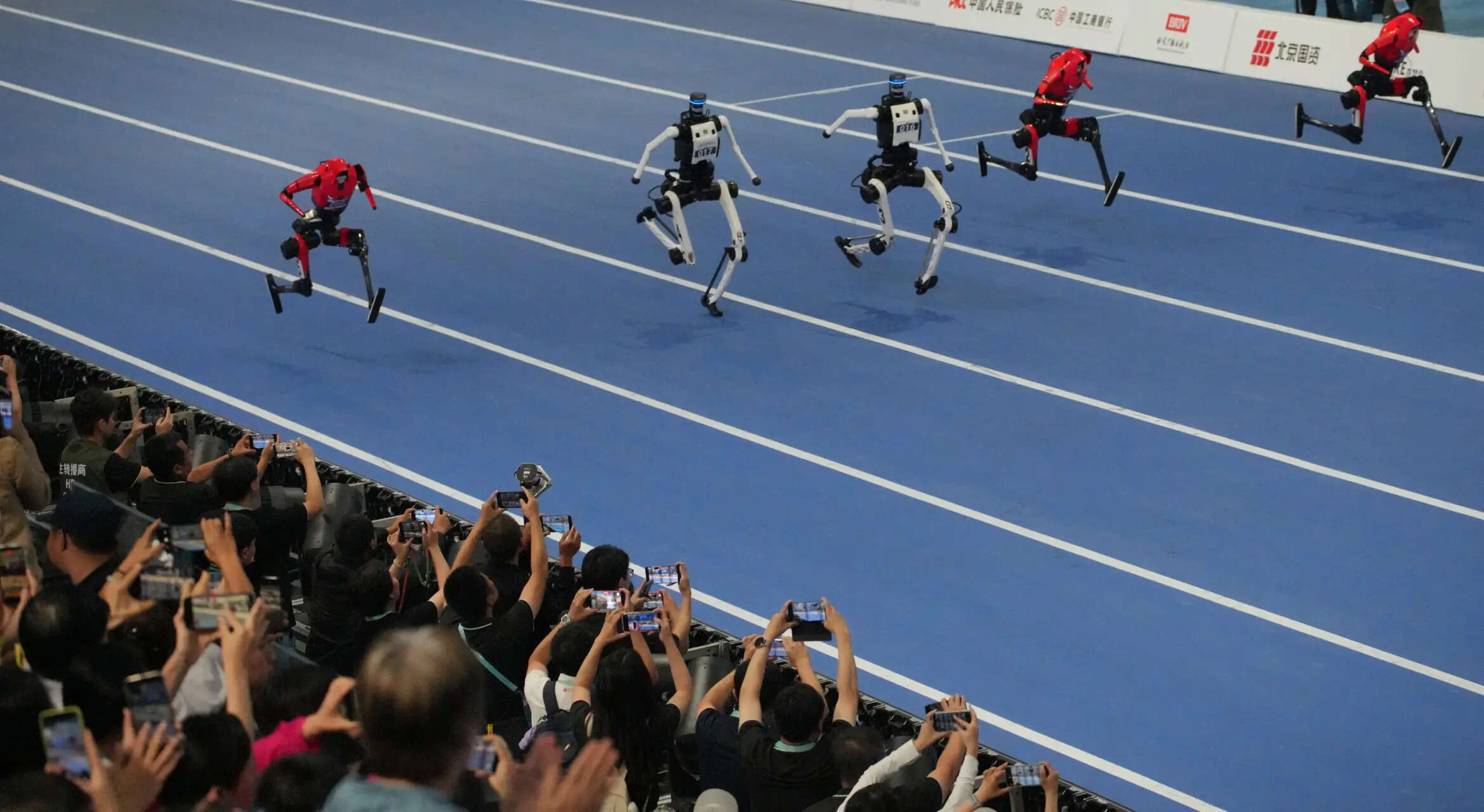
China's humanoid robot manufacturers have achieved impressive feats in terms of mobility, such as running, dancing, and performing acrobatics. However, the next step for these companies is to develop the artificial intelligence (AI) that will enable their machines to perform a wider range of tasks in various industries. This shift towards embodied AI is driving a surge in investment, with Chinese companies raising 93.5 billion yuan ($13 billion) across 322 deals in the first half of 2026 - five times the amount raised a year earlier.
The focus is on software that allows robots to comprehend their environment, learn new tasks, and adapt without being pre-programmed for each job.
Funding is increasingly reaching specialist developers of robot intelligence alongside manufacturers. As hardware prices decline, industry experts believe the competitive advantage will lie in the intelligence "brain" of the robots rather than their hardware. This development is intensifying the US-China tech rivalry, with American companies currently leading in some advanced robot AI systems. However, Chinese developers leverage their manufacturing prowess and access to real-world data to challenge the US competitors.
A significant bottleneck in the development of embodied AI is the "brain" of the robot - the AI software. While American startups, such as Physical Intelligence, Skild AI, and Generalist, are developing software capable of teaching robots new skills without extensive retraining, Chinese companies are also making headway. For instance, Generalist claims its GEN-1.5 model can complete around 60% of simple tasks after just a 3-12 second demonstration.
Chinese firms X Square and Spirit AI have demonstrated robots learning handling skills from a single human video demonstration, without the need for retraining the model for each task.
US developers have a technical edge due to advanced AI research and access to powerful computing chips. In contrast, Chinese companies can collaborate closely with robot manufacturers and industrial customers to test and refine their systems. Specialist Chinese startups, including X Square, Galaxea, and Spirit AI, have reached valuations of roughly $3 billion each.
Manufacturers are also investing heavily in AI development. Hong Kong-listed UBTech has appointed a chief scientist to oversee AI model development, and Hangzhou-based Unitree is developing AI that predicts how objects will behave, with approximately 30 researchers dedicated to this task. However, Chinese robot firms must navigate challenges, such as limited access to advanced Nvidia chips due to US export controls and a reduced IPO landscape due to regulatory concerns.
Despite these hurdles, Chinese developers are making significant strides in the field of embodied AI, which could lead to advancements in industrial automation and reshape the global robotics market.
Written by urgent.news from Economic Times Tech's reporting — not their text. Machine-written — may contain errors; check the original before relying on it.
This story
This is one outlet's version. Read the fullest account.
- China’s robot makers have mastered the moves. Now comes the race for brains investing.com
- Meta reportedly built a humanoid robot prototype that can do household chores engadget.com
- China’s robot makers have mastered the moves. Now comes the race for brains. japantimes.co.jp
- Meta builds humanoid robot with Chinese startup Fourier: Report thehindu.com