China’s 5,000-ton digging machines are a trade war risk to India
China is tightening export controls on tunnel-boring machines and other specialised construction equipment, raising concerns that the restrictions could disrupt India's infrastructure projects, particularly along the disputed Himalayan border.
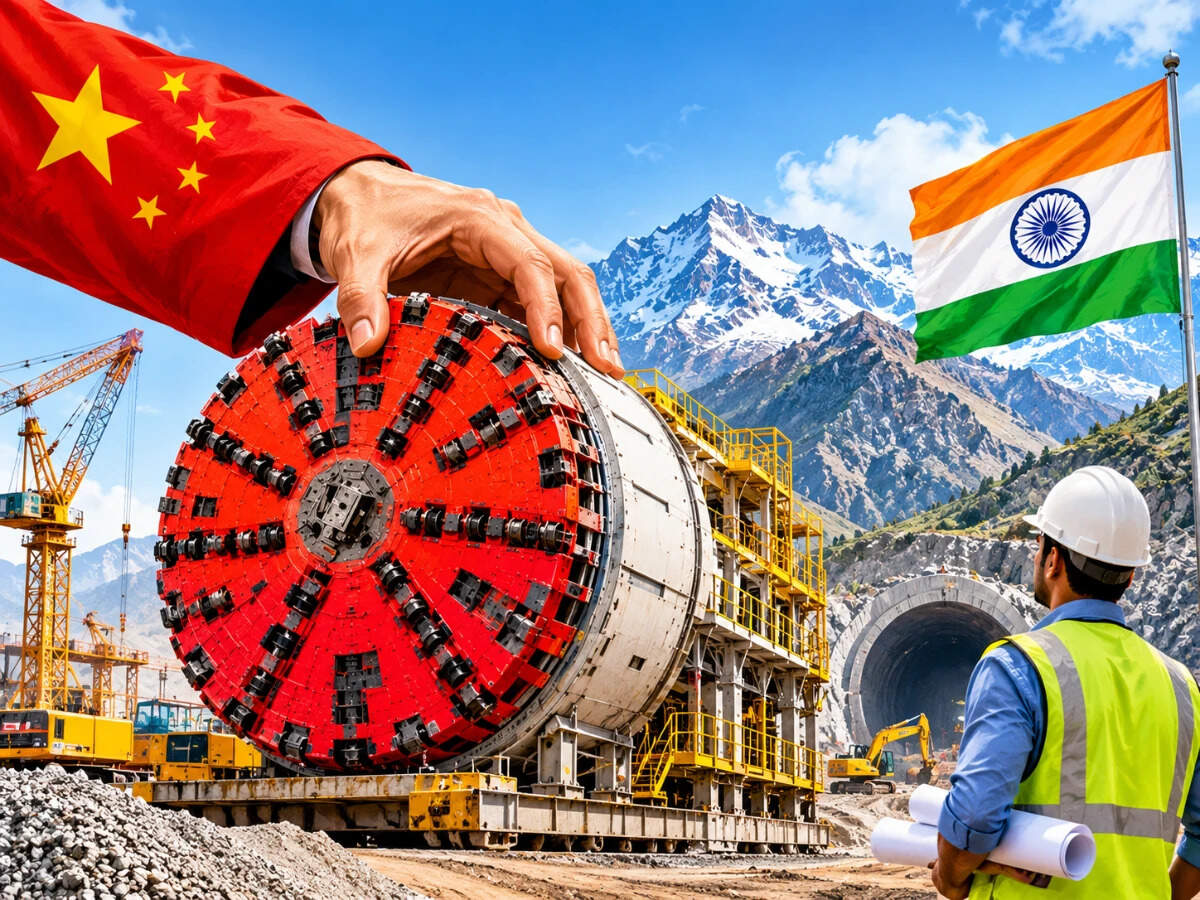
China's near-monopoly on rare earths has given it significant bargaining power, and now, Beijing is looking to repeat this strategy in the construction equipment industry. Specifically, China has imposed export controls on tunnel-boring machines, some of the world's largest and most complex industrial devices, which are used to build subways and drill through mountains. These machines are predominantly produced in China, making India, a major customer, susceptible to the new regulations.
While China's dominance in this industry may seem like an obvious chokepoint, it is not absolute, and other countries are looking to break free from China's grip. Kyle Chan, a fellow at the Brookings Institution, points out that Beijing's growing recognition of its position as a key global producer of construction equipment in strategic terms raises concerns about dependency and incentivizes other countries to try to de-risk from China.
However, changing this dynamic in the short term is challenging, especially given the ongoing conflicts in Ukraine and Iran, which have highlighted the growing military importance of underground facilities.
The new curbs also apply to other construction equipment, including machines for spraying concrete at high altitudes. Beijing invoked the potential for dual use in both military and civilian projects, applying stricter rules to "sensitive countries and regions with disputes with China." For India, tensions on the Himalayan border have flared recently, with the country building railway lines and roads in the area to reduce troop mobilization times.
These projects, including tunnels, could be impacted by the new controls on specialized construction equipment.
However, China's tightening export control regime could also strengthen India's position as an alternative manufacturing base, according to Chetna Kumar, a Geoeconomics Analyst for South Asia. Foreign equipment makers have an incentive to add capacity in large markets like India. The inclusion of high-altitude machinery in the restrictions may suggest particular attention to strategically sensitive terrain, where Chinese engineering capabilities could strengthen another country's military infrastructure.
China has flexed its muscle as the chief exporter of tunnel-diggers in the past. In 2024, Beijing delayed efforts by Germany's Herrenknecht AG to sell its manufacturing facilities in China to India for projects like the Ahmedabad-Mumbai bullet train and the Delhi metro. For India, the new restrictions on components of these machines could also impact existing stocks and procurement of new ones.
While China's restrictions could be a boon for some alternative manufacturers, such as those in the US and Japan, India's immediate switch to domestic equipment is difficult due to the scale of production and cost. Nevertheless, India is investing heavily in tunneling infrastructure and considering incentives for local manufacturers. However, with China producing tunneling gear for 36 countries, including Denmark and France, India may face challenges in competing on cost.
Written by urgent.news from The Economic Times - Economy's reporting — not their text. Machine-written — may contain errors; check the original before relying on it.
This story
This is one outlet's version. Read the fullest account.