Cape Coast Communique: Democracy Is Not For Sale
ISSUED BY THE DEMOCRACY NOT FOR SALE PROJECT (JOYNEWS IMPACT MAKERS FOUNDATION, IN PARTNERSHIP WITH ADOM BRANDS /MULTIMEDIA GROUP) CAPE COAST — FRIDAY, OCTOBER 30, 2026 This communiqué is issued following the Democracy Not for Sale dialogue held at the Centre for National Culture, Cape Coast, on Friday, October 30, 2026, at 4:00 PM. The […]
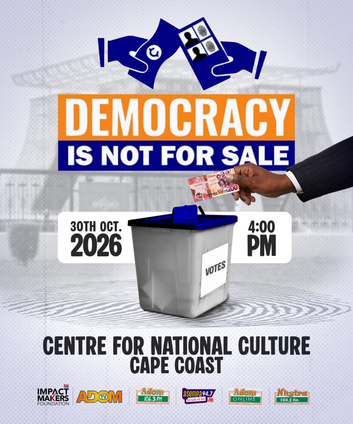
Cape Coast Communique Marks Third Dialogue on Democracy and Finance
The Democracy Not for Sale project, a collaboration between JoyNews Impact Makers Foundation and Adom Brands, held its third dialogue in Cape Coast on October 30, 2026. The event brought together civic education experts, electoral administrators, academics, local government officials, and political party representatives to examine the influence of money on Ghana's democratic processes.
Field Survey Results in Cape Coast
The field survey of Cape Coast residents revealed that 99% of respondents were aware of vote buying, with 27.5% having personally witnessed a candidate offering money or gifts for votes. Awareness of vote buying varied by occupation, with the highest levels among the 51+ age group (71.5%) and the lowest among the 18-25 age group (1%).
The survey also found that younger voters (18-25) rated money's influence on election outcomes as low (10.31%), while older voters rated it as high (50% for the 36-50 age group and 50% for the 51+ age group). Despite the perception of high influence among the younger demographic, 91.7% of respondents said they would vote for a candidate with less money but better ideas.
Financing Political Campaigns
The survey found that 74% of respondents believed government money or taxpayer funds were the primary hidden financier of political campaigns, followed by politicians' personal savings (29%), wealthy businessmen (11%), and organized crime or illicit groups (8%).
Public Confidence and Perceived Solutions
Across all age groups, respondents expressed near-universal confidence that Ghana's laws exist but are not enforced. When asked what would most effectively stop "democracy for sale," 46% of respondents said nothing could be done, the highest response in the project's history. Other perceived solutions included improving the standard of living (37%) and imposing strict jail time for vote-buyers and vote-sellers (29%).
Dialogue Insights
The dialogue panel discussed various factors contributing to vote buying, including economic hardship, greed, a weak regulatory framework, and a trust deficit among citizens. Panelists suggested strengthening internal party discipline and sanctions against candidates and members engaging in vote buying, as well as promoting genuine resolve within political parties to deter the practice.
Written by urgent.news from Adom Online's reporting — not their text. Machine-written — may contain errors; check the original before relying on it.