Canada tests noisy drones as hundreds of polar bears prepare to gather
As hundreds of polar bears gather near Churchill in Canada, conservationists are testing noisy drones to move them away from populated areas. They are also developing AI-powered cameras to detect approaching bears and installing electric fencing at a waste facility. The measures aim to protect people and animals as climate change delays sea ice formation, increasing the risk of encounters.
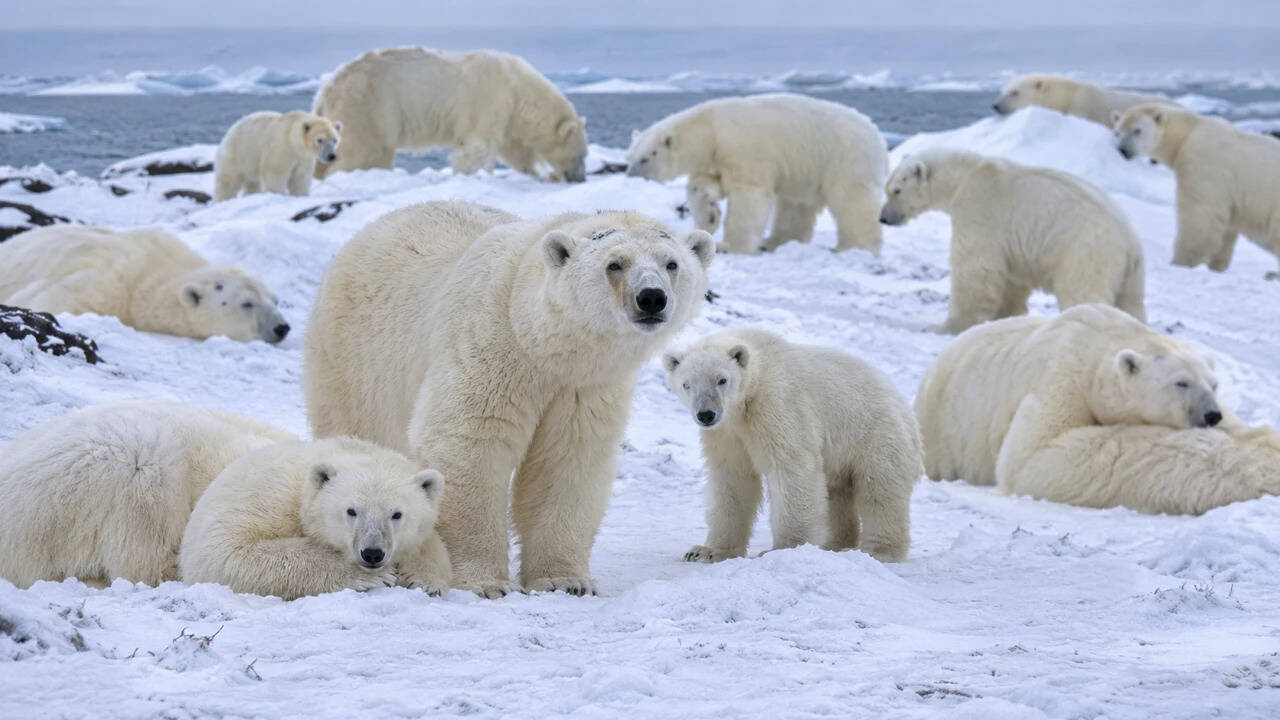
As polar bears prepare for their annual gathering near the Canadian town of Churchill in Manitoba, conservationists are testing innovative methods to ensure the bears' movement remains safe. Temperatures are falling, and the animals are waiting for Hudson Bay to freeze, which typically takes longer due to climate change. This annual movement puts them in close proximity to local residents, leading to the development of various deterrents.
One such initiative involves the use of noisy drones to guide the bears away from populated areas. Brigham Young University in Utah, in collaboration with Polar Bears International (PBI), is researching the effectiveness of these drones as a non-lethal means of managing bear-human encounters. The drones emit sounds that encourage the animals to move in a different direction, allowing researchers to guide their movement without physical intervention.
Another project focuses on an AI-powered warning system called Bear-vision. Installed at Churchill's waste facility, this system combines radar and cameras to detect approaching polar bears and send alerts to nearby residents and workers. The technology aims to identify bears before they come too close, reducing unexpected encounters.
Electric fencing is also being installed at the waste facility to prevent bears from entering the area, where they may be drawn by the scent of garbage. Researchers are exploring various deterrents, such as ultrasonic sound, conductive materials, and a new odour-based bear spray formula to discourage bears from approaching residential areas.
The urgency of these efforts is underscored by the declining population of polar bears in western Hudson Bay, which has dropped by nearly half since 1979 due to climate-driven sea ice loss. Polar bears rely on sea ice for hunting, and delayed freezing forces them to remain on land longer, increasing the risk of human interaction. Polar Bear Week, which coincides with the annual gathering, highlights ongoing conservation efforts to improve the coexistence between humans and these majestic creatures.
Written by urgent.news from Times of India's reporting — not their text. Machine-written — may contain errors; check the original before relying on it.