Auto parts industry in panic over New Energy Vehicle policy
The Auto and Auto Parts Policy 2026-31 has turned into a mystery. Multiple drafts are circulating, yet no one outside close government circles knows the exact contents of the document, which was approved “in principle” by Prime Minister Shehbaz Sharif in early September and forwarded for “IMF review” late last month. The country’s 1,200 auto parts manufacturing companies, which employ 300,000…
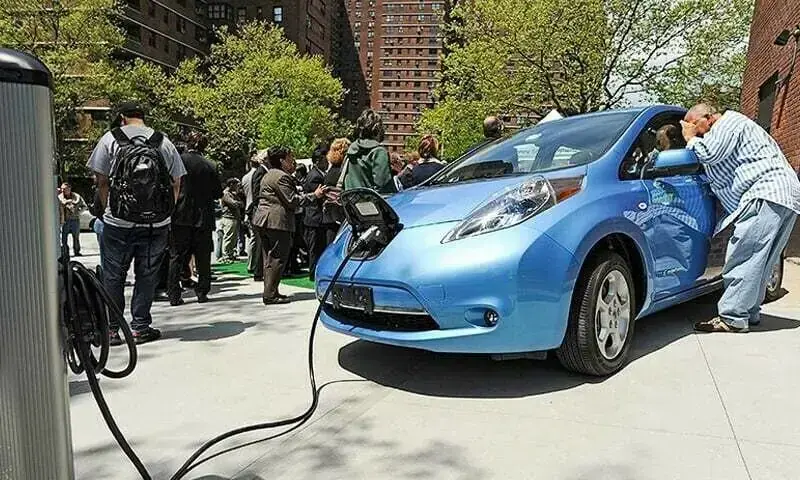
The Auto and Auto Parts Policy 2026-31 has caused widespread alarm among Pakistan's auto manufacturing sector. The policy, approved by Prime Minister Shehbaz Sharif in September, is yet to be fully disclosed. The 1,200 auto parts manufacturers in the country, which provide employment to 300,000 people directly and 1.8 million indirectly, are anxious following the leak of multiple drafts of the policy.
The draft policy acknowledges the sector's significance, citing $4 billion in foreign and domestic investment and $6 billion in domestic production. It represents 4.5% of the nation's large-scale manufacturing, supports 1,200 auto parts manufacturers, and contributes Rs600 billion in annual tax revenue.
The policy highlights three structural challenges: the lack of domestic parts integration in New Energy Vehicles (NEVs) and recent vehicles, stagnated export revenues at $190 million, and a significant cost of production disadvantage compared to regional peers.
Despite claiming a 40% year-on-year increase in production, the policy overlooks the fact that domestic demand is lower than it was two decades ago. This is in contrast with Indonesia, where auto demand grew by 279% over 11 years due to improved security, stable GDP growth, and increased consumer purchasing power.
To tackle the sector's challenges, the policy proposes several objectives including boosting exports through integration into Global Value Chains (GVCs), promoting NEV adoption, lowering automobile prices, enhancing quality, protecting consumer interests, encouraging innovation, and increasing transparency. It also plans to benchmark these proposals against other countries, significantly reduce tariffs to bring Pakistan's weighted average tariff below 6% by 2030, and increase local value addition to reduce imports.
However, these proposed measures contradict the policy's objectives. For instance, the aggressive reduction in Completely Built Unit (CBU) duties from 120% to 15% by 2031 will likely lead to massive imports, increasing unemployment and straining Pakistan's current account. Similarly, subsidised NEV imports with low sales taxes will conflict with the goal of domestic industrialization.
Other shocks include the phasing out of localised parts for conventional ICE vehicles, blocking future localisation, disincentivizing NEV localization, and weak domestic value addition requirements for NEV assemblers. These measures, while noble in intent, pose significant challenges to the domestic auto manufacturing industry.
Written by urgent.news from Dawn Business's reporting — not their text. Machine-written — may contain errors; check the original before relying on it.