Asia's factory activity feels fading glimmer of AI boom
TOKYO: Factory activity across Asia continued to expand in October but growth slowed in major chip exporters, private surveys showed on Monday, suggesting the AI boom may be losing momentum as markets start to question the sector’s profitability. The data points to growing strains on export-led economies as prolonged conflict in the Middle East keeps fuel and food prices elevated, hitting…
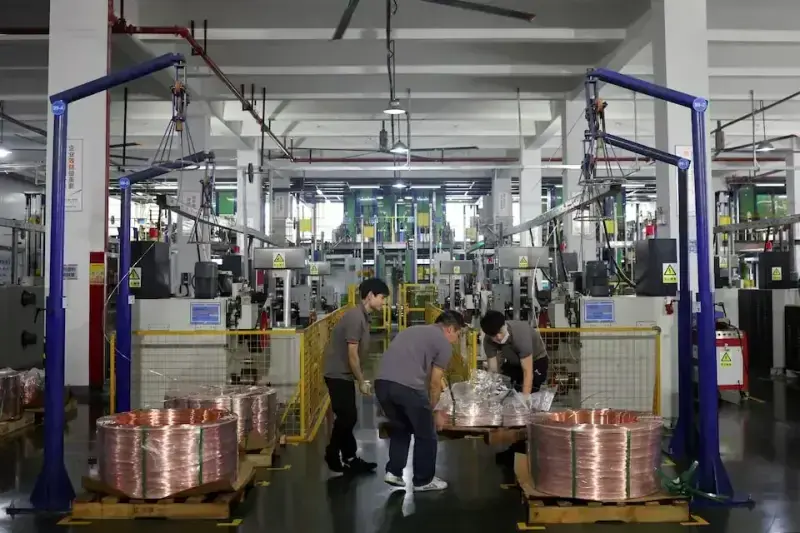
TOKYO – Factory activity across Asia expanded in October, according to private surveys released on Monday, but growth slowed in major chip exporters. The data suggests that the AI boom might be losing steam as markets begin questioning the sector's profitability. Prolonged conflict in the Middle East continues to raise fuel and food prices, which are dampening consumption and business confidence, even as demand for chips and AI-related goods remains robust.
Manufacturing activity in China, Japan, South Korea, and Taiwan all slowed, according to the surveys. Toru Nishihama, chief emerging market economist at Dai-ichi Life Research Institute in Tokyo, noted that strong chip and AI demand had masked economic weaknesses, but that dynamic is becoming harder to maintain with the ongoing Middle East war driving up fuel and food costs.
The RatingDog China General Manufacturing Purchasing Managers' Index (PMI) for October was 52.0, slightly down from 52.1 in September, indicating growth but not as strong as before. The PMI also showed China's factory activity contracting for the third consecutive month in October. Nguyen Hoang Nam, a China economist at Capital Economics, said that while foreign demand for Chinese goods remains resilient, there are concerns about the slowdown in construction activity and the dwindling confidence in fiscal support.
Japan's PMI dipped to 53.3 in October from 54.1 in September, marking the slowest expansion in seven months. South Korea's PMI fell to 51.3 from 53.9 in September, showing the weakest growth in eight months. Taiwan's PMI also decreased to 54.9 from 56.7 in September. Some countries, such as Vietnam, Indonesia, and Malaysia, reported stronger-than-expected factory activity growth in October.
The International Monetary Fund projects that Asia's economic growth will decelerate next year, with an expected expansion of 4.8% in 2026 and 4.4% in 2027, both lower than the 5.0% growth seen in 2025.
Written by urgent.news from Business Recorder's reporting — not their text. Machine-written — may contain errors; check the original before relying on it.
This story
This is one outlet's version. Read the fullest account.