As AI solves maths puzzles faster than humans, mathematicians face uncertain future
Artificial intelligence (AI) is now solving maths puzzles that have long stumped humans, prompting mathematicians around the world, including in China, to ponder not only whether machines will replace them, but also what achievement and research in their field will mean in the future. In early October, OpenAI released manuscripts showing progress on 372 categories of mathematical problems,…
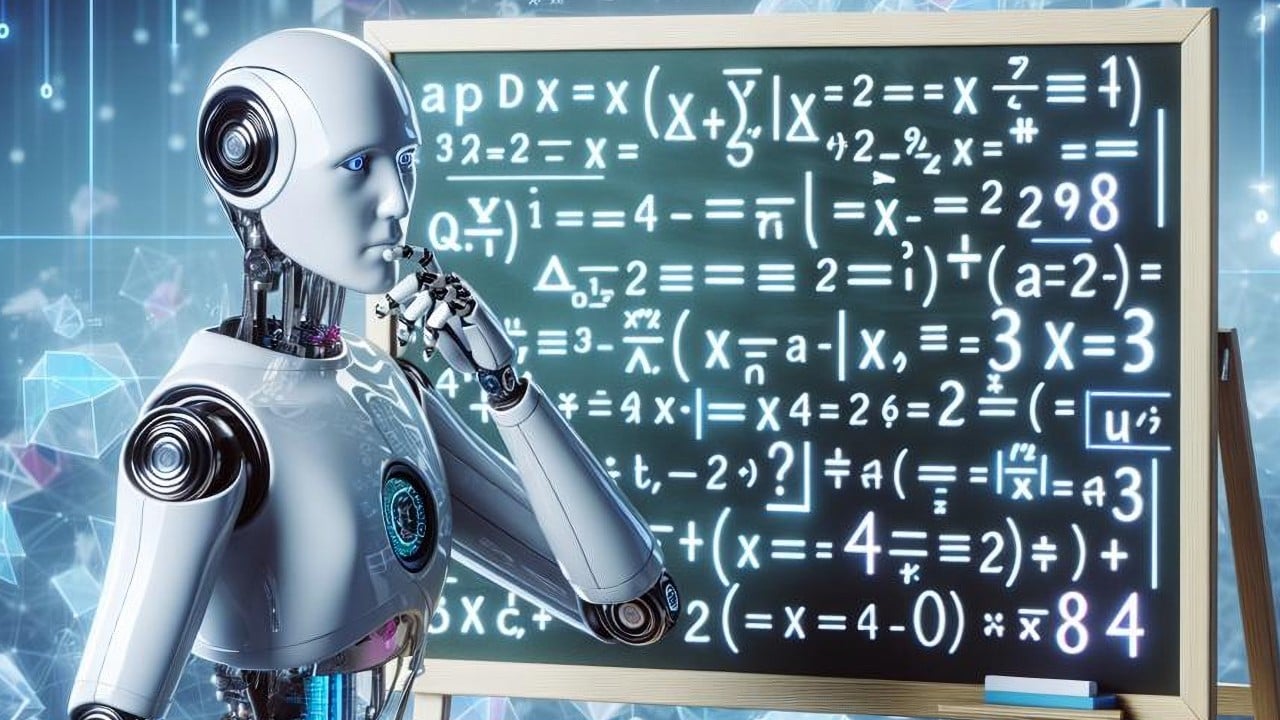
Artificial intelligence is now outpacing humans in solving complex mathematical problems, leaving mathematicians to grapple with a shifting landscape. In October, OpenAI revealed breakthrough results across 372 categories of mathematical challenges, some of which had long remained unsolved. Since then, AI-generated findings are being reviewed by human teams in various fields. The implications of this rapid advancement have sparked intense debate within the mathematical community.
Reactions have been mixed, with some mathematicians like Terence Tao, a Fields Medal winner, expressing concern that AI-generated solutions undermine the traditional pursuit of discovery. Tao likened it to "strip mining" of previous research. He and 24 other Fields Medal winners have cautioned that shortcuts could compromise the way mathematics is learned and passed down. They believe AI-created proofs should be developed and integrated by humans.
Chinese mathematicians share similar concerns. Shing-Tung Yau, from Tsinghua University, is spearheading an alliance of over 1,000 scientists to develop AI models tailored for mathematics. He sees AI as a "tsunami" that the country is lagging behind the U.S. in. Yau argues for strict standards - theorems must adhere to the same proof requirements as top-tier mathematics journals - regardless of AI's role in their creation. Authors would need to clarify the contribution of AI and how any AI-generated claims were verified.
Others in the field see AI as a valuable tool. Babak Haghighat, a German-Iranian mathematician at Tsinghua University, views AI as a powerful resource that could connect previously inaccessible areas of study. He believes some AI breakthroughs could be considered as worthy of a Fields Medal. Haghighat warns that large AI companies' dominance of the most advanced models could widen the gap between countries.
He calls for Chinese universities and mathematicians to collaborate on developing AI models, suggesting current Chinese models excel in programming but not mathematics.
On the more optimistic side, experts like Grant Sanderson, creator of the 3Blue1Brown YouTube channel, argue that the best time to learn mathematics may have arrived. With AI helping to provide solutions, researchers can now focus on developing deeper theories. Sanderson compares the current state of AI-assisted mathematics to weightlifting - while machines may lift heavier than humans, the human effort remains invaluable.
Written by urgent.news from South China Morning Post's reporting — not their text. Machine-written — may contain errors; check the original before relying on it.