Analysis-BOJ locks in December hike, but neutral-rate uncertainty muddies outlook
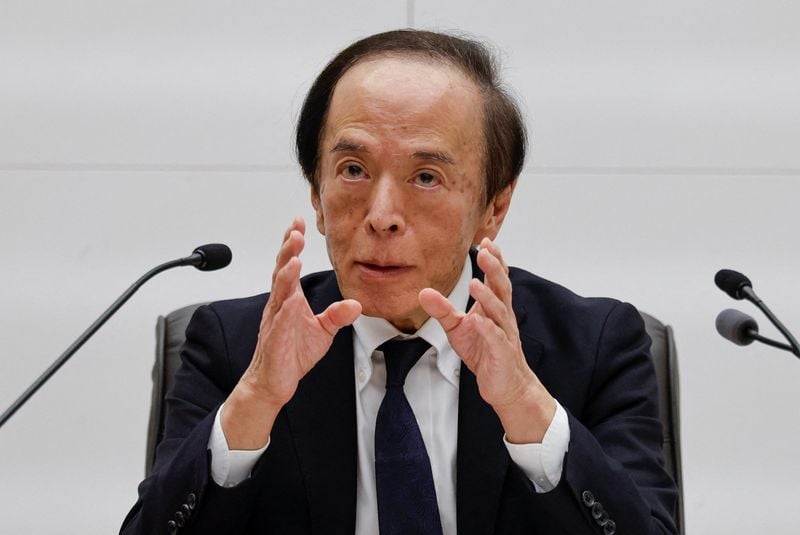
The Bank of Japan (BOJ) has firmly indicated its intention to hike interest rates in December, but investors are left uncertain about how much further the central bank may go once rates approach the neutral territory. Governor Kazuo Ueda has made it clear that a December hike is highly likely, but the precise trajectory beyond that point remains ambiguous.
The BOJ has declared victory in its 14-year campaign to hit its price target and is now focused on avoiding an inflation overshoot, emphasizing its hawkish stance. During a recent meeting, Ueda stated that the BOJ plans to delay the rate hike decision by a bit more, echoing similar remarks made in July before the latest rate increase in September. Furthermore, the BOJ will likely discuss policy decisions focusing on upside price risks during the upcoming meeting, suggesting a probable hike to 1.5% by December.
Japan's economy grew at an annualized rate of 1.4% in the second quarter, with firms continuing to increase spending despite challenges posed by geopolitical tensions. In September, core inflation reached 2.1%, surpassing the BOJ's 2% target as rising price pressures outpaced the mitigating effects of fuel subsidies. Former BOJ official Nobuyasu Atago, now the chief economist at Rakuten Securities Economic Research Institute, believes a rate hike in December is almost certain, while the next-year outlook is less clear.
The main source of uncertainty for the BOJ is its limited confidence in determining the country's neutral rate, which neither accelerates nor decelerates the economy. BOJ staff calculations suggest a nominal neutral rate ranging between 1.1% and 2.5%, which serves as a guide for the extent of borrowing cost increases. However, the BOJ has been cautious about disclosing the exact level, as the neutral rate is not directly observable and can vary depending on the chosen models.
Ueda highlighted the need to monitor the effects of higher borrowing costs on both corporate and household lending, despite warning about potential price pressures. While acknowledging that smaller firms are experiencing tighter lending conditions, Ueda maintains that overall financial conditions remain accommodative. The challenge of neutral rate uncertainty is more pressing for the BOJ compared to other central banks due to Japan's relatively low policy rate of 1.25%.
Japan's prolonged experience with deflation since the 1990s has left households and businesses unusually sensitive to higher rates, a risk that the BOJ considers worthy of caution. The central bank's unfamiliarity with an economy accustomed to ultra-low rates now facing sustained monetary tightening adds another layer of complexity to the decision-making process.
With no consensus among the board members on the optimal rate hike trajectory, the BOJ is likely to maintain its distance from the neutral rate, paving the way for a potential 1.75% hike by March next year, followed by a potential pause.
Written by urgent.news from Investing.com's reporting — not their text. Machine-written — may contain errors; check the original before relying on it.
This story
This is one outlet's version. Read the fullest account.