Ana Mendieta's Lasting Imprint on Art
A major survey at Tate Modern asks us to take notice of the earth, the power of the female body, and the artist’s remarkable practice.
Ana Mendieta's groundbreaking art leaves an indelible mark on the world of creativity. Her Siluetas, a series of photographic works, often go unnoticed but are expertly crafted. One from 1979 depicts a faint human form etched into mud at a dried-up riverbed, while another from 1978 reveals a delicate outline of a woman against the trunk of a tree, surrounded by delicate foliage.
This major exhibition at Tate Modern, however, urges viewers to appreciate the significance of Mendieta's art: the profound connection to the earth, the strength of the female form, and the artist's extraordinary talent. The exhibition breaks away from a linear timeline, grouping works based on their physical and symbolic locations.
Exhibited in places like The Grove, The School, and The Sacred Grounds, it highlights the site-specific nature of Mendieta's work, showcasing how individual pieces engage with personal, environmental, or spiritual contexts.
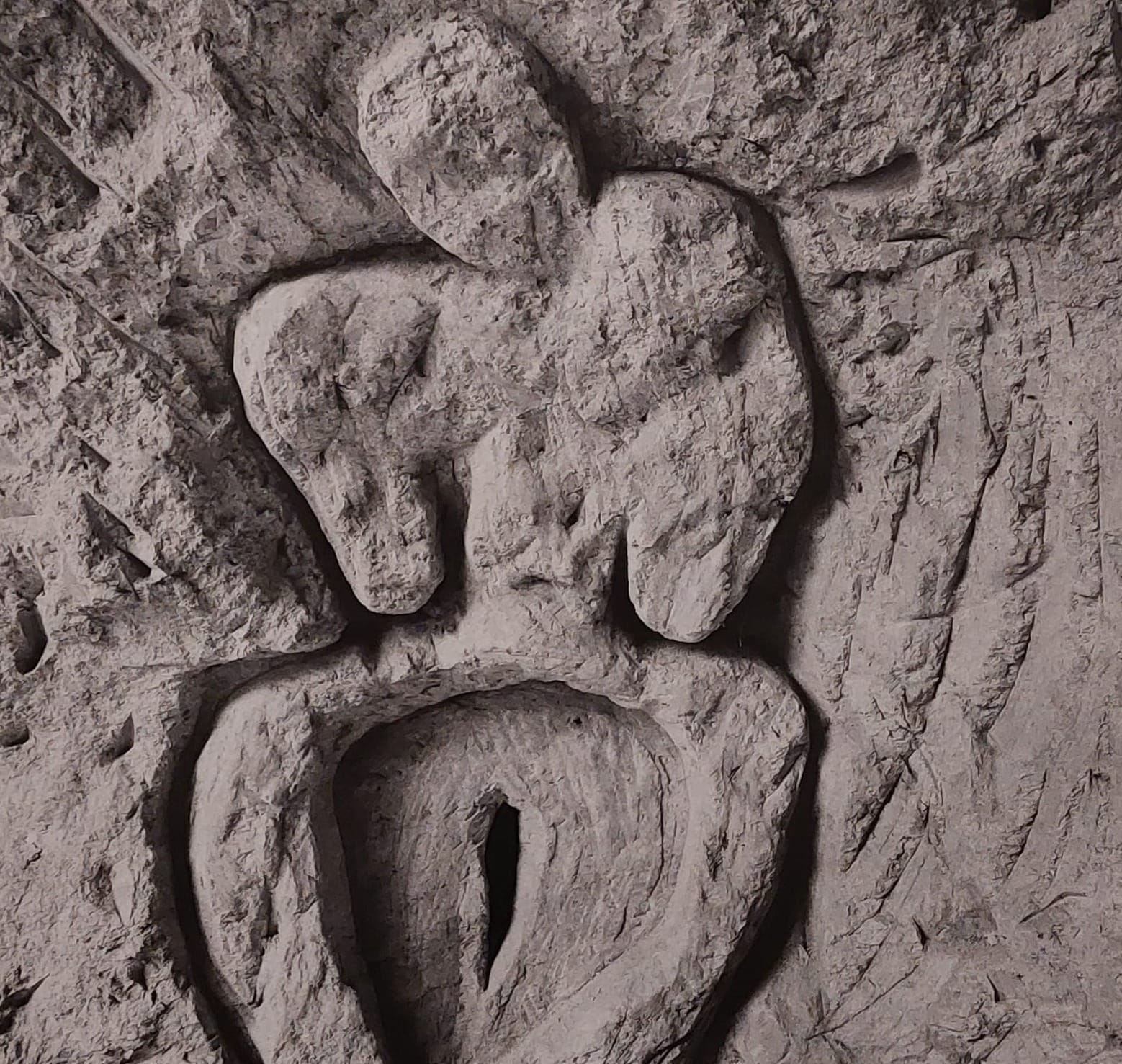
The exhibition commences with "The Cave," showcasing Mendieta's late 1980s works, including her final video piece "Ochún" and a collection of "rupestrian" sculptures inspired by ancient rock art. Unlike her well-known Siluetas, these later pieces are more abstract and open-ended. Here, the female figures are not derived from Mendieta's own body but rather are drawn from natural elements like rocks and prehistoric representations of goddesses.
Written by urgent.news from Hyperallergic's reporting — not their text. Machine-written — may contain errors; check the original before relying on it.