A Cold War blueprint for today’s nuclear dangers
U.S. President Donald Trump wants a three-way summit with his Russian and Chinese counterparts to talk about nuclear weapons and denuclearization.
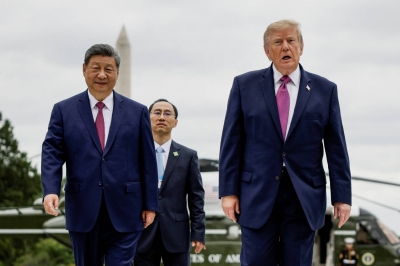
U.S. President Donald Trump has expressed interest in a three-way summit with Russian President Vladimir Putin and Chinese President Xi Jinping during their upcoming gathering in Shenzhen for an economic forum. This meeting could potentially take a dangerous turn, with Trump and Xi Jinping allegedly plotting to subjugate Ukraine under Putin's control. Alternatively, a positive outcome could pave the way for a comprehensive process towards nuclear detente among the United States, Russia, and China.
Trump claims his motivation for the trilateral meeting is not solely focused on Ukraine, but rather to address nuclear weapons and denuclearization issues. To better understand the potential implications of such discussions, we can look to a historical example from the 1970s - a visit by West German Chancellor Willy Brandt to Moscow.
Brandt's visit, known as the Ostpolitik, aimed to normalize relations between West Germany and the Eastern Bloc countries, including the Soviet Union. This diplomatic move led to the Helsinki Accords in 1975, which established principles for peaceful coexistence and the eventual easing of tensions between the East and West.
While the situation today differs from that of the 1970s, Trump could draw valuable lessons from Brandt's approach. By fostering dialogue and cooperation between the major powers, particularly in the realm of nuclear disarmament, there is potential for a more stable and secure world order. Trump's words should be taken seriously, and the prospects of a trilateral summit should be approached with both caution and optimism, drawing inspiration from historical precedents of successful diplomatic efforts.
Written by urgent.news from Japan Times's reporting — not their text. Machine-written — may contain errors; check the original before relying on it.