US daylight saving time ends: Why does America still change clocks twice a year? The 1918 history behind the practice
The practice is followed across most US states and the twice-yearly clock change has remained controversial, with lawmakers continuing to debate whether the country should adopt daylight saving time throughout the year.
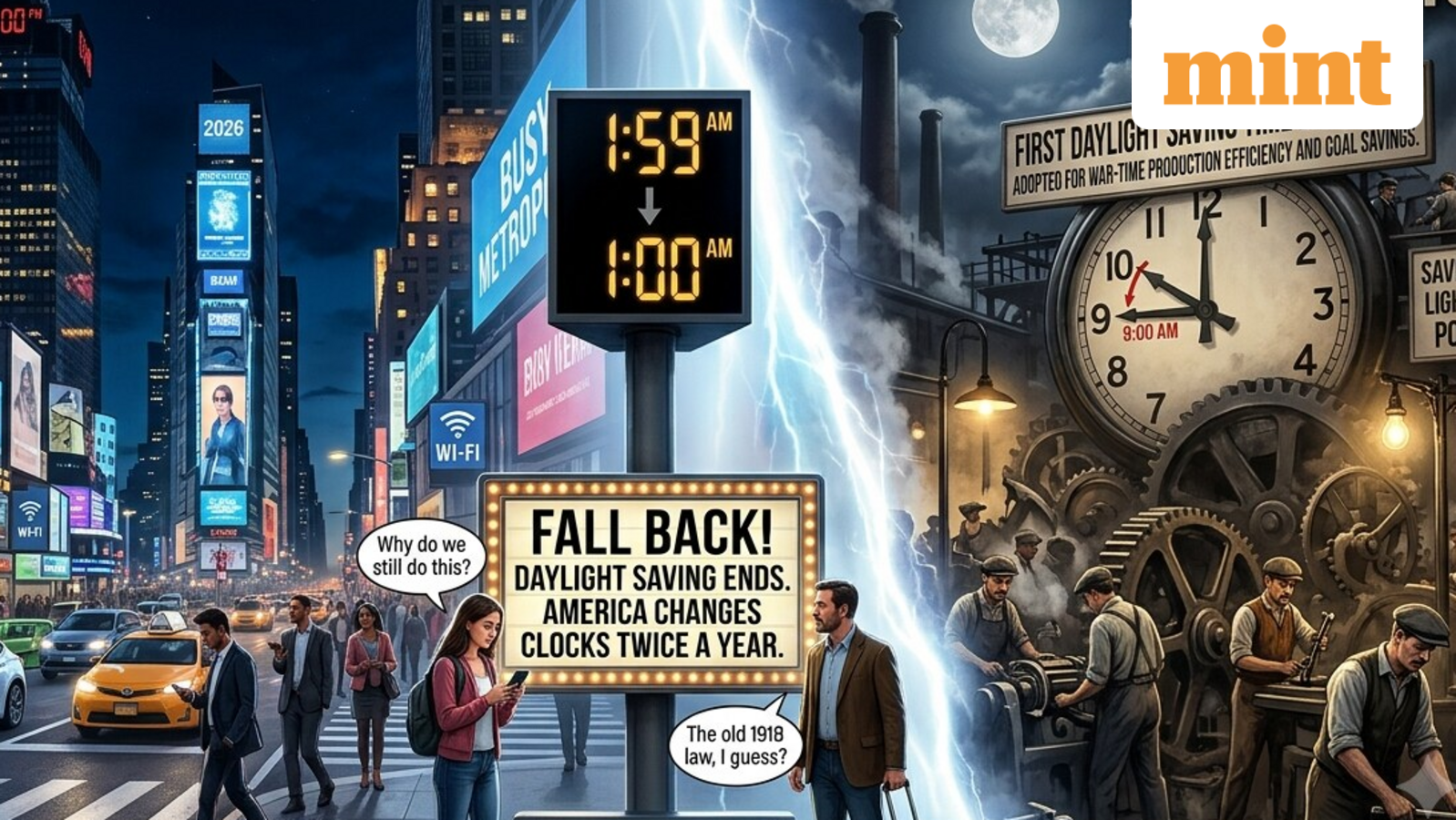
On November 1, 2026, Americans set their clocks back one hour as daylight saving time officially ended for the year. This marked the return to standard time after months of longer evening daylight. The practice, often referred to as "falling back," takes place after the clocks are moved forward by an hour in March. The intention behind daylight saving time is to shift more daylight into the evening during spring and summer months.
However, the twice-yearly clock change has been a subject of controversy, with ongoing debates in Congress about whether the United States should adopt daylight saving time year-round. The United States first adopted daylight saving time in 1918 during World War I as a measure to conserve energy, inspired by European countries already using similar clock changes.
The law was repealed post-war, with individual states deciding whether to observe it. The Uniform Time Act of 1966 standardized the dates for daylight saving time, which was later extended in 2005. The Sunshine Protection Act, proposed in 2026, would make daylight saving time permanent, but it still needs Senate approval. Until then, the existing system will continue, with daylight saving time set to resume in March 2027.
Written by urgent.news from Live Mint's reporting — not their text. Machine-written — may contain errors; check the original before relying on it.