This colossal 1990s film camera only gave you four shots per roll, but photographers still obsess over it
Before digital panoramas, this massive medium-format monster ruled the landscape
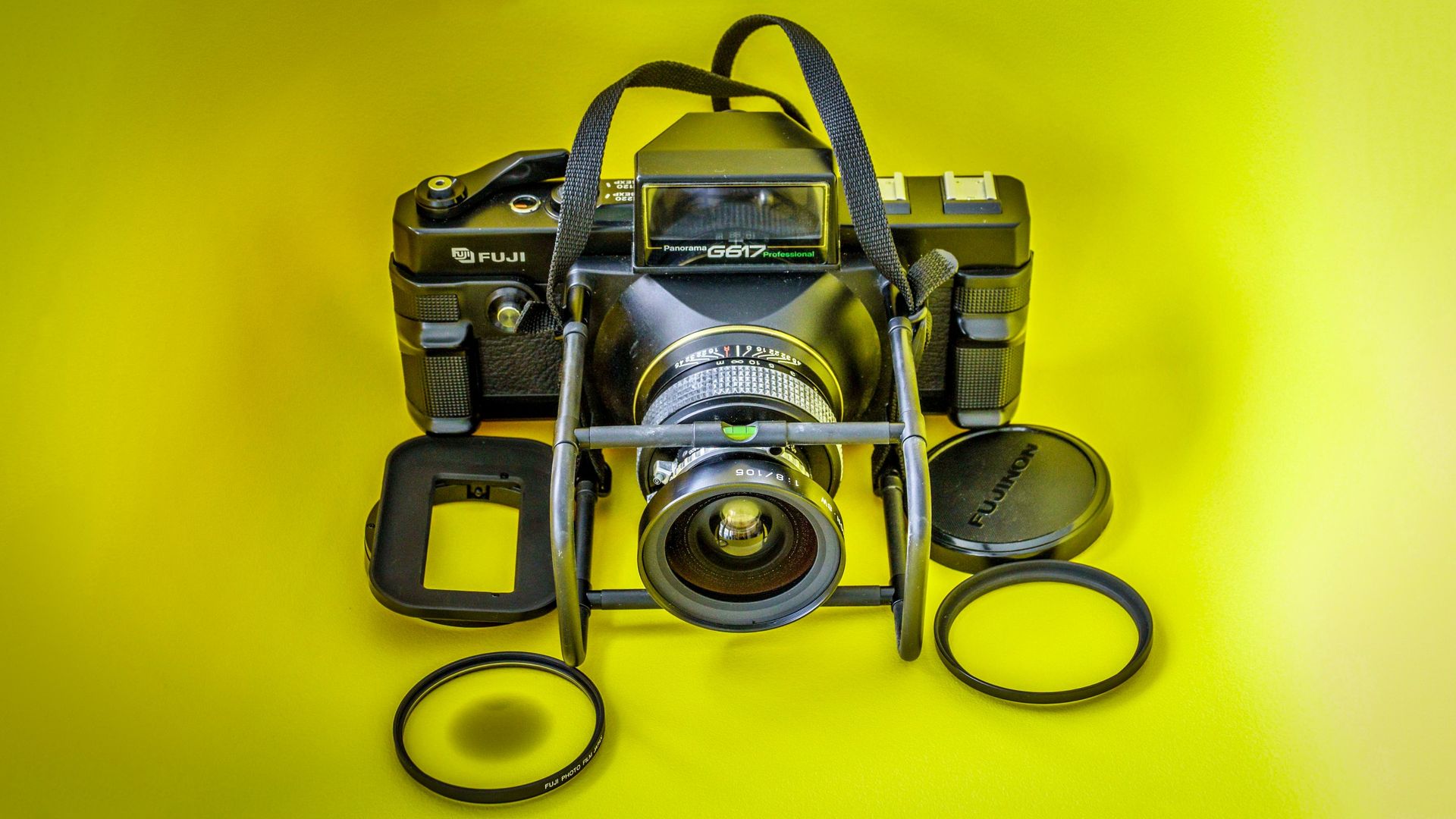
In 1982, Fujifilm introduced two large medium format rangefinder cameras, the Fujica GW690 Professional and the GSW690, both using 120 film. These cameras, known as the "Texas Leicas," were renowned for their robust construction and superior lenses, tracing their roots back to the 1968 G690. The engineers subsequently designed an even larger camera in 1983, the Fujica Panorama G617, which boasted a fixed 105mm lens.
Despite its fixed lens, the G617 catered to a professional market by enabling landscape photographers to capture large negatives or transparencies on 120 or 220 film without the weight and bulk of a 4x5 camera. However, the G617's limited field of view restricted its versatility. This limitation prompted the release of the GX617 in 1993, featuring interchangeable lenses with four options: a 90mm f/5.6 Super-Wide lens with an 89° field of view, a classic panorama lens with a 105mm f/8 and an 80.3° field of view, a 180mm f/6.7 telephoto lens offering a 52° view, and a 300mm f/8 telephoto lens with a 32° field of view.
The GX617, a marvel of engineering with a sturdy die-cast frame, was a manual camera lacking a rangefinder, exposure meter, or autofocus. Its lenses each housed a Copal leaf shutter, while the camera itself featured an electromagnetic shutter-release mechanism. Focusing was manual, but the GX617 offered a ground-glass focusing accessory for close-up work.
Photographers typically estimated distance or utilized the hyperfocal stop for the lens. The GX617's format, larger than a 6x6 camera (3,400mm²), delivered an impressive 9,240mm² negative, comparable to a 4x5 camera's size (12,900mm²) while still using 120 or 220 roll film. However, this professional camera's limitation was its four exposures per 120 roll or eight on a 220 roll.
Despite its high price in 1993, with the body alone selling for $2,663 and lenses ranging from $2,350 to $2,800 each, the Fuji 617 camera produced colossal panoramic images, as demonstrated in a photograph of Bora Bora, French Polynesia. Although discontinued in 2003 with the rest of Fuji's roll-film cameras due to the rise of digital photography, these cameras remain highly sought after and can now command higher prices due to renewed interest in film photography.
Written by urgent.news from Digital Camera World's reporting — not their text. Machine-written — may contain errors; check the original before relying on it.