Dhanteras 2026: From Buying Gold To Lighting Diyas, What Do These Rituals Mean?
Dhanteras (also known as Dhantrayodashi) is chronicled in the ancient Hindu Puranic scriptures. It is celebrated in the Hindu month of Kartik, on the 13 th lunar day of the dark fortnight (Krishna Paksha). The term originates from dhan (wealth) and Teras (13 th day) and is observed to welcome health, wealth and prosperity into the household. The dedication is based on three genesis narratives…
Dhanteras, also known as Dhantrayodashi, is a Hindu festival celebrated in the month of Kartik, on the 13th day of the dark fortnight. The name combines "dhan" meaning wealth, and "teras" representing the 13th day. The festival is a way to welcome health, wealth, and prosperity into one's home. Three main religious stories explain the origins of Dhanteras: the churning of the ocean, the birth of Lord Dhanvantari, and the appearance of Goddess Lakshmi.
Lord Dhanvantari, the god of medicine, is worshipped as the avatar of Lord Vishnu. He is honored for his teachings on Ayurveda, which emphasizes holistic well-being through balanced eating, healthy living, and natural remedies. Dhanteras is also known as Dhanvantari Jayanti, commemorating his birth.
Originating from the churning of the cosmic ocean, Lord Dhanvantari appeared with a kalash (pot) filled with Amrit, the nectar of immortality. Goddess Lakshmi, the goddess of wealth and fortune, emerged from the ocean waves around the same time. Consequently, Dhanteras signifies the celebration of both material wealth and physical well-being.
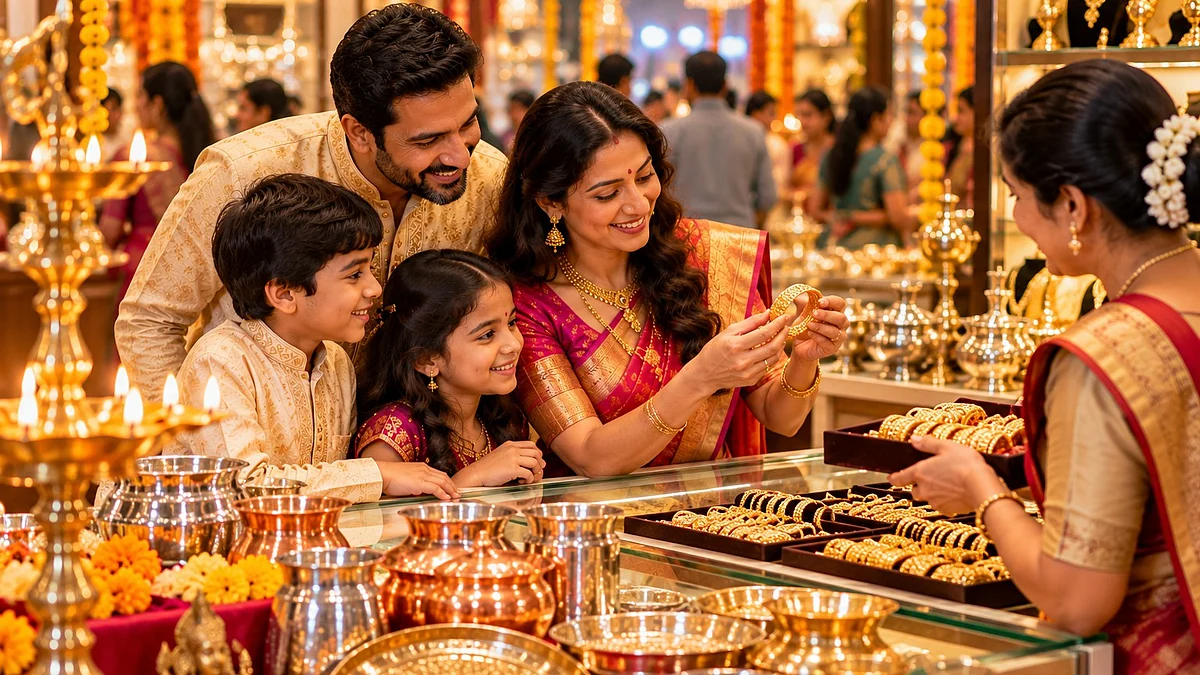
Buying gold on Dhanteras is a widespread tradition in Hindu culture. Gold is associated with purity, prosperity, and long-term stability. Families purchase gold coins, jewelry, or other precious items to invite positive energy and pray for financial growth in the new year. Krishnan Sampath, a senior Vedic astrologer, explains that gold's symbolic qualities make it a fitting symbol for financial security.
In Hindu tradition, worshipping Goddess Lakshmi and Lord Kubera together is believed to bring good luck, stability, and abundance into one's life. Goddess Lakshmi is the goddess of prosperity, while Lord Kubera, also known as the treasurer of the gods, is the protector of wealth. Together, they are thought to safeguard financial security, foster business success, and protect hard-earned savings.
The ritual of Yama Deep Daan, or lighting a diya (oil lamp) outside the house, is observed on the evening of Dhanteras. Families light the diya facing south, the direction associated with Lord Yama, the god of death and justice. This ritual is believed to protect family members from untimely death and bring peace to the home. Yama Deepam symbolizes hope, safety, and the power of light over darkness, and families seek blessings for a long, peaceful, and prosperous life.
Dhanteras is celebrated differently across various regions of India. In Maharashtra and Gujarat, new utensils (made of metal) or kalash are bought to honor Dhanvantari, the divine physician. Offerings of dried coriander seeds mixed with jaggery are made to Goddess Lakshmi. Meanwhile, in South India, Lord Dhanvantari is the primary focus of veneration.
In Tamil Nadu, Brahmin and traditional families prepare Marundu, a herbal formulation designed to balance the body's three doshas and promote health. Homes are adorned with intricate rice-flour designs known as kolams, and oil lamps. Mercantile and craft communities often use Dhanteras as an opportunity to clean, maintain, and honor their tools, machinery, and commercial workspaces.
Shopkeepers purchase new account ledgers and clean their storefronts, symbolizing a fresh and prosperous start to the financial year.
Written by urgent.news from Free Press Journal's reporting — not their text. Machine-written — may contain errors; check the original before relying on it.