Crew from Nasa's simulated Mars mission emerges after 378 days in isolation
The four members of a crew who took part in a simulated mission to Mars have emerged after 378 days in isolation at the US space agency’s Johnson Space Centre in Houston, an endeavour designed to help prepare for a possible future excursion by Nasa astronauts to Earth’s planetary neighbour. “It’s been a hell of a year — analogue astronauts living in captivity of our own free will,” Ellen Ellis,…
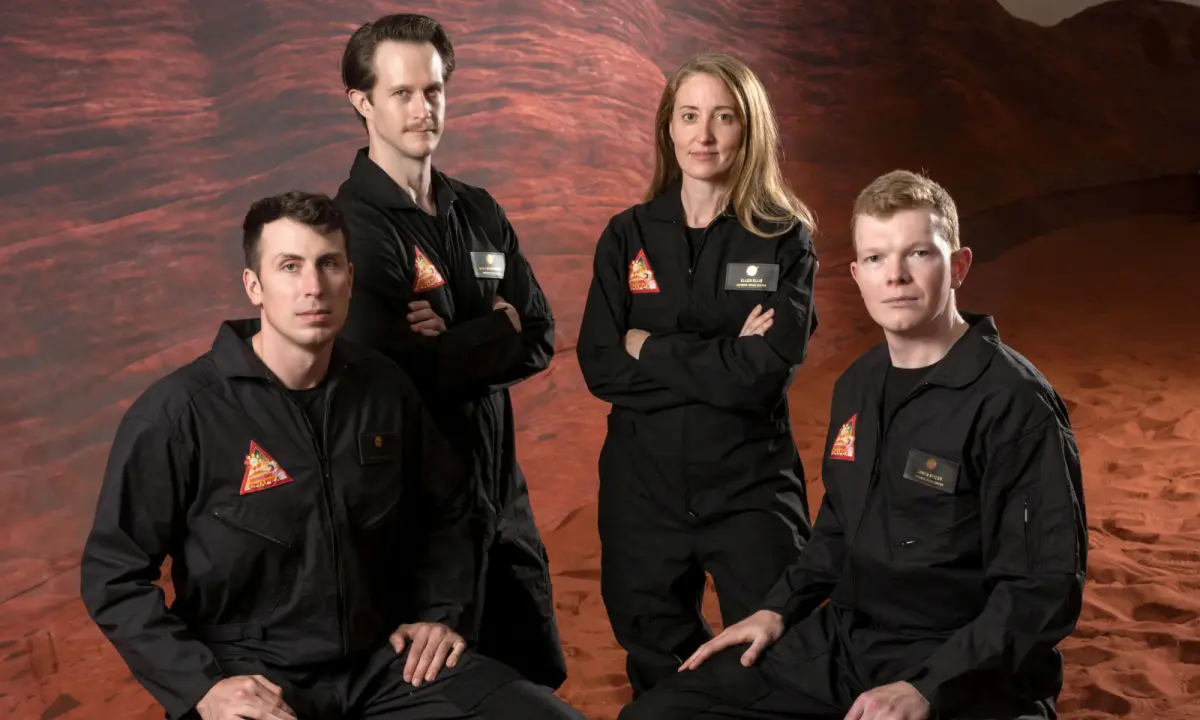
After 378 days living in isolation at NASA's Johnson Space Centre in Houston, the four members of a simulated Mars mission have emerged. Ellen Ellis, the medical officer on the Crew Health and Performance Exploration Analogue (Chapea) mission, welcomed her crewmates Ross Elder, Matthew Montgomery, and James Spicer back to the space centre on Saturday.
The crew had entered a 158-square-metre 3D-printed habitat on October 19, 2025, where they performed tasks including growing crops in simulated Martian soil and interacting with NASA officials through delayed communications, mirroring interplanetary communication challenges.
NASA's mission to Mars has been a priority, with the agency aiming for a human mission in the 2030s. Plans also include a return to the moon by 2024, following 50 years since the last manned lunar landing in 1972. Chapea mission commander Ross Elder emphasized the importance of seizing the initiative, leading with scientific research that benefits both the economy and the future of space exploration for generations to come.
Mission science officer Matthew Montgomery echoed these sentiments, highlighting the significance of the initiative in securing the U.S.'s leading position in space exploration.
The crew's experience, particularly their ability to maintain the habitat and operate under simulated interplanetary communication delays, will be invaluable for future NASA missions. Vanessa Wyche, director of the Johnson Space Centre, praised the crew's resilience and adaptability during their time in isolation. Wyche noted that the lessons learned from the Chapea mission will aid in preparing for both lunar and eventual Martian missions.
After a two-week period of evaluations and debriefing with NASA scientists, the crew will continue to contribute to ongoing research aimed at ensuring astronaut health and productivity during long-duration space missions.
Written by urgent.news from Dawn's reporting — not their text. Machine-written — may contain errors; check the original before relying on it.
Also reported by 1 other outlet
- Crew from NASA's simulated Mars mission emerges after 378 days in isolation channelnewsasia.com