With ‘Kissinger moment’ over, US and China urged to foster new ‘bridge builders’
Beijing and Washington have been urged to foster a new generation of talent to bridge gaps between the countries and strengthen people-to-people exchanges amid growing frictions and concerns about a lack of China expertise in the US. Academics and experts from the two countries gathered in Shanghai on Friday at the China-US Intergenerational Dialogue 2026. They were seeking a new crop of “bridge…
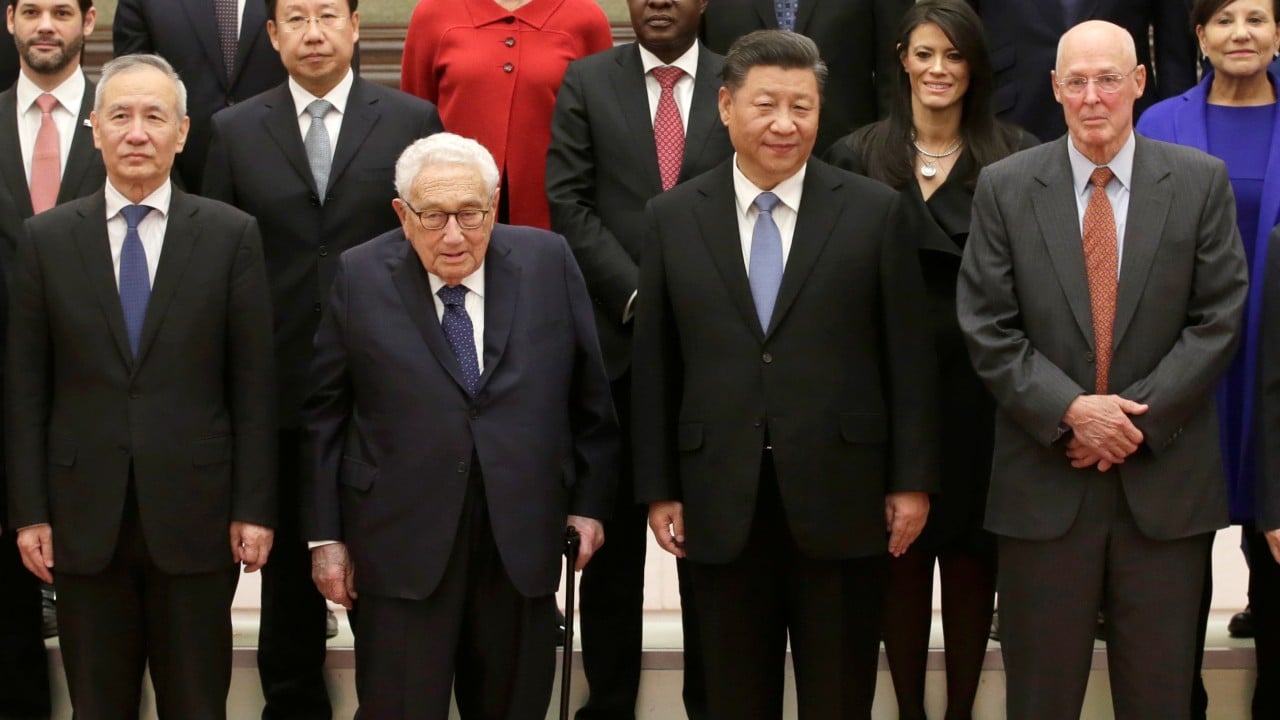
Beijing and Washington have been called upon to cultivate a fresh cohort of individuals capable of bridging divides between the two nations and boosting people-to-people interactions amidst escalating friction and worries over insufficient China knowledge in the US. Scholars and experts from both countries convened in Shanghai on Friday at the China-US Intergenerational Dialogue 2026, aiming to nurture a new batch of "bridge builders" akin to Henry Kissinger, the former US secretary of state who facilitated the landmark rapprochement during the Cold War.
Kissinger, then US national security adviser, covertly traveled to China in 1971, setting the stage for President Richard Nixon's historic visit the following year. The diplomat continued his involvement in China-US relations, making more than 100 visits until his passing in November 2023. While Zhu Feng, a professor at Nanjing University, acknowledged that the "Kissinger moment" had ended for China-US relations, he emphasized that his legacy remained "a profound asset for us to hold in our heart."
Zhu highlighted that shared strategic interests that brought the two sides together over five decades ago were unlikely to resurface, as those were largely driven by Washington's Cold War geopolitical calculations. Today, China-US relations are transitioning into a new phase, with the countries viewing each other as strategic rivals.
Zhu called for exploring novel avenues of collaboration and constructing a robust, "unstoppable linkage" between the nations. Despite two summits between their presidents this year indicating a period of fragile stabilization following prolonged tensions over trade, technology, and security, issues persist. People-to-people exchanges between China and the US have encountered increasing barriers due to heightened geopolitical tensions, stricter visa scrutiny, and national security concerns affecting students, scholars, and travelers.
Qian Jing, vice-president of the Asia Society, urged universities, think tanks, media outlets, and companies to offer more opportunities and enhanced protections for those facilitating these exchanges. "A scientist, a journalist, a student embarking on their first international exchange must understand what they can do, how to proceed, and whom to consult in case of difficulties," Qian stated in a video message.
"Both the US and China must establish clear and predictable rules and institutional support." Qian stressed the need to develop successors to these bridge builders and ensure their protection, noting that engagement must persist despite ongoing differences. American students studying in China for academic credit plummeted by 85% from 11,639 in the 2018-19 academic year to 1,749 in 2023-24, while the number of Chinese students in the US declined nearly 29% from a peak of 2019-20 to around 266,000 in 2024-25, according to a November report from the Institute of International Education.
John Quelch, executive vice-chancellor of Duke Kunshan University, stressed the importance of confidence in safe travel, fair treatment, and seamless passage between the two countries, warning that impediments such as unexpected visa restrictions or other bottlenecks would deter people from crossing the bridge.
Written by urgent.news from Reuters Business via SCMP's reporting — not their text. Machine-written — may contain errors; check the original before relying on it.
This story
This is one outlet's version. Read the fullest account.