Neanderthals Were Likely Stronger Than Modern Humans, but Also Cared More Than Stereotypes Suggest
Learn why Neanderthals were likely stronger than us, and that they likely weren't brutes.
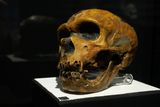
Neanderthals were robust and stocky, possessing short, thick arm and leg bones with greater muscle mass compared to modern humans. This physical difference likely arose as an adaptation to cold weather, not solely for strength. Despite their strength, Neanderthals were not merely brute-force creatures. Evidence suggests they created art, buried their dead with care and ceremony, and cared for the ill and wounded.
Neanderthals, or Homo neanderthalensis, were one of at least 21 human species that once inhabited Earth, including Homo sapiens, the sole surviving human species today. They are our closest extinct human relatives, sharing a significant portion of our DNA. Their average male height was about 5'5" and weighed around 143 pounds, while females typically measured around 5'0" and weighed 120 pounds.
While Neanderthals were not delicate, they were not significantly taller or heavier than modern humans. Their genetic variation in the HPS axis resulted in an abundance of muscle. However, quantifying their strength relative to modern humans remains challenging.
The assumption that Neanderthals were brutish and dull-witted was prevalent, but this view is unfair and incorrect. Recent studies reveal Neanderthals valued benevolence alongside brawn. Artifacts indicate they created art, while evidence shows they buried their dead with care and ceremony. In a 2026 study in Nature Scientific Reports, a Neanderthal skeleton with a carefully arranged burial had survived a spear wound, indicating a previous severe facial injury.
The recovery of this wound would have required considerable care from others, highlighting a collaborative and altruistic Neanderthal society.
Professor Penny Spikins, an archaeology expert, asserts that Neanderthal communities were highly collaborative, displaying strong altruistic motivations and a willingness to care for others for extended periods, even risking their lives to bring food. Research by Spikins and colleagues, published in Quaternary Science Reviews, found numerous instances of Neanderthals tending to the ill and injured, many of whom lived with severe disabilities for years.
Spikins suggests that such caring behaviors were adaptive, helping the group survive, as the welfare of everyone affected everyone else in their small, highly collaborative groups.
In conclusion, Neanderthals were indeed strong, but this strength was accompanied by a deep sense of benevolence, challenging stereotypes associated with them.
Written by urgent.news from Discover Magazine's reporting — not their text. Machine-written — may contain errors; check the original before relying on it.