I stopped juggling Claude Code, Codex, and other coding agents after finding this open-source app
The end of my terminal tab nightmare
In a world where AI coding agents have become increasingly prevalent, managing these tools has introduced a new set of challenges for developers. Rather than solely managing people, one must now oversee AI agents, each with unique workflows and quirks. After months of juggling multiple agents in separate windows, I discovered an open-source application that allows all coding agents to be consolidated into one workspace.
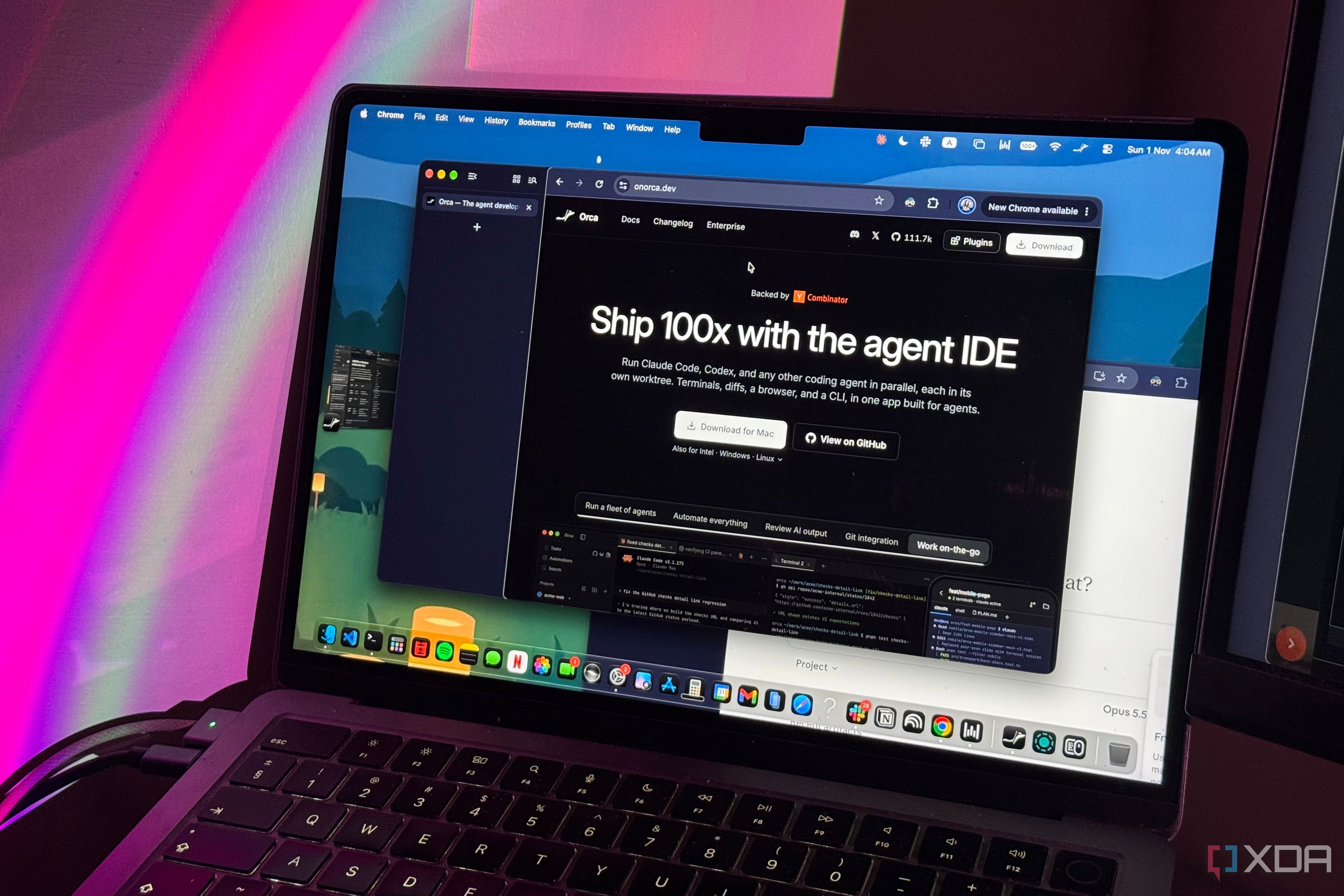
IDEs (Integrated Development Environments) are typically used for writing, editing, and debugging code, but Agent Development Environments (ADEs) serve a different purpose. ADEs are tailored for managing AI agents that perform coding tasks. Orca, a free and open-source ADE developed by Stably AI, enables users to manage multiple AI coding agents from a single interface.
Orca, created by Jinjing Liang and Neil Parker, has gained significant popularity with over 110,000 GitHub stars in just three months. It is compatible with various operating systems and works with any CLI agent, including Claude Code, Codex, Grok, and more. By importing an existing Git repository into Orca, users can create separate workspaces for each agent, isolating their work using Git worktrees.
This prevents conflicts between agents' changes and provides a code editor and diff viewer for inspecting the modifications made by each agent. Orca simplifies the process of working with multiple AI coding agents, allowing developers to streamline their workflow and focus on the task at hand.
Written by urgent.news from XDA Developers's reporting — not their text. Machine-written — may contain errors; check the original before relying on it.
This story
This is one outlet's version. Read the fullest account.