I shot the same scenes with a pro Viltrox prime lens and a DSLR icon — can you spot the difference?
The Viltrox AF 35mm F1.4 Pro lens for Sony and Nikon mirrorless cameras is a superb moderate wide-angle prime, but how does it compare to Sigma's legendary 35mm f/1.4 Art lens for DSLRs?
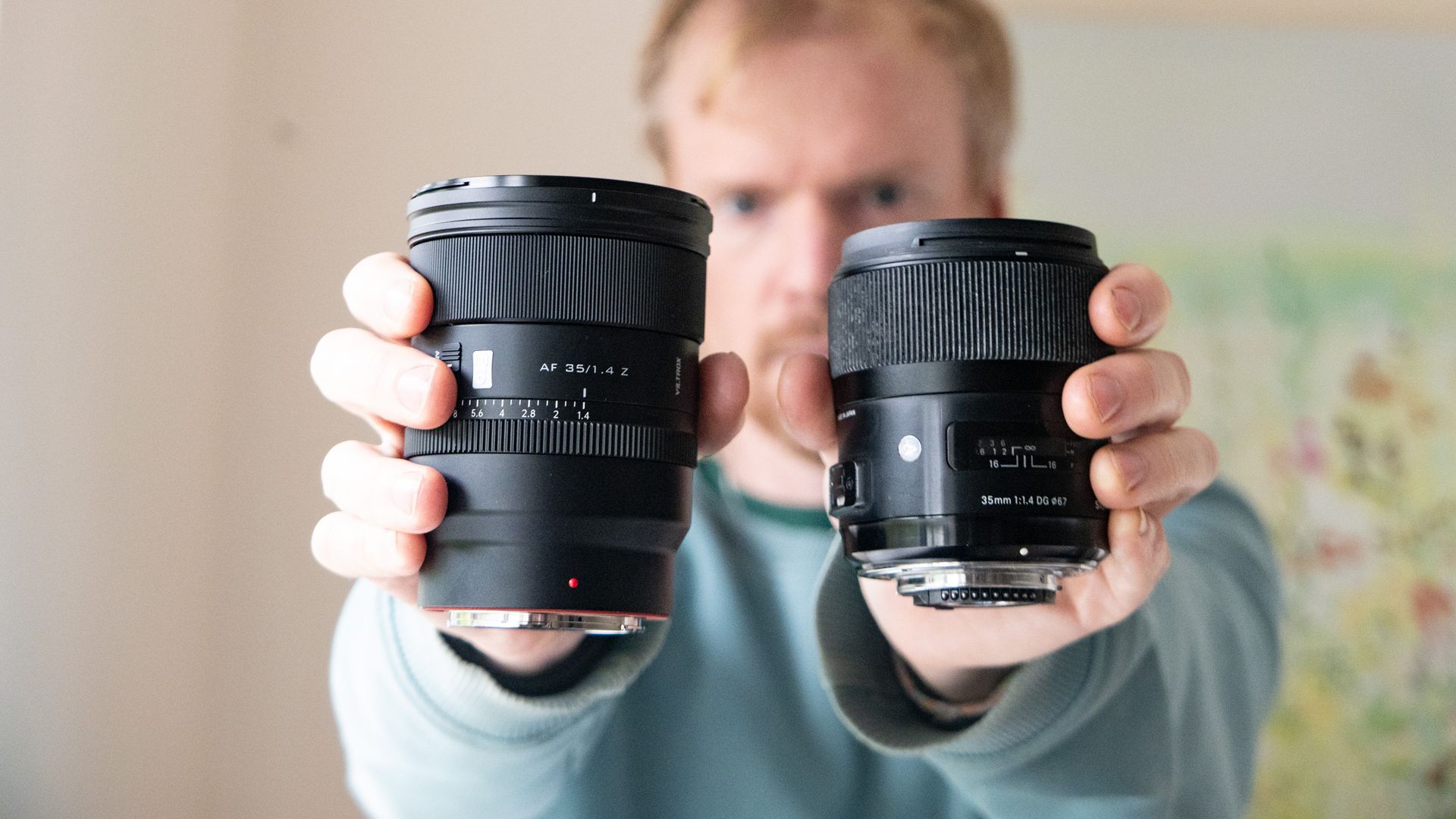
During a stint in East Africa, I had the pleasure of using the Sigma 35mm f/1.4 DG HSM Art lens extensively for my photojournalistic work. This lens became my primary companion for over four years, capturing more than 75% of my images across various Kenyan landscapes and vibrant local cultures. Recently, I had the opportunity to test the Viltrox AF 35mm F1.4 Pro lens, which was designed to match the specifications of my trusty Sigma lens.
To compare the two, I shot identical scenes using the Viltrox lens attached to my Nikon Z6 II camera, with the Sigma lens connected through an adapter.
Upon handling both lenses, I found that the Sigma lens was slightly smaller than the Viltrox lens, but the adapter added a bit of bulk, making the two systems roughly comparable in size and weight. Neither lens had a significant advantage over the other regarding usability. The Sigma lens, which I've relied on for nearly a decade, remains in excellent condition despite harsh conditions, while the Viltrox lens, despite its affordable price, showed signs of wear, such as easily scratched exterior.
When it came to autofocus performance, the Viltrox lens was marginally quicker and smoother, but the difference was not substantial enough to be a deciding factor. The focus distance in the scenes I shot was fairly close, providing a consistent comparison.
Optical quality was the primary focus of my comparison, particularly at the maximum f/1.4 aperture, where both lenses excel in decreasing depth of field and blurring the background to isolate subjects. While the Viltrox lens showed slightly sharper details and better contrast, the Sigma lens performed admirably and was still considered very sharp.
However, when pixel peeping, the Viltrox lens demonstrated better control over chromatic aberration (CA) and longitudinal chromatic aberration (LoCA), which are more challenging to correct.
Bokeh, or the out-of-focus quality, proved to be another tie between the two lenses. Both produced smooth, aesthetically pleasing bokeh with roundish centers and slightly cat-eye shapes in the corners. In summary, the Viltrox lens outperformed the Sigma lens in optical sharpness and aberration control, but for most practical purposes, the difference is subtle and may not be noticeable without close examination.
Written by urgent.news from TechRadar's reporting — not their text. Machine-written — may contain errors; check the original before relying on it.