Google's AI satellite sends a very expensive haiku to Earth
Experimental orbital datacenter prototype puts its TPU to work producing poetry
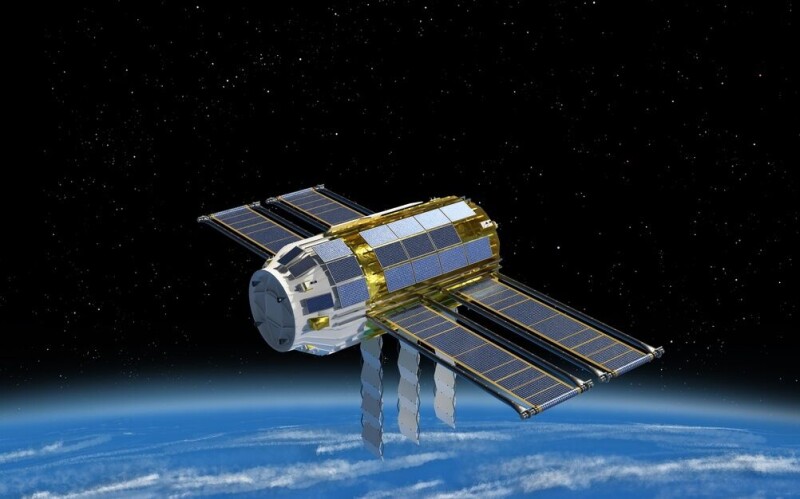
Google's Suncatcher satellite, launched in early month and orbiting Earth, has transmitted an AI-generated haiku in response to a prompt. The satellite's onboard Gemma 4 model, after completing machine learning tests, successfully produced the poem. The haiku, titled "Blue marble below," was sent during a ground-station pass while the satellite was over Svalbard, Norway.
The system's high-bandwidth memory showed minimal sensitivity to a 67 MeV proton beam, with irregularities appearing after a cumulative dose of 2 krad(Si). For typical transformer workloads, the system's silent data corruption rate is one event per 17 rad, equating to an extremely low failure probability. Google plans to test a constellation of smaller, interconnected satellites in the future, aiming to reduce costs and improve efficiency in AI satellite operations.
Written by urgent.news from The Register Science's reporting — not their text. Machine-written — may contain errors; check the original before relying on it.
This story
This is one outlet's version. Read the fullest account.
- Google's Project Suncatcher Achieves Major Milestone As AI Model Successfully Runs On Satellite, Sends First Response To Earth | Watch freepressjournal.in
- Google's AI satellite sends a very expensive haiku to Earth theregister.com
- Google’s satellite AI server transmits its first response to Earth theverge.com