Polar bear arrival in Manitoba town prompts safety concerns, conservation opportunity
Hundreds of polar bears are expected to arrive in Churchill, Man. as they partake in their fall trek towards the Hudson Bay.
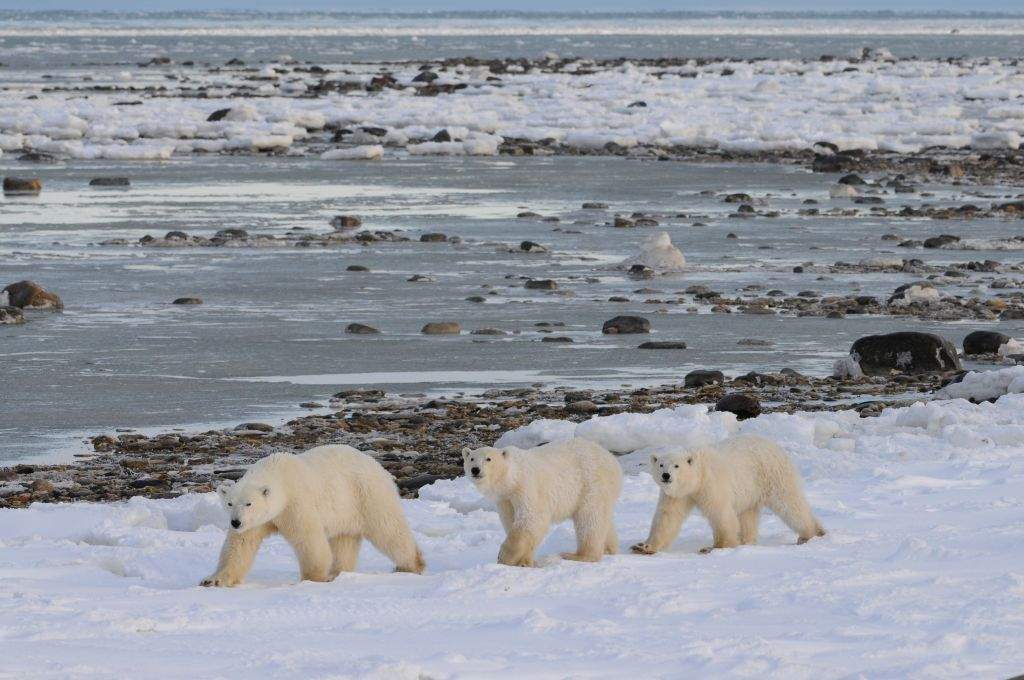
As polar bears arrive in Churchill, Manitoba in large numbers, safety concerns and conservation opportunities arise. Polar Bears International (PBI), a nonprofit organization, is dedicated to protecting the future of polar bears and Arctic sea ice. Polar bears visit Churchill each year as the Hudson Bay freezes over, providing them with access to the bay for hunting seals and other prey.
Geoff York, vice-president for science and policy at PBI, explained that the arrival of the bears is triggered by decreasing temperatures and freezing land. Over the past few decades, human-polar bear interactions have increased due to the delayed freezing of Hudson Bay caused by climate change. To address this, PBI has implemented deterrent measures to keep people and bears safe during interactions.
This year, PBI is using drones, in collaboration with Brigham Young University (BYU), to monitor polar bear activity and herd them away from potentially dangerous areas. Kyle Garrett, a master's student at BYU who is currently in Churchill, noted that the drone's noise helps scare the bears in the desired direction. Additionally, work has been done at the town's waste site, where garbage attracts polar bears.
This includes the installation of an electric fence, dubbed "Bear-vision," which is a camera-based early warning system for polar bear detection near the waste facility. Bear-vision functions similarly to a doorbell camera, alerting residents if a polar bear is nearby.
PBI emphasizes the importance of non-lethal deterrents to ensure the long-term conservation of polar bears. York explained that preserving large predators like polar bears requires creating a safe environment for people living alongside them, which in turn fosters tolerance and helps maintain these animals on the landscape. Churchill's western Hudson Bay polar bear subpopulation has declined by almost half since 1979 due to climate-driven sea ice loss and reduced female reproductive rates. With these efforts, PBI aims to maintain polar bear populations for the long term.
Written by urgent.news from Global News's reporting — not their text. Machine-written — may contain errors; check the original before relying on it.