Italien: Hunderttausende gegen Meloni auf der Straße
Aus Sorge vor Krawallen mobilisiert die Regierung die Sicherheitskräfte. Auch Schüler demonstrieren wieder. Unterdessen schnellt die Inflation auf 5,4 Prozent - so hoch war sie seit Jahren nicht.
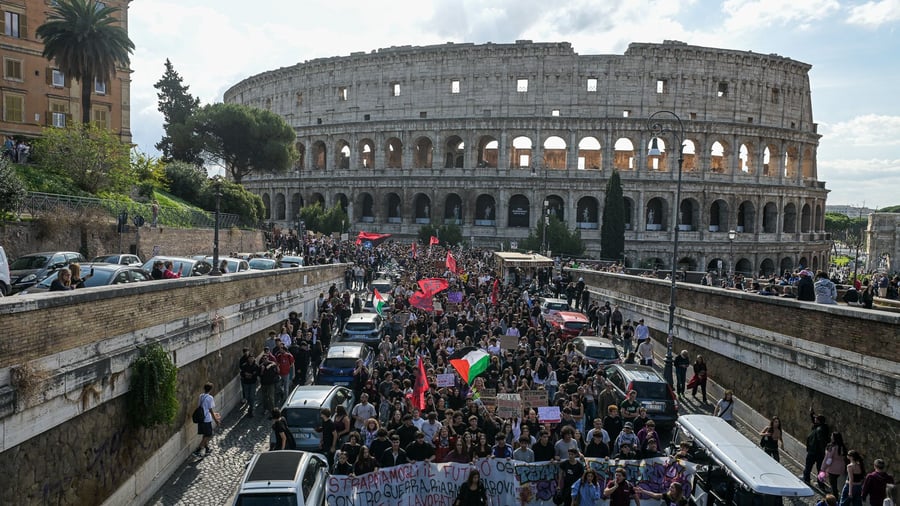
Over 200,000 people took to the streets in Italy in protest against Prime Minister Giorgia Meloni's right-wing government. The largest demonstrations, with approximately 50,000 participants each, took place in Rome and Bologna, based on independent estimates. Other cities like Milan, Naples, and Turin saw tens of thousands join the protests.
Many students and students participated, as they have in previous demonstrations in recent weeks. Across the country, more than 50 cities hosted gatherings as part of a nationwide labor union USB protest day. The union estimated the nationwide participation at over one million people, although authorities or others have not confirmed this figure.
Security forces were on high alert due to concerns about potential violence. There were no major riots initially. Italian parliamentary elections are scheduled for next year, and Meloni, along with her party Fratelli d Italia (Brothers of Italy), currently leads in the polls. The protests primarily target the high inflation rate, which stood at 5.4% in Italy this month, the highest level in three years.
Inflation is also causing protests across Europe. In Germany, protests are planned for Saturday. In addition to the marches in many cities, public transport and healthcare sectors also went on strike. However, a general strike as announced by the union did not materialize. Most demonstrations were peaceful, but in Turin, there were clashes between demonstrators and police.
Molotov cocktails were thrown at the Colosseum in Rome, one of the most visited landmarks in Italy. There were isolated confrontations in other cities, but not on the same scale as demonstrations two weeks ago when over 200 security forces were injured in Milan. The Italian tricolor and Palestinian flags were often seen at protests.
The protests are directed against Meloni's coalition of three right-wing and conservative parties, accusing them of causing high inflation, low wages, and excessive defense spending. Protesters are calling for government action, particularly more funding for schools and universities. The slogans "Put down your weapons, raise wages" and "No to a war economy" were common on protest signs.
Transport strikes were banned in the first transportation and long-distance transport sectors due to the upcoming All Saints' Day on November 1st, as ordered by Transport Minister Matteo Salvini. This is legally possible in Italy. Consequently, protesters gathered in front of the Transport Ministry in Rome to express their frustration.
Increased checks were conducted in many cities to prevent riots. Meloni has been in power for over four years, longer than anyone else since the end of World War II in Rome. In all polls, she and her "Brothers of Italy" party are clearly ahead. However, the right and left wings are roughly balanced, and Meloni faces pressure from a new party called Futuro Nazionale, which is even more right-wing. No date has been set for the parliamentary election.
Written by urgent.news from Handelsblatt's reporting — not their text. Machine-written — may contain errors; check the original before relying on it.