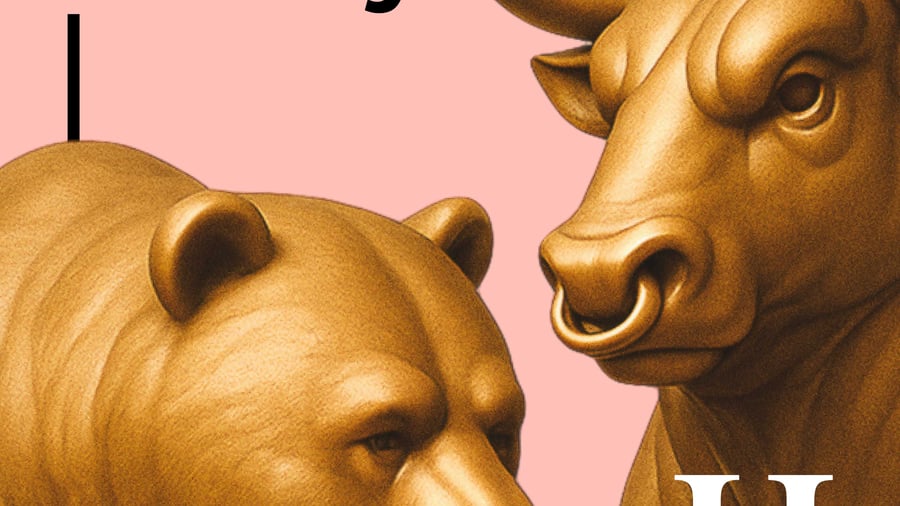
Handelskonflikt: Steinmeier in Peking: „Nicht zulassen, dass die industrielle Basis verloren geht“
Beim Besuch des Bundespräsidenten in der Volksrepublik zeigt sich die chinesische Seite erst „robust“, dann versöhnlich. Wie ernst nimmt Peking Europas Sorge um das hohe Handelsdefizit?
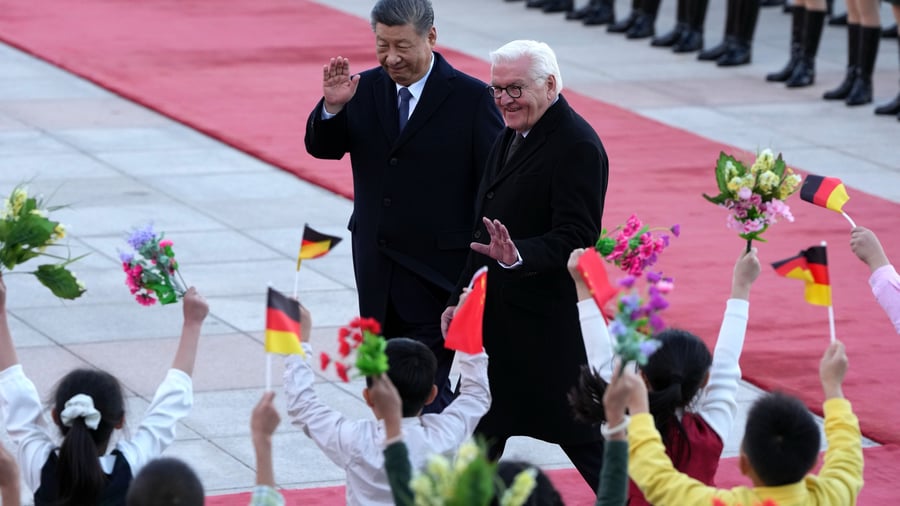
In a recent high-level meeting in Beijing, German President Frank-Walter Steinmeier welcomed Chinese State and Party Chief Xi Jinping, who praised a new paradigm for equal and mutually beneficial cooperation. Steinmeier had pushed for a solution to the trade surplus with China, stating that they wanted to maintain the 'Win-win' principle and restore it if necessary.
In a speech at Peking University the previous day, he warned that Europe cannot allow its industrial base to be lost. China exported goods worth around €90 billion to Germany last year, causing concern for Germany, which coined the term 'China Shock 2.0'. This led to warnings of job losses, with the German Industry Federation (BDI) estimating around 15,000 jobs at risk each month.
While China had previously dismissed concerns about the trade surplus, Steinmeier's delegation managed to have a robust discussion about it. Xi acknowledged differences and problems that could be resolved and recognized Brussels as a negotiation partner in trade matters. Previously, China had tried to resolve issues through bilateral talks with EU member states, leading to Brussels, Germany, and France increasing pressure on Beijing.
At the end of October, the EU, Germany, and France agreed to slow China's export growth in hybrid cars. German officials now hope that other industries will see reduced exports as well. Peter Leibinger, BDI President and part of Steinmeier's delegation, saw the hybrid car compromise as a 'step into negotiations' and stated that China was open to quota solutions as a transition, provided the German economy uses the gained time to become more competitive.
However, this could be jeopardized if the high Chinese exports cause significant damage in Europe, both economically and politically. Leibinger warned China not to 'win at any cost', referencing potential impacts on elections in Europe. Dirk Jandura, President of the German Association of Wholesale (BGA), warned China to understand that it cannot 'win at any cost'.
Omid Nouripour, Green Party Vice President and part of the Steinmeier delegation, emphasized that China also has dependencies and needs cooperation. 'Europe must be aware of its power,' he said to Handelsblatt. With Germany and China's relationship becoming more complex, German Chancellor Merz has also been seeking partnerships in Japan and South Korea to reduce dependence on China.
Merz's visit, however, brought a different tone to the German approach compared to Steinmeier's. While the German economy sees a mix of perspectives, Chinese state media noted that Merz's stance is stricter than Steinmeier's, but Steinmeier's visit aims to balance bilateral relations and keep dialog channels open. The next day, a state banquet marked the conclusion of Steinmeier's five-day trip to China, which included visits to Volkswagen's factory in Anhui and a boat ride in the Summer Palace. Additionally, Steinmeier received an honorary professorship at Peking University.
Written by urgent.news from Handelsblatt's reporting — not their text. Machine-written — may contain errors; check the original before relying on it.
This story
This is one outlet's version. Read the fullest account.