[WEEKENDER] Iranian physicist turns scientific journey into new life in Korea
In 2024, a team of physicists in Gwangju used an ultra-intense laser to demonstrate a phenomenon that could reshape our understanding of environments near neutron stars and black holes. The scientist who led the experiment, Mohammad Mirzaie, is now a Korean citizen — one of 30 foreigners granted nationality this year through a special program for outstanding talent. Mirzaie, an Iranian-born…
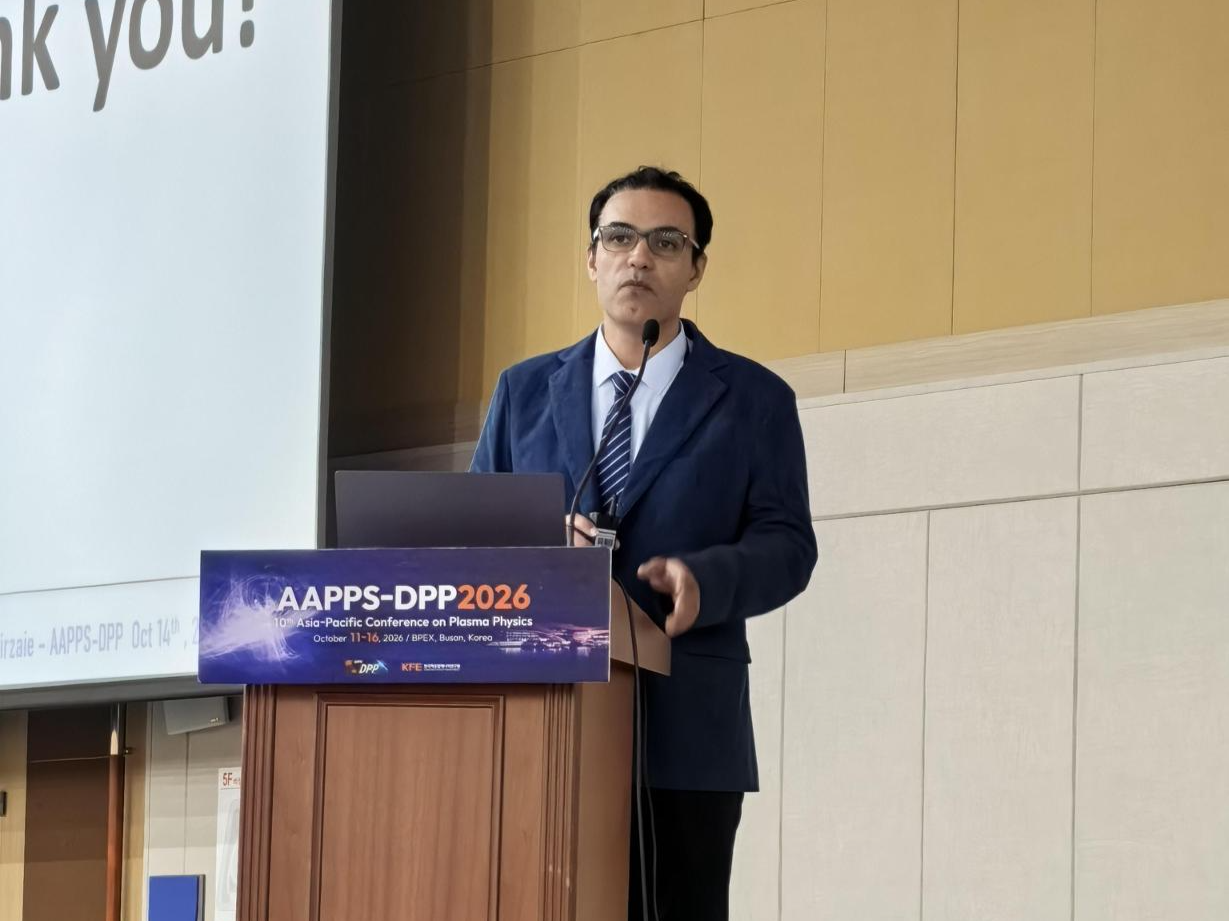
In 2024, an Iranian physicist named Mohammad Mirzaie made a remarkable transition from his scientific career to becoming a permanent resident of South Korea. Mirzaie, who is the senior research fellow at the Institute for Basic Science (IBS), led a team of physicists in conducting a groundbreaking experiment using an ultra-intense laser. This experiment demonstrated a phenomenon that could potentially provide new insights into environments near neutron stars and black holes.
Mirzaie's journey began in 2019 when he moved to Korea for a research posting. Over the years, his children grew up in the country, and what started as a professional opportunity evolved into a permanent home for the Mirzaie family. In July, he was granted special naturalization, an honor reserved for 30 foreigners this year for their exceptional contributions to basic science.
"I wanted to take a step of becoming a Korean citizen and make a long-term commitment to the country where our family had established lives," Mirzaie told The Korea Times. The key breakthrough that led to his citizenship status was achieved through years of collaboration with fellow physicists and laser experts, culminating in the successful demonstration of all-optical nonlinear Compton scattering.
Written by urgent.news from The Korea Times's reporting — not their text. Machine-written — may contain errors; check the original before relying on it.
This story
This is one outlet's version. Read the fullest account.