Sambungan Kabel Dasar Laut Madani RM2 bilion kukuh jaringan digital negara
Projek dijangka bermula suku pertama 2027 dan siap suku keempat 2029 bakal perkukuh sambungan digital Semenanjung, Sabah dan Sarawak.
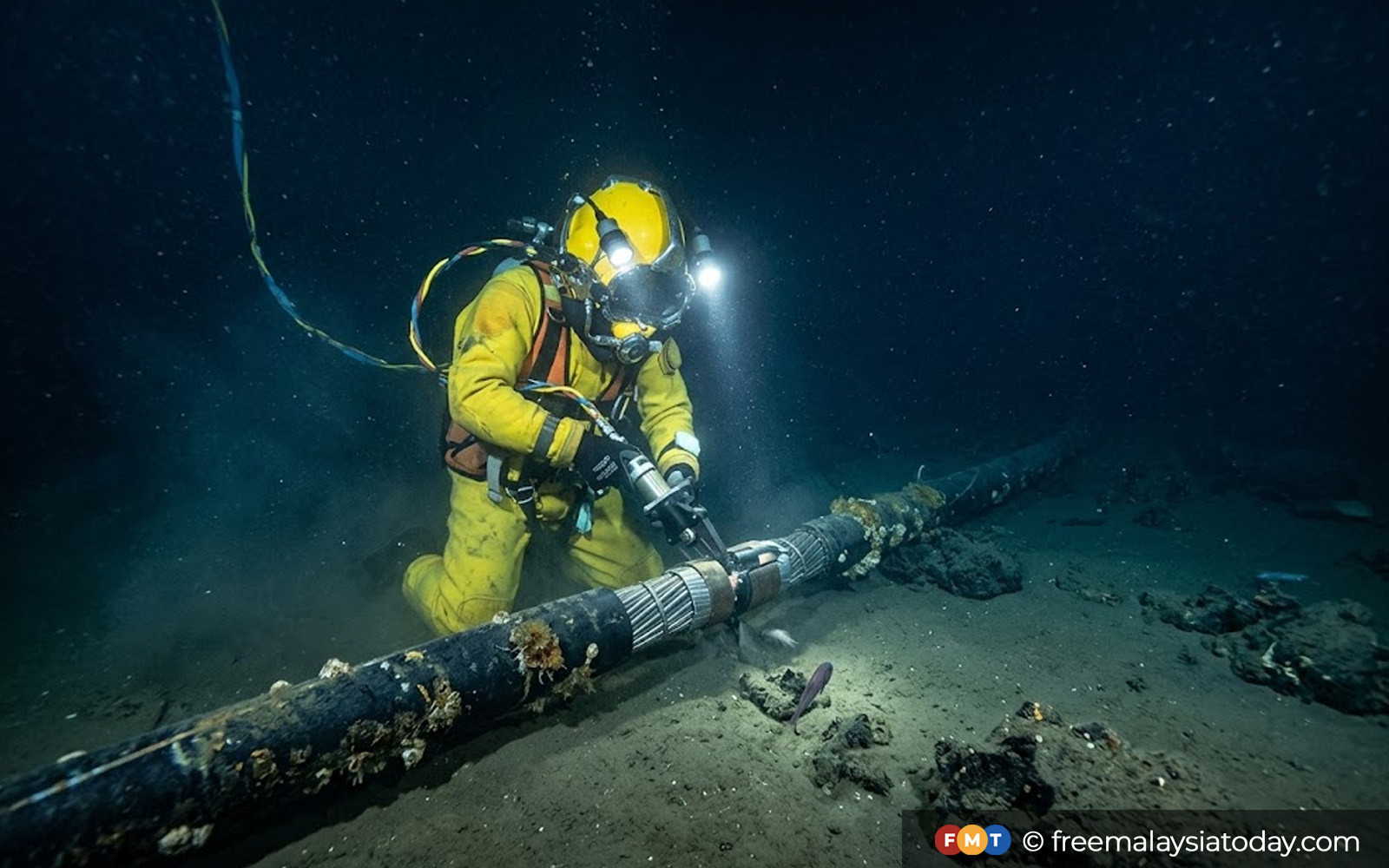
The Malaysian Communication and Multimedia Commission (SKMM) announced a RM2 billion national underwater cable project called Sambungan Kabel Dasar Laut Madani (Salam) aimed at enhancing the country's communication network. The project, scheduled to commence in the first half of 2027 and completed by 2029, will increase data transmission capacity and resilience, addressing the growing demand for bandwidth driven by the rise in internet usage, artificial intelligence, and cloud computing.
The project will consist of 10 underwater cable landing stations connected through four segments, totaling approximately 5,582km. Three of the stations will be located in Sarawak, five in Sabah, and two on the mainland. Amir Akramin Shafie, a smart system engineering professor at Universiti Sultan Zainal Abidin (UniSZA), highlighted that Malaysia already has the 1Malaysia People's Cable (SKR1M) system, which was completed in 2017.
The SKR1M was designed with a capacity of 4 terabits per second (Tbps) and a maximum capacity of 12.8 Tbps. However, with the increasing demand for data transmission due to the growth of high-definition streaming, e-commerce, AI, and cloud computing, the existing capacity is insufficient, according to Amir.
Amir also pointed out that the SKR1M cable, nearing the end of its 10-year lifespan, requires more maintenance, while Salam will provide additional paths to reduce reliance on a single system. In case one cable fails, alternative routes can ensure continuous operation and increased reliability. Underwater cables primarily carry data through optical fibers, utilizing light signals to transmit information between locations before connecting to a terrestrial network.
Amir explained that these cables can carry vast amounts of data at high speeds and reliability, generally handling around 95% of global data traffic. However, building an underwater cable network does not guarantee direct internet access for every household or remote area. Data still needs to travel through terrestrial infrastructure like telecom networks and broadcast towers before reaching the end-user, while satellites can provide connectivity in hard-to-reach areas that cannot be connected through physical networks.
Firdausi Suffian, a lecturer at Universiti Teknologi Mara (UiTM) Sabah, emphasized that digital interconnectivity is now as crucial as traditional infrastructure such as roads, ports, and electricity. He noted that a lack of digital infrastructure can hinder productivity, industry competitiveness, and investment opportunities in Sabah and Sarawak.
He stated that the digital divide leads to missed opportunities for development, and inadequate digital infrastructure can perpetuate regional disparities, particularly in terms of productivity, industry competitiveness, and investment potential. According to Firdausi, a more stable and high-capacity network can support the growth of digital industries, including e-commerce, while facilitating access to education, healthcare, and government services online.
Written by urgent.news from Free Malaysia Today's reporting — not their text. Machine-written — may contain errors; check the original before relying on it.
This story
This is one outlet's version. Read the fullest account.
- RM2bil Madani submarine cable project strengthens nation’s digital network freemalaysiatoday.com