Rare love letters to French aristocrat shed light on Louis XVI maritime mystery
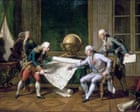
‘Miracle’ cache of letters written by French scientist who died in ill-fated La Pérouse mission give personal account of 1785 voyage As he prepared to climb the scaffolding to be publicly executed by guillotine on 21 January 1793, Louis XVI is reported to have asked: “Is there news of Monsieur de la Pérouse?” He was referring to Jean-François de Galaup, the count of Pérouse , a naval officer and…
Rare and intimate letters written by a French scientist who perished during the ill-fated La Pérouse expedition have recently resurfaced, shedding new light on the 1785 round-the-world voyage. The letters, discovered hidden in a book of engravings, were written by Jean-André Mongez to Louise Victoria Le Cloustier, the daughter of a minor noble family from Rouen, Normandy.
The La Pérouse expedition, launched at a time of intense competition between Britain and France over colonial expansion, aimed to rival Captain James Cook's discoveries and potentially establish trade routes. The expedition, led by Jean-François de Galaup, the count of Pérouse, set sail from Brest on August 1, 1785, with 225 crew members, officers, and scientists.
For almost three years, the ships, La Boussole and L’Astrolabe, sent reports from various locations including Alaska, Asia, Russia, and Samoa, where the captain of the Astrolabe and 11 men tragically lost their lives.
As Louis XVI prepared for his execution on January 21, 1793, he reportedly inquired about the fate of La Pérouse, who had not been heard from since leaving Botany Bay in March 1788. The ships were believed to have wrecked on coral reefs at Vanikoro, east of the Solomon Islands, in a tornado a few months later. The wreckage was only identified formally in 2005.
Mongez's letters, described as veiled love letters, provide a personal account of the expedition, expressing the scientist's unhappiness with Louise's marriage and his remorse for past behavior. He even promises to be "a better man" upon his return. The letters offer insight into how the young men endured the three-year journey, highlighting their resilience and the harsh conditions they faced. The letters were kept hidden by Louise, possibly to shield them from her husband.
Written by urgent.news from The Guardian's reporting — not their text. Machine-written — may contain errors; check the original before relying on it.
This story
This is one outlet's version. Read the fullest account.