El plan de Elon Musk para dominar la era de la inteligencia artificial
La posible fusión entre SpaceX y Tesla llevaría al extremo una estrategia para controlar buena parte de la cadena de valor de la inteligencia artificial. De los robotaxis y robots humanoides a los centros de datos, la IA es el hilo que conecta cada vez más negocios de Elon Musk. Leer
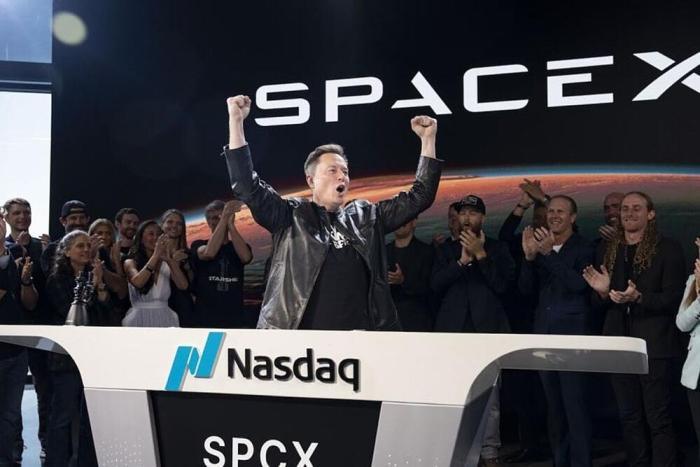
Elon Musk's plan to dominate the era of artificial intelligence appears to be taking shape as he strives to connect various elements of his conglomerate through the power of AI. By merging SpaceX and Tesla, Musk aims to create a strong foundation for physical AI applications like autonomous vehicles and humanoid robots. The Roadster, a Tesla supercar powered by SpaceX technology, exemplifies this synergy.
According to Dan Ives, analyst at Yorkville Ives, while cars remain Tesla's core business, autonomous driving, robotaxis, and Optimus robots are likely to drive much of the company's value. These elements account for about two-thirds of Tesla's $500 per share price target.
However, some investors see opportunism in the potential merger, as Tesla faces challenges such as stagnant revenue and a 43% net profit decline in the latest quarter. Meanwhile, SpaceX's capitalization has dropped 18% over the past year, and its revenue from the Super Intelligence (SI) division now exceeds that of its space and connectivity businesses.
SpaceX generates more revenue from its SI division than from its space or connectivity businesses, with $7.560 million in the third quarter, representing 52% of its total revenue. This division is also the biggest earner of adjusted EBITDA, turning from a $428 million loss to a $4.953 million positive in the same period.
UBS expects SpaceX's SI earnings to grow to $130.774 million by 2027 and has raised its price target from $210 to $230. Musk envisions a future where SpaceX could generate $500 billion to $1 trillion in annual recurring revenue by the end of 2027, driven by the AI business and its computational capacity.
To support this growth, SpaceX is accelerating its hyper-scaling efforts, building massive data centers for AI model development and third-party capacity rental. UBS expects SpaceX's revenue to accelerate due to increased rental prices for AI-computing infrastructure, with the company already having 1.7 GW of computing capacity and aiming to reach 13 GW by the end of 2027.
Musk acknowledges the possibility of surpassing 20 GW if sufficient energy and cooling are available. He warns that the shortage of computational capacity will last for a long time, and SpaceX is "in the same league" as other hyper-scalers in the race for more AI power.
The scarcity of computing capacity benefits SpaceX in terms of pricing, as the company has closed deals above the $30 to $50 per watt range it commanded a quarter earlier. The return on investment for this computational capacity is so strong that it can be amortized within less than a year, or even six months by 2027, according to Musk. Bank of America notes that investor focus will be on the strong return on capital expenditures (capex) for Super Intelligence and future investment and financing needs.
Written by urgent.news from Expansion ES's reporting — not their text. Machine-written — may contain errors; check the original before relying on it.
This story
This is one outlet's version. Read the fullest account.