Bündnisverteidigung: Heereschef will mehr Tempo zur Verteidigung des Baltikums
Mehr als 70 Generale aus Deutschland und den Niederlanden erkunden mögliche Brennpunkte im Baltikum. Heereschef Freuding sieht beim Tempo der Verteidigung noch Nachholbedarf und teilt eine Sorge.
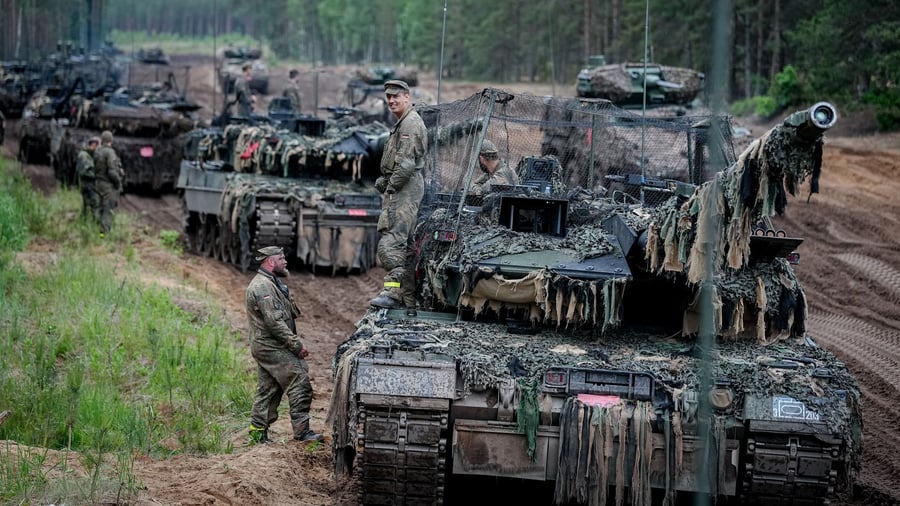
NATO members are strengthening defenses against potential military conflict with Russia in the Baltic region. Along the eastern flank, defensive positions are being expanded, new drone systems installed, and preparations made to quickly support the Allies along the Russia border. German and Dutch army chiefs emphasized the need for more speed during a multi-day visit to the Russian border area.
Over 70 generals and senior officers from both nations have been exploring possible focal points along the Russia border. This largely secret mission is described as unprecedented, demonstrating the seriousness NATO countries place on the mutual defense pledge. Germany has stationed a Panzer brigade in Lithuania. In Lithuania, Germany has already deployed the Panzer Brigade 45 under construction.
Since July, the German-Netherlands Corps has also been preparing for possible NATO land operations in Estonia and Latvia. The Baltic region has thus become the main responsibility zone for German land forces. In the event of a crisis, German soldiers are expected to be rapidly deployed there. The Allies are closely observing potential scenarios for a surprise attack from Russia, which could even launch without extensive preparation.
Military planners and security researchers are debating whether Russian President Vladimir Putin might stage such a limited strike against NATO territory, given his forces' slow progress in Ukraine. Freuding states he sees no indicators for this scenario but acknowledges it is not entirely implausible based on scientific arguments.
He notes the possibility that Putin might use such a potential "faustpfand" for political leverage over NATO partners, convincing them to halt support for Ukraine in exchange for ending the Russian advance in NATO territory. Freuding acknowledges Russian forces would likely be numerically superior in the Baltic region. He emphasizes the need for defensive measures in low-altitude airspace, electromagnetic warfare with jamming signals, the use of drones and unmanned systems, digital communication supported by AI to manage troops, and the logistical pre-positioning of weapons and materials in the Baltic region.
Direct, indirect, or financial support is all part of the strategy. Freuding emphasizes the importance of indirect warfare with long-range missiles capable of striking enemy formations and supply lines up to 1,500 kilometers away. The production of such missiles is likely to be sourced from Ukraine and Germany. Freuding admits that details will remain classified, with a focus on ensuring the stealthy deployment of defensive infrastructure like trenches and bunkers along the Russia border.
Written by urgent.news from Handelsblatt's reporting — not their text. Machine-written — may contain errors; check the original before relying on it.