66 major housing markets now see falling prices
Want more housing market stories from Lance Lambert’s ResiClub in your inbox? Based on ResiClub ’s analysis of the Zillow Home Value Index, nationally aggregated U.S. home prices are up +1.0% year-over-year between September 2025 and September 2026. That’s a month-over-month deceleration from the +1.3% YoY shift between August 2025 to August 2026. After…
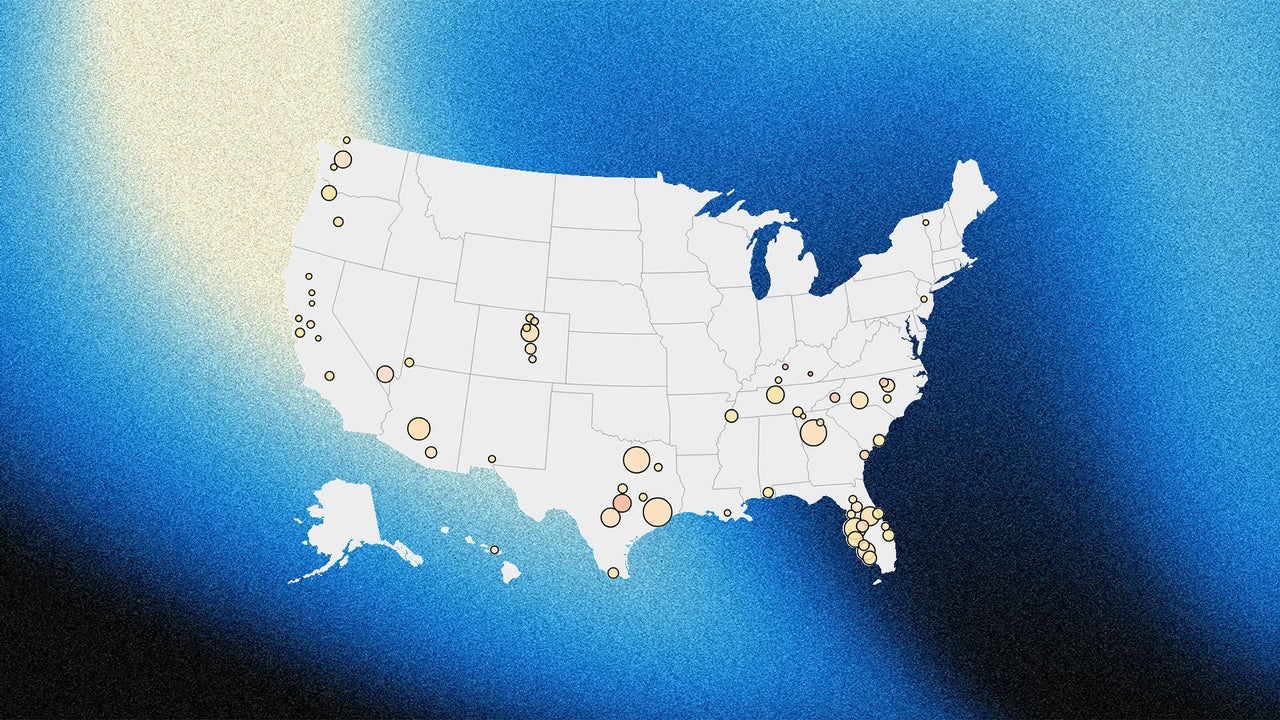
A recent analysis by ResiClub reveals that 66 out of the 300 largest housing markets in the United States are experiencing falling home prices, marking a 22% increase from the previous August 2025 to August 2026 period. Despite a slight national uptick in home prices by 1.0% year-over-year between September 2025 and September 2026, this trend is mainly confined to regions with active inventory levels below pre-pandemic 2019 standards, particularly in the Northeast and Midwest.
Meanwhile, in states like Texas, Florida, Washington, and Colorado, where active inventory exceeds pre-pandemic norms, some markets have already witnessed price corrections, and others are flat. The major concern lies in the potential acceleration of this softening in the nationwide housing market, given the recent surge in 30-year fixed mortgage rates above 7.00%, affordability challenges, and a post-boom cyclical cooling period.
ResiClub advises monitoring local active inventory closely over the upcoming months. The Sun Belt and Mountain West regions, which previously witnessed significant price surges during the Pandemic Housing Boom, are currently experiencing more pronounced softening. While 234 of the 300 largest metro-area housing markets are witnessing year-over-year home price increases, most of these gains are below inflation-adjusted income and consumer price growth, thereby representing real (inflation-adjusted) declines.
Notably, the divergence between markets with rising and falling prices is wider than usual, given that national appreciation is soft. For instance, home prices in Hartford, CT have surged 28.6% above their 2022 peak, while Austin, TX home prices are 28.1% below their 2022 peak. This inequality between resilient and weaker markets could potentially widen over time.
Written by urgent.news from Fast Company's reporting — not their text. Machine-written — may contain errors; check the original before relying on it.