Why is the US reluctant to give South Korea wartime control of its troops?
South Korea wants to take back wartime command of its troops from the United States within the next two years, but analysts say Washington is refusing to commit to a date to keep a hold on a military it sees as vital to countering China. The dispute is over wartime operational control, known as OPCON, which the US has held since shortly after the outbreak of the Korean war in 1950. If fighting…
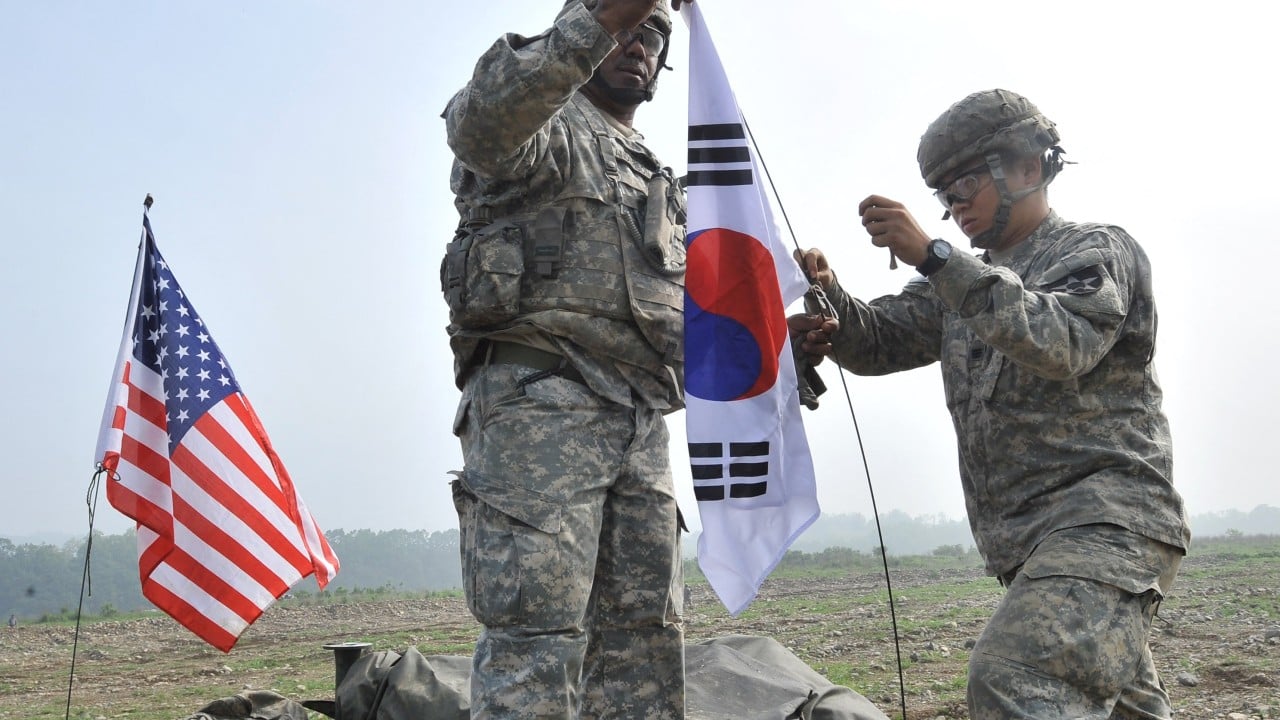
South Korea aims to regain wartime control of its military forces from the United States within the next two years. However, American officials are resisting any definite timetable for this transfer, which involves a military arrangement known as OPCON, or Operational Control. This control has been held by the United States since shortly after the Korean War began in 1950.
If hostilities were to erupt again, South Korean troops would typically be placed under the command of the Combined Forces Command, led by U.S. General Xavier Brunson. The exact units involved are classified, but they are believed to include frontline army units and significant portions of the air force and navy.
South Korea's Defense Ministry has been pushing for a date for the OPCON transfer since the beginning of the year. However, analysts argue that Washington maintains that Seoul has not yet satisfied its conditions. Kim Yeol-soo, a senior research fellow at the Korea Institute for Military Affairs, noted that Washington also has an "undeclared motive" in retaining influence over South Korea's military to counter China's growing influence.
Doo Jin-ho, a research fellow at Kyungnam University's Institute for Far Eastern Studies, concurred, stating that the U.S. fears that a transfer could weaken its influence over South Korea and its military, considering China's proximity to the Korean peninsula.
U.S. General Brunson, who commands roughly 28,500 U.S. troops stationed in South Korea, has previously stated that the alliance must adapt to threats beyond the peninsula and that any transfer of control should be based on conditions rather than a political timeline. In recent comments, Brunson cited North Korean missile launches and other provocations as evidence of an evolving security landscape, suggesting that the allies need new standards, critical capabilities, and full mission readiness before any transfer can occur.
President Lee Jae Myung has emphasized the importance of reclaiming OPCON at an early date, asserting that it is crucial to South Korea's national sovereignty. He stated that talks on the issue were "generally progressing well." Seoul's defense ministry, however, warns that any changes or additions to U.S. requirements for a transfer of command could be seen as moving the goalposts.
The Defense Minister, Kang Shin-chul, clashed with conservative opposition lawmakers at a parliamentary audit, where he emphasized that the survival of the country and the lives of its people were at stake. He called for extreme caution and mutual trust in the transfer process. Doo Jin-ho noted that the comparison with Iran was flawed, as a conflict on the Korean peninsula could easily escalate and involve China and Russia as well.
Written by urgent.news from South China Morning Post's reporting — not their text. Machine-written — may contain errors; check the original before relying on it.