China’s battery factories could be sitting right on top of vast lithium deposits
Lithium deposits formed by ancient volcanic activity may lie beneath parts of China’s battery manufacturing heartland, particularly along the southeastern coast, according to a new study. In an interview with the South China Morning Post, geologist Duan Zheng said that “potential targets for clay-type lithium deposits in southeastern China overlap with lithium battery industrial clusters in East…
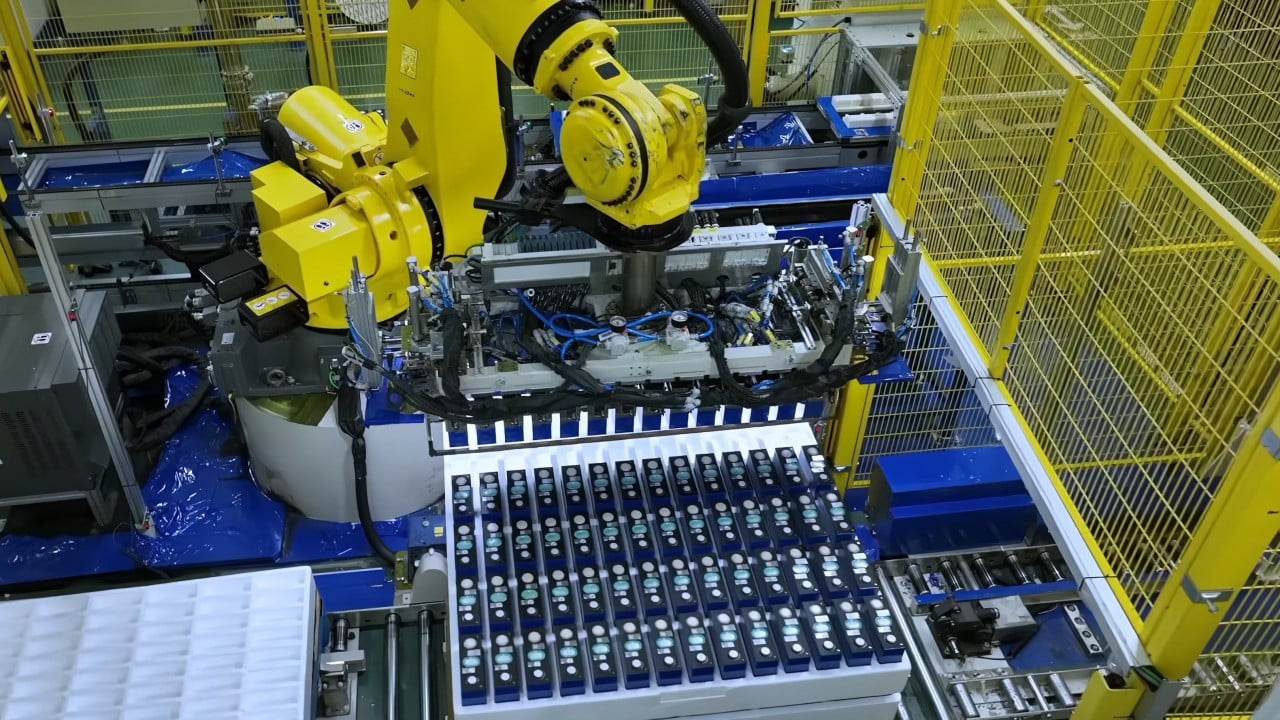
China's battery manufacturing centers could potentially sit atop significant lithium deposits, according to a recent study. Geologists have identified volcanic clay-type lithium deposits in southeastern coastal China, an area known as the volcanic belt. This region, stretching 1,200km along the coast and 500km inland, contains approximately 150,000 square kilometers of land that could be rich in lithium.
The study, published in the Chinese journal East China Geology, compares these potential lithium deposits with major finds in the US and Europe. Lithium is classified into three types: hard-rock, brine, and clay. Recent discoveries of volcanic clay-type lithium deposits in acidic volcanic regions have been hailed as a crucial new resource.
China currently has around 17,000 lithium-battery-related companies, with 40% located in southern China and 31.6% in eastern China, accounting for 71.6% of the national total. The country relies mainly on imported lithium raw materials, including hard-rock lithium from Australia and resources from South America. Developing domestic sources near manufacturing centers could reduce dependence on overseas producers and increase China's bargaining power.
The researchers identified the Shirenbei Basin in Heping county, Guangdong province, and the Shouchang Basin in Zhejiang province's Jiande city as priority areas for further investigation. These areas have clay-type lithium mineralisation identified in clay-rich layers within their volcanic rocks. The Shouchang Basin and areas around Jinyun and Lucheng in Zhejiang were also considered promising due to the presence of clay minerals such as smectite and illite.
The geological process leading to lithium accumulation involves volcanic eruptions that produce lithium-bearing rocks and debris. These deposits contain lithium primarily in clay minerals formed through weathering and alteration of volcanic debris. Calderas, large depressions formed by volcanic activity, create a closed hydrological system that concentrates lithium. Rainfall and hydrothermal activity further contribute to lithium enrichment within the caldera.
To assess the region's potential, the researchers compared its geology with major overseas deposits, including the McDermitt deposit in the US and the Jadar deposit in Serbia. These comparisons highlight the potential for China's southeastern coastal deposits to become a significant source of lithium for the battery industry.
Written by urgent.news from South China Morning Post's reporting — not their text. Machine-written — may contain errors; check the original before relying on it.
This story
This is one outlet's version. Read the fullest account.