Uncertainty in Israel After Election Results
A majority of Israelis rejected the government of Prime Minister Benjamin Netanyahu, but forming a coalition could require breaking taboos.
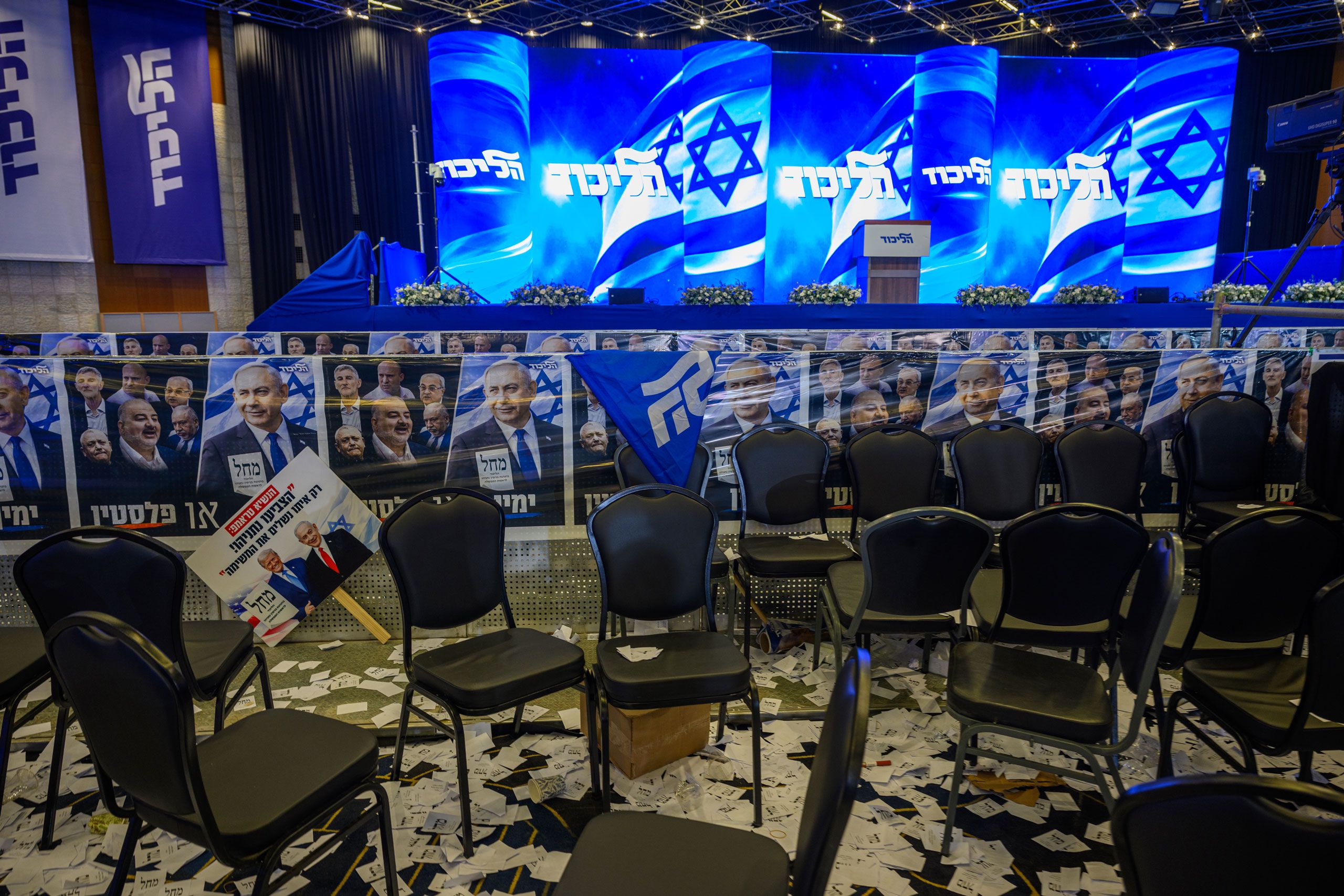
In Israel, the recent election results have brought about a significant shift in the political landscape. Prime Minister Benjamin Netanyahu's coalition of far-right and ultra-Orthodox parties, which had previously held a majority of sixty-eight seats out of a hundred and twenty, is now projected to fall short of the necessary fifty-three seats.
The decline in Netanyahu's support was evident as his party, Likud, maintained its dominance, while his main challenger, Gadi Eisenkot, failed to secure the predicted outcome. Eisenkot's party, Yashar, is expected to garner twenty-one seats, a notable performance for a new party but not a major breakthrough. Palestinian citizens of Israel demonstrated unprecedented voter turnout, with some reportedly motivated by the claims made by Ben-Gvir, the national-security minister, who regards Palestinians as enemies.
This surge in voting power from Palestinian citizens has led to an almost doubling of their representation in the Knesset, from ten to nineteen seats. However, this surge in support was met with a climate of fear and hostility towards Palestinians. Ultra-Orthodox parties, openly anti-Zionist, continue to play a pivotal role in the political discourse.
As the President of Israel, Isaac Herzog, faces the challenge of determining the next Prime Minister, it remains uncertain whether Netanyahu or Eisenkot will emerge as the leader of the largest bloc of parties. The upcoming coalition negotiations are expected to be fraught with tension and uncertainty, as neither Eisenkot nor alternative leaders like Naftali Bennett seem willing to form a government with Netanyahu.
Under these circumstances, Israel may face a period of political deadlock, potentially requiring the formation of a national-unity government. This scenario, though desirable, may prove challenging, considering the opposition's aversion to a government led by Netanyahu and his ultra-Orthodox partners. The political climate in Israel remains uncertain, with the fear of another escalation with Iran hanging over the nation's future.
Written by urgent.news from The New Yorker's reporting — not their text. Machine-written — may contain errors; check the original before relying on it.