Rendezvous Robotics Raises $20 Million to Build Self-Assembling Spacecraft
Rendezvous Robotics Raises $20 Million in Seed Funding Rendezvous Robotics has raised $20 million in an oversubscribed seed round. The financing was led by MaC Venture Capital and Toyota Ventures. The post Rendezvous Robotics Raises $20 Million to Build Self-Assembling Spacecraft appeared first on Ventureburn .
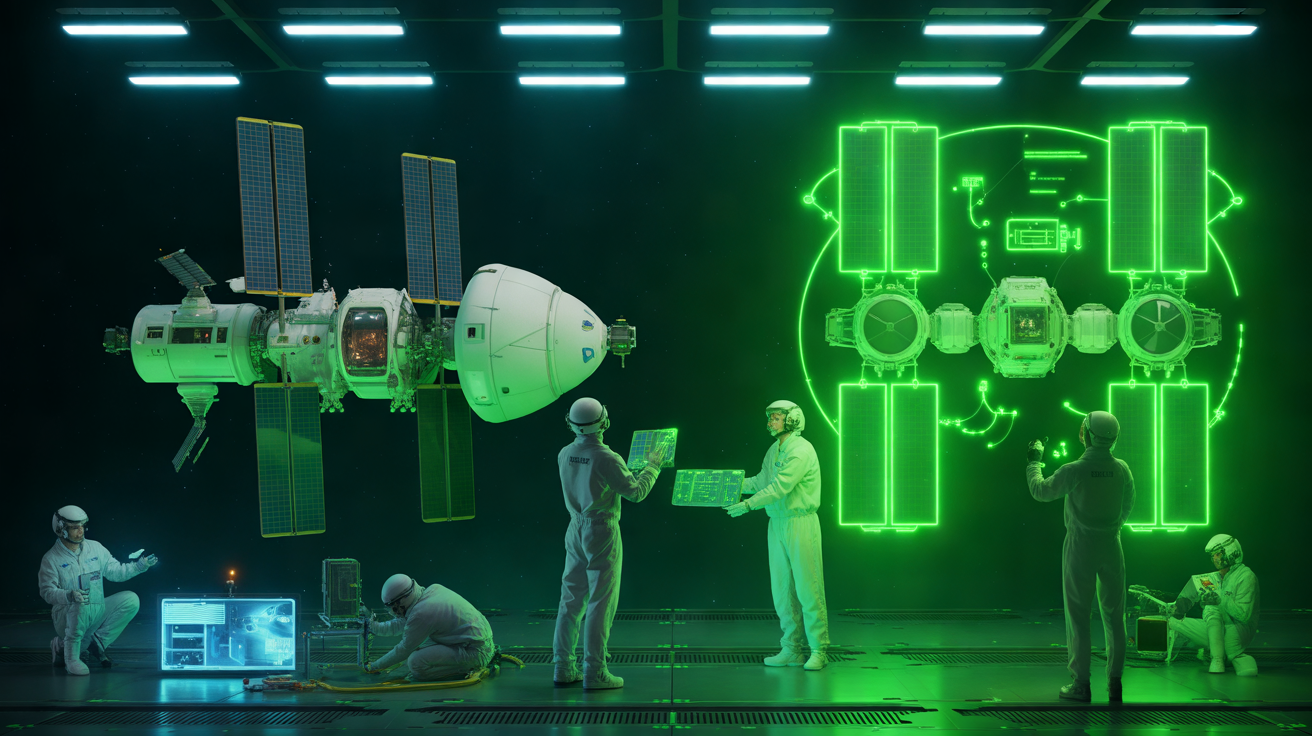
Rendezvous Robotics has successfully secured $20 million in seed funding to develop self-assembling spacecraft. The round was led by MaC Venture Capital and Toyota Ventures, with participation from various investors including the University of Michigan Endowment, Astera, Industrious Ventures, Aurelia Foundry, ATX Venture Partners, and Mana Ventures.
The company's focus is on creating one-metre hexagon tiles equipped with sensors and onboard processing, which can navigate to a rendezvous point, position themselves, and dock in orbit. These modules will use electromagnetic actuation to enable movement and self-assembly, potentially serving various functions upon attachment. This innovative approach aims to overcome traditional launch limitations, allowing for the addition or repositioning of components as needed, and reducing the need to build and launch entirely new spacecraft when components fail.
The technology is based on nearly a decade of research by Dr. Ariel Ekblaw, who developed the original self-assembly technology at MIT and later founded the Aurelia Institute. Rendezvous Robotics plans to conduct flight demonstrations in November 2026 to validate its modular spacecraft technology, including electromagnetic actuation and mobility under microgravity conditions.
A separate demonstration on the International Space Station in December 2026 will involve 32 tiles assembling into a three-dimensional structure, while a dedicated low-Earth-orbit demonstration is scheduled for launch no earlier than April 2028. Co-founder and CEO Joe Landon envisions that this technology could support spacecraft with greater power generation and larger communications systems, potentially enabling missions that conventional launch constraints make difficult.
Written by urgent.news from Ventureburn's reporting — not their text. Machine-written — may contain errors; check the original before relying on it.