First clear image of China's mysterious 'divine dragon' space plane revealed in US government report
The Defense Intelligence Agency's latest "Challenges to Security in Space" report included a declassified satellite photo of China's Shenlong, or "divine dragon," space plane, which has released at least nine mysterious payloads into low Earth orbit since 2022.
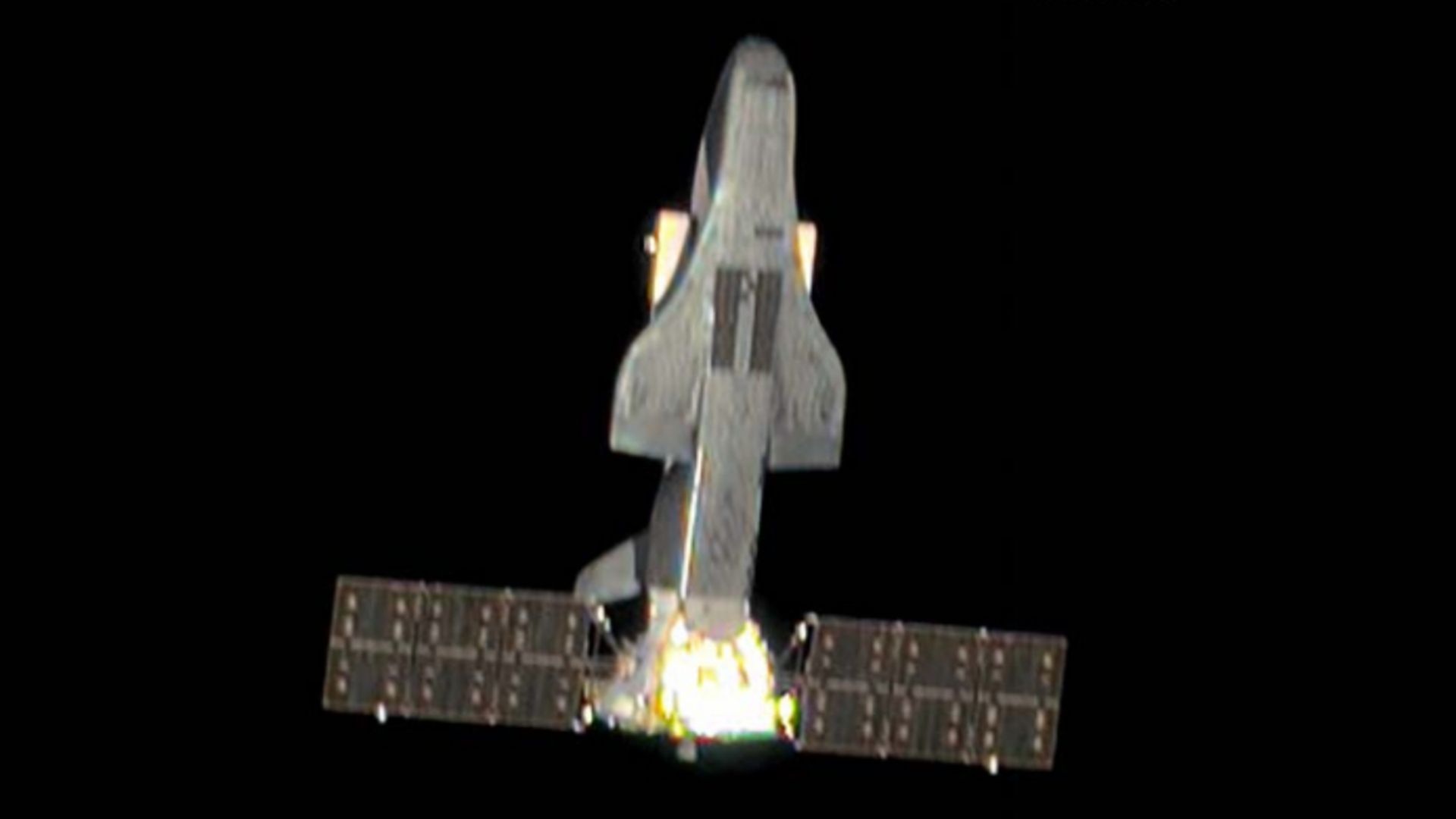
A newly declassified U.S. intelligence report has unveiled a clear image of China's enigmatic "divine dragon" space plane, known as Shenlong, orbiting Earth. The photograph, captured by a satellite belonging to the private company Maxar Technologies, marks the first clear view of the top-secret vehicle. The image, published in the Defense Intelligence Agency's (DIA) latest "Challenges to Security in Space" report, suggests that Shenlong closely resembles the U.S. Space Force's X-37B spaceplane currently in orbit.
The 130-page document, containing the image on page 53, provides new insights into Shenlong's capabilities. Chinese officials, private companies, and researchers have closely monitored the spacecraft since its inception six years ago, using tools like ground-based radar. However, previous images of Shenlong were grainy, revealing only light reflections and offering minimal information about its design or purpose.
The new photo indicates that Shenlong possesses delta wings, payload bay doors, a heat shield, and a service module with solar arrays. While its overall design resembles the American X-37B, experts note subtle differences in wing geometry, suggesting the two spacecraft are not exact replicas. The DIA report does not confirm whether the depicted spacecraft is the same one used in all of Shenlong's missions or if China operates multiple space planes.
Written by urgent.news from Live Science's reporting — not their text. Machine-written — may contain errors; check the original before relying on it.